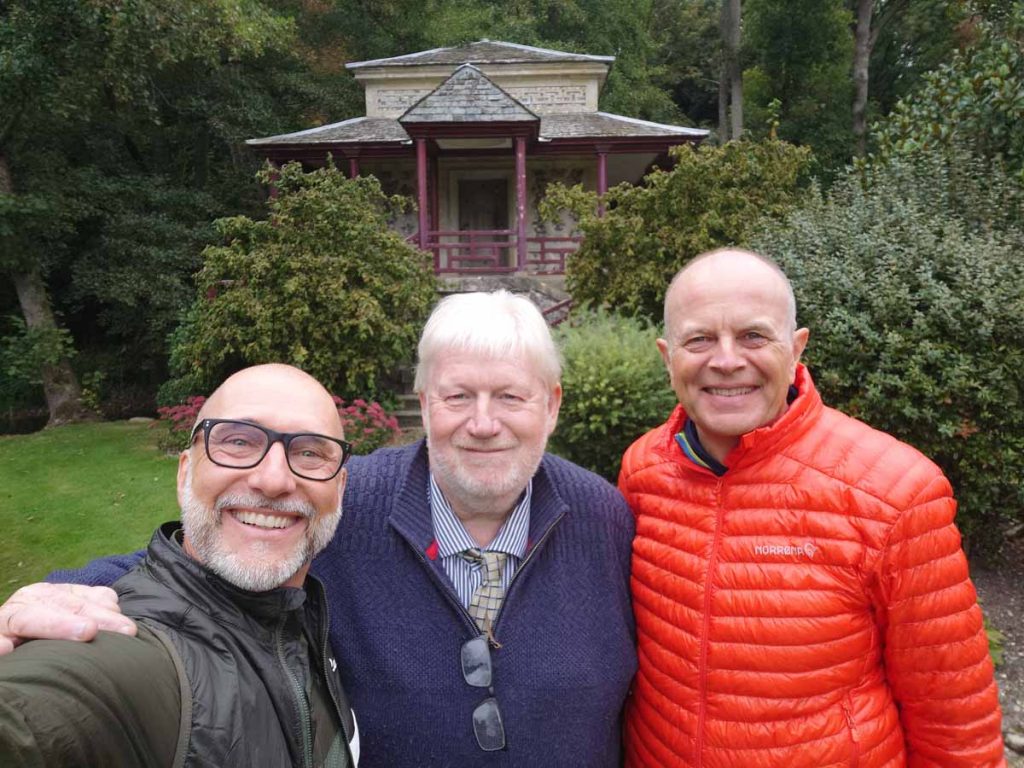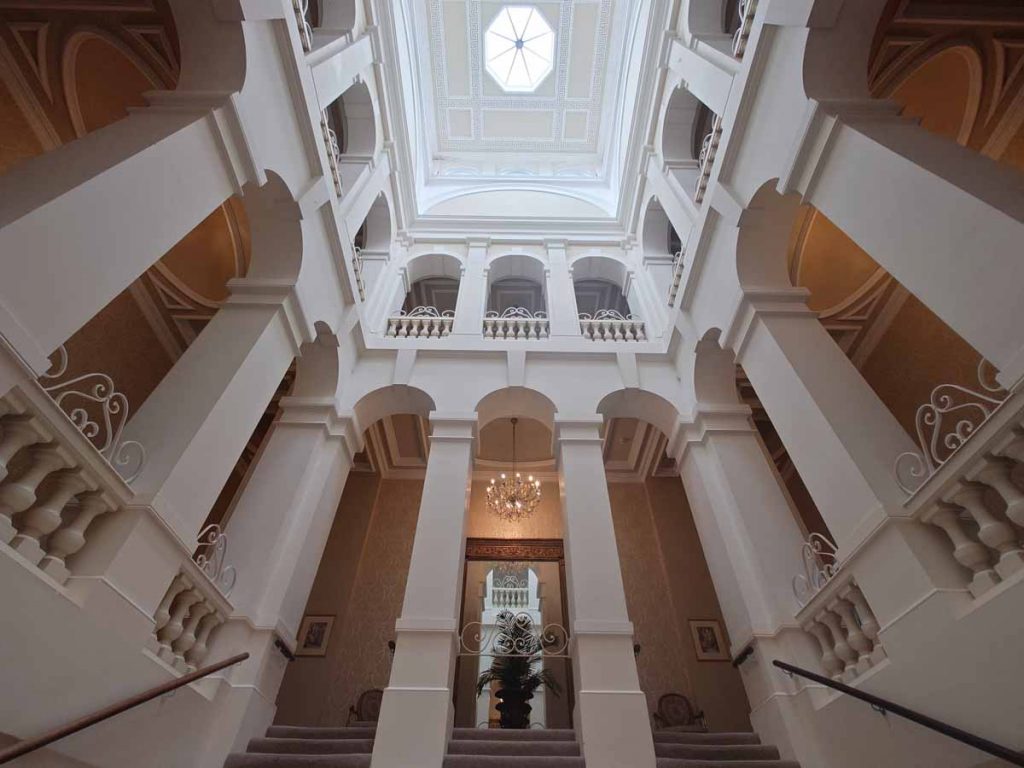
We woke up our metal horses where we had left them overnight in one of the dining rooms and they had charged enough energy from the electronic oat-meal the sockets offered them. When we rolled them down the hallway we could see Andy Rhind-Tutt through a glass door holding a meeting. He was really a busy man, but nevertheless offered us some of his private time to meet around noon.
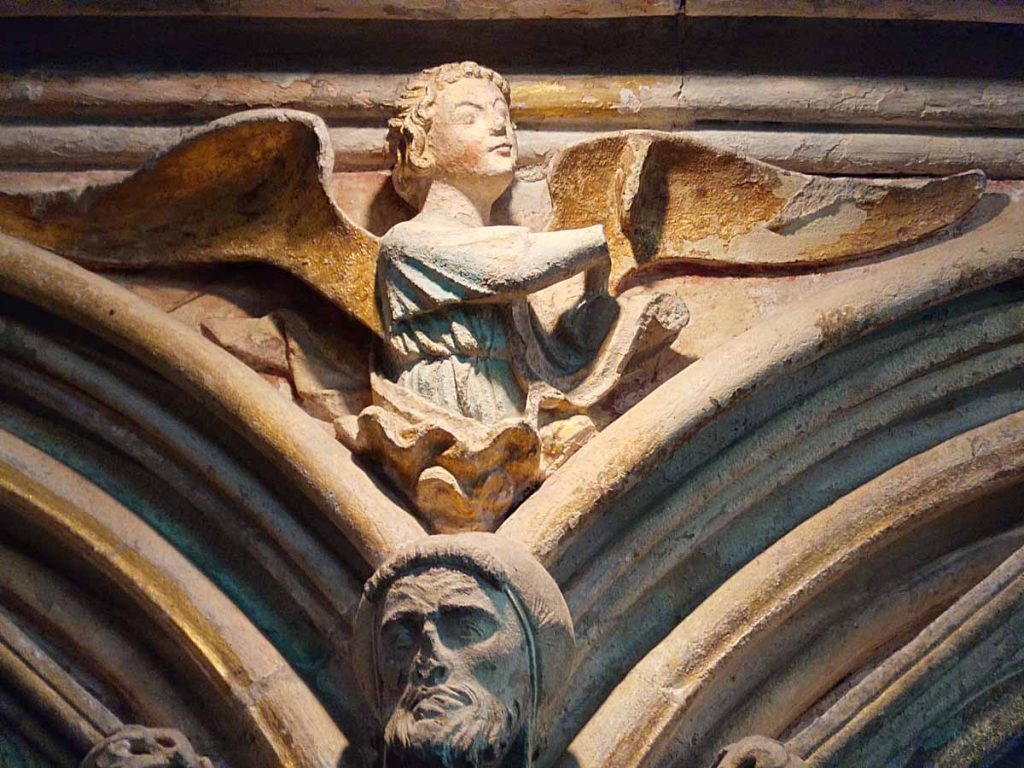
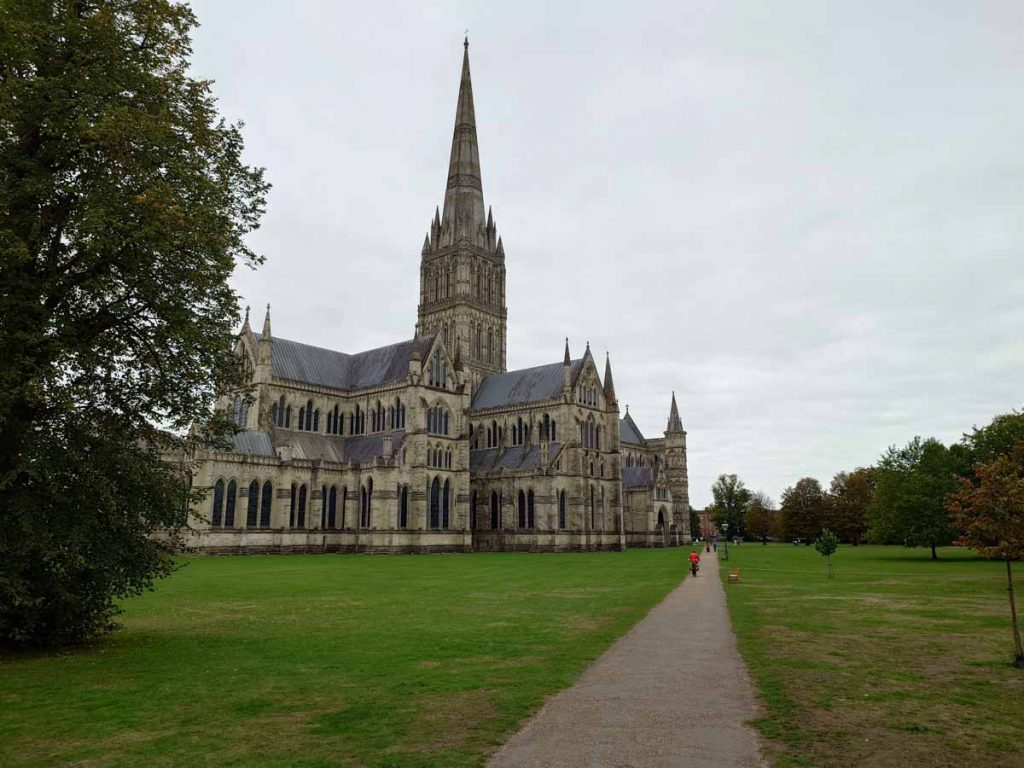
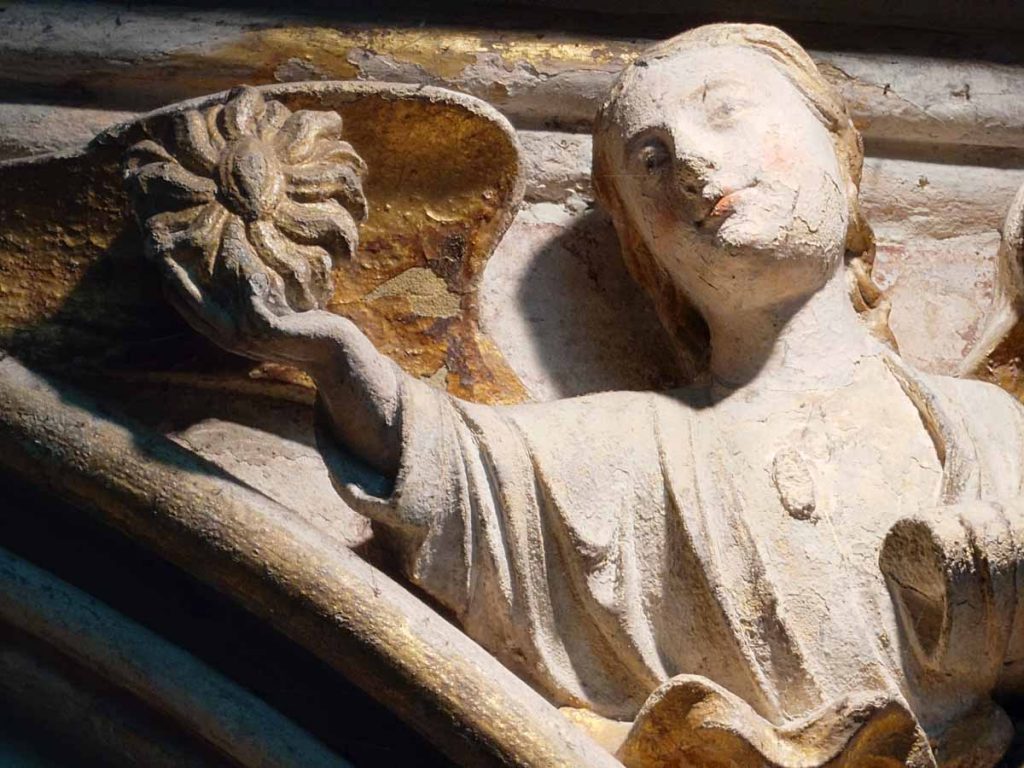
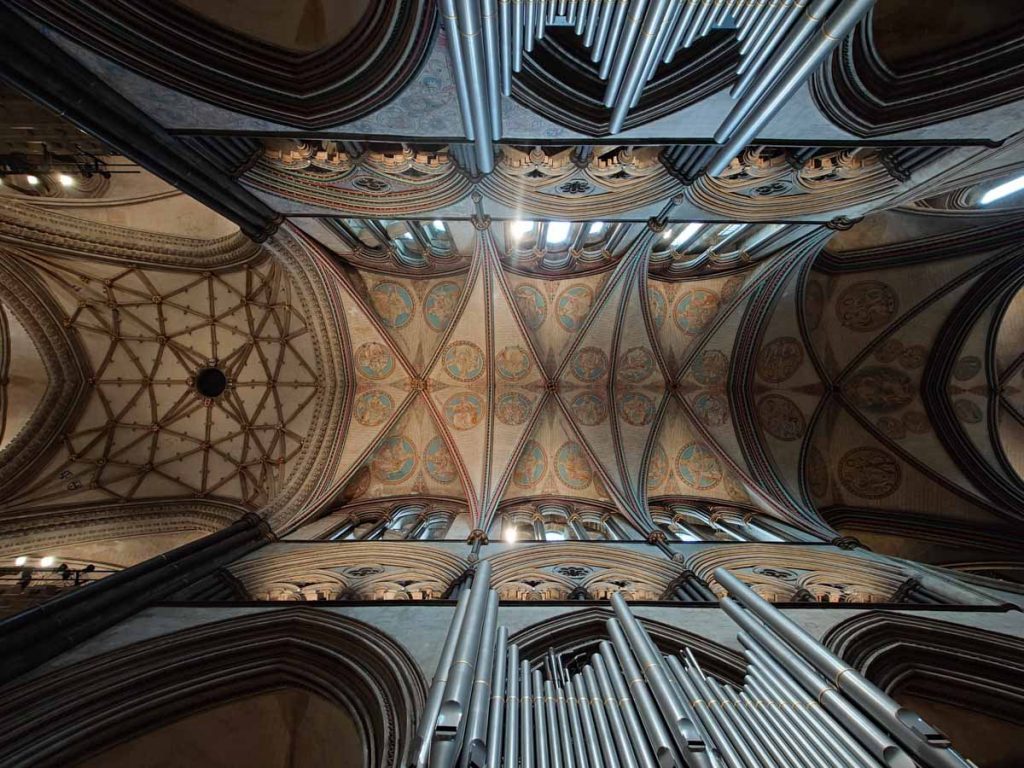
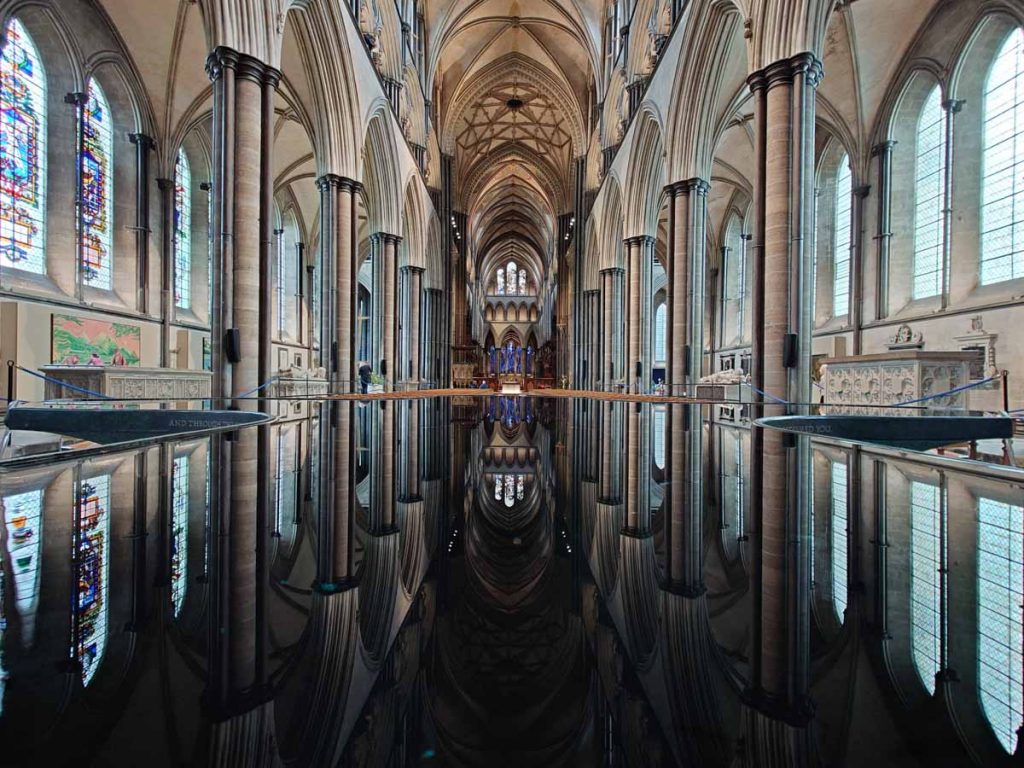
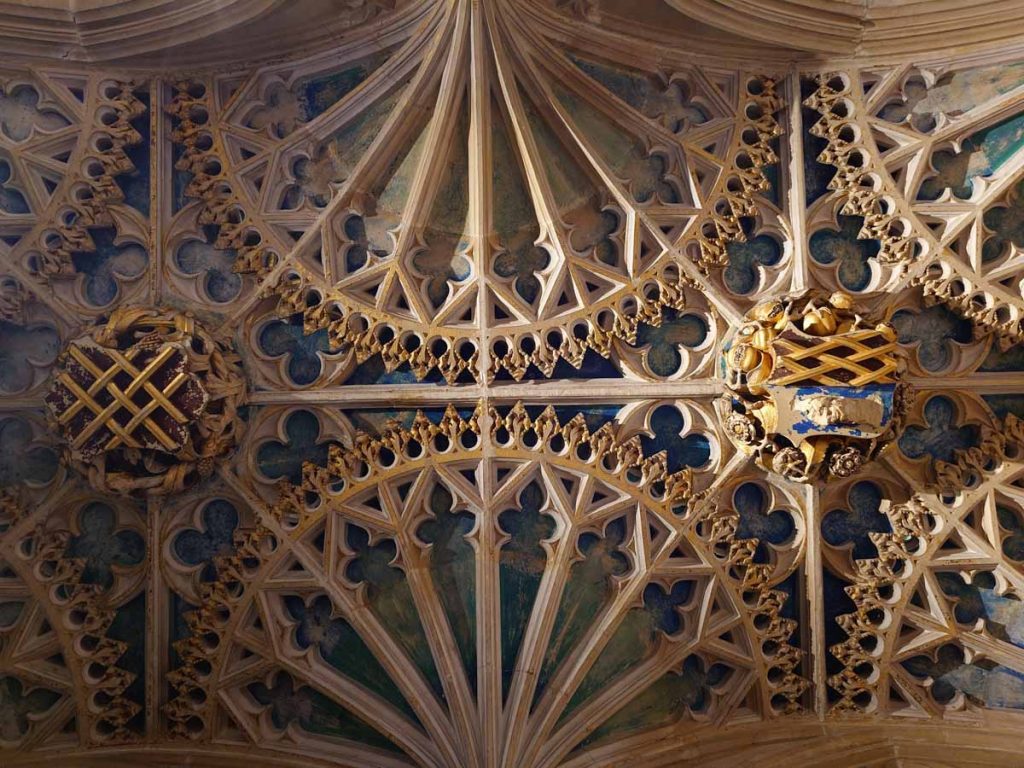
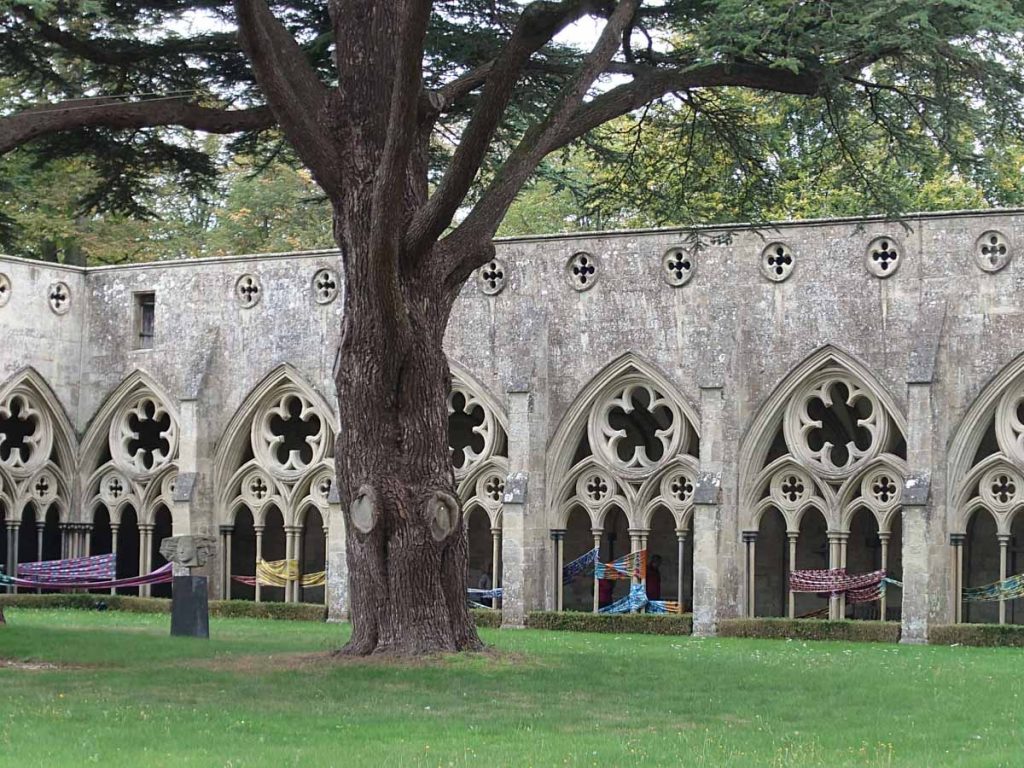
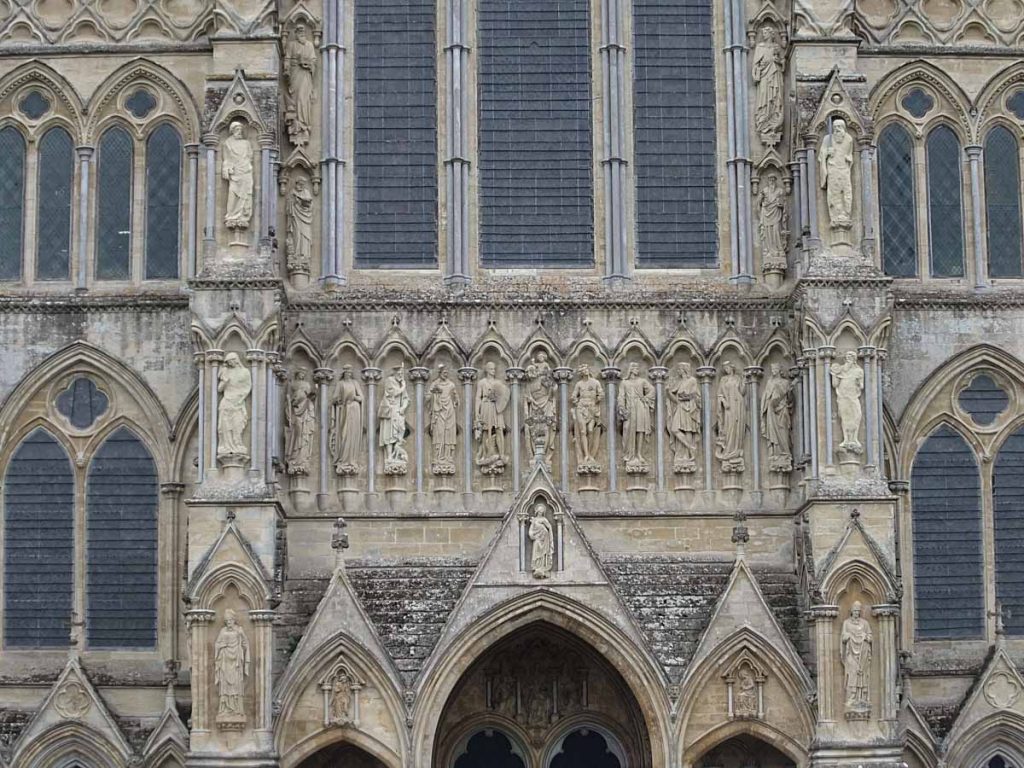
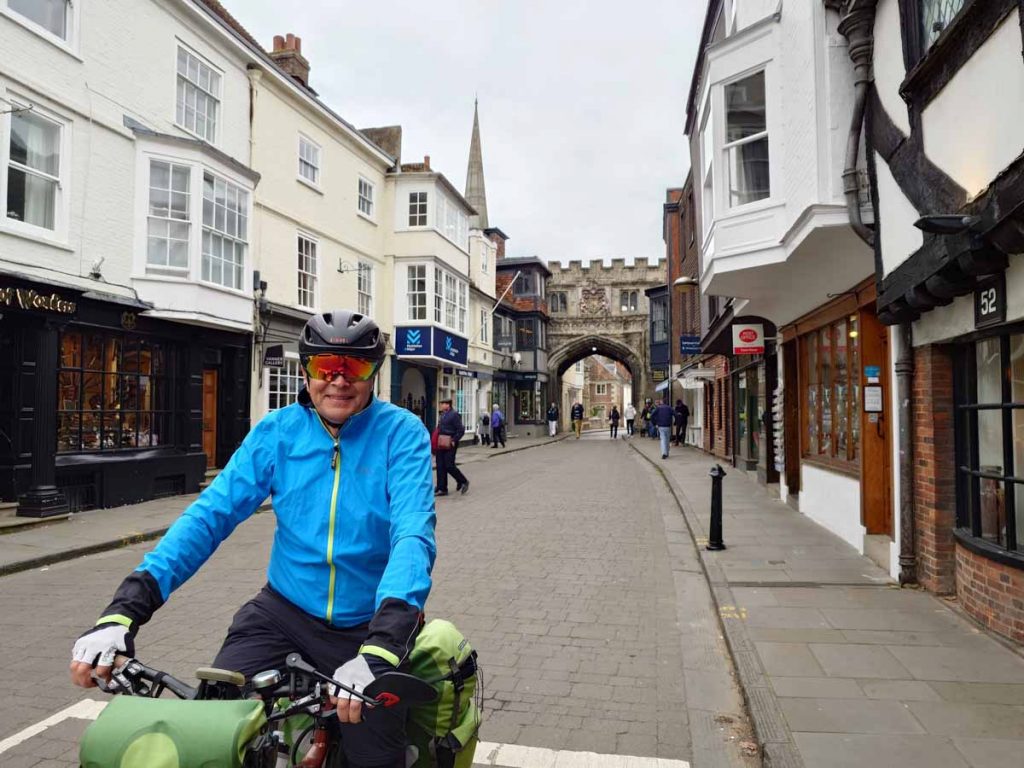
We saddled up our horses and rode over to the medieval gothic architecture of Salisbury Cathedral, where we had a guided tour. The laying of the foundation stone was in 1220 on a ground which was so close to groundwater that even today there’s still a hole in the ground where they can measure the level. The construction was completed in a relatively short time and in 1258 the cathedral was sanctified. But this was not the end of the construction because the builders still wanted to add the tower and spire on top of the crossing of the four naves.
Until today it has been a real miracle that the spire is with 123m the tallest stonemasonry building on the British Isles, because the weight of 6500 tons was just built on the principle of trial and error and no one knows how it is standing. The four main columns are visibly bending under the load and in the 17th century restorations tried to fix some of the structural problems with steel. William Golding is describing this hybris in his novel “The Spire”.
The history was so rich and interesting, but suddenly I got a call from Andy Rhind-Tutt, asking if we were already on our way to Amesbury. I had to deny that we were already back in our saddles, but we immediately left the cathedral tour to start galloping with our windmill fighting two-wheelers like Don Quichotte and Sancho Panza towards the next chapter in their time travel.
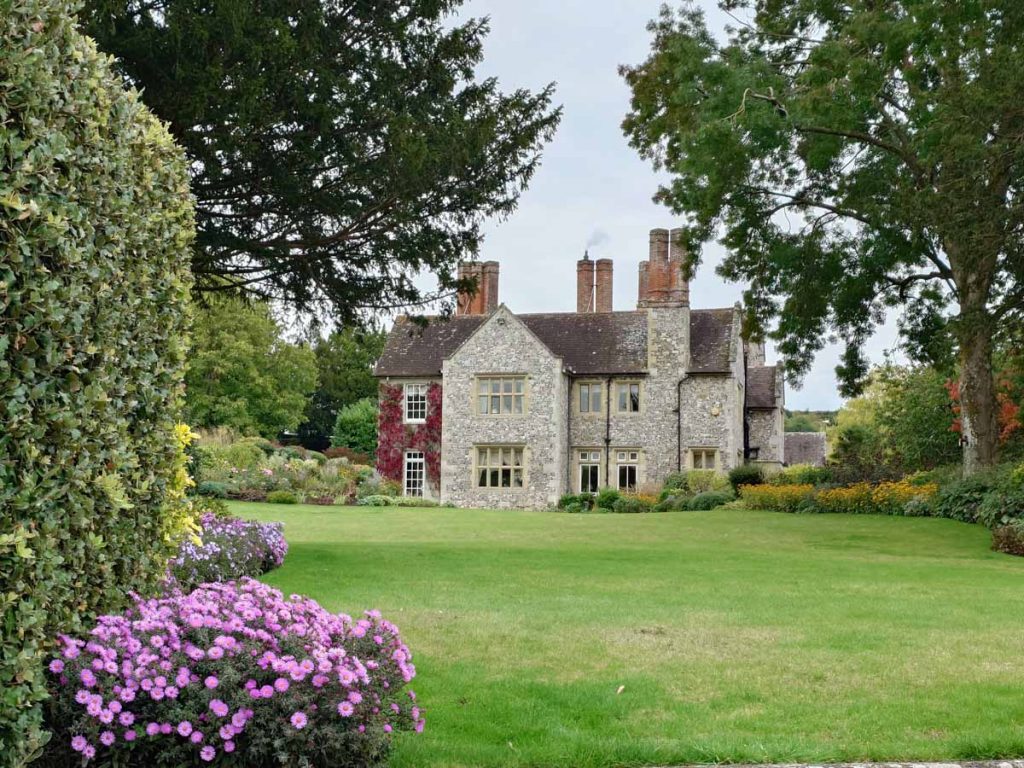
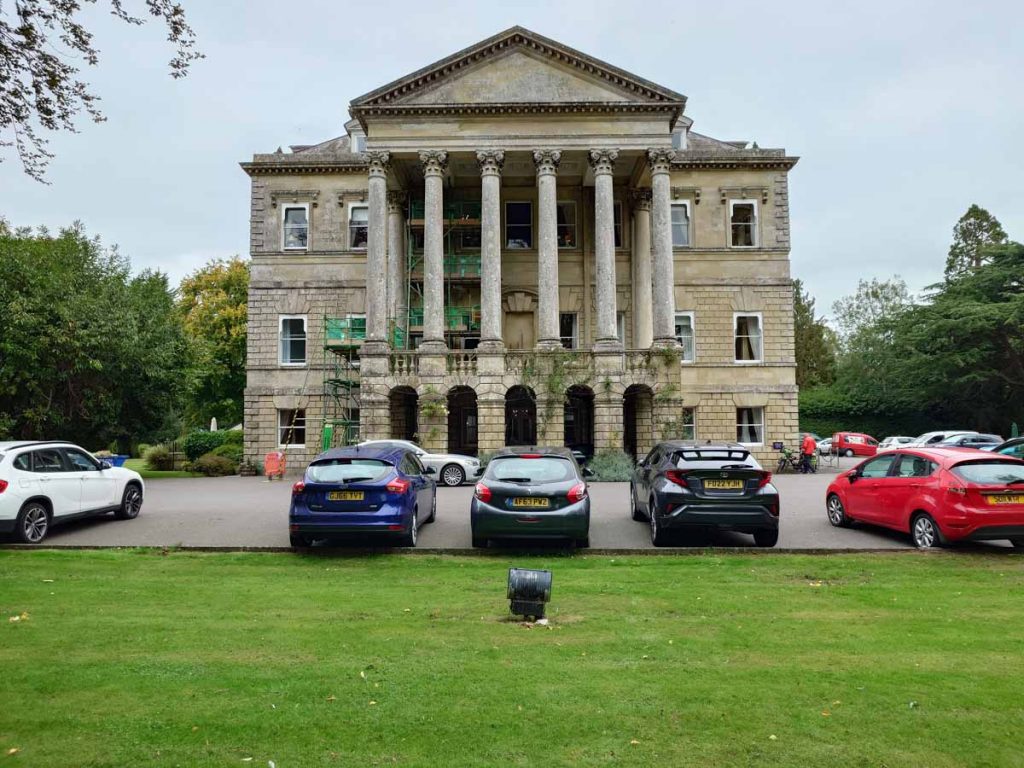
We followed the winding riverbed of the Avon up to enter Amesbury from the Stonehenge road, where we reached the Abbey with the Parish church of St. Mary and St. Melor as one of the first buildings on our way, where Andy was already waiting for us. He let us park our bikes at a very elegant mansion in neoclassical style.
We jumped into his car to continue the time travel and we were getting to know him better as one of the best anecdotists one could imagine, with such a rich knowledge of history concerning everything around this place, which was so full of surprises.
The first chapter of Andy’s history lesson brought us back to the time of Salisbury Cathedral, when Eleanor of Provence was Queen of England after Henry III died. She retired 1285 as a nun at the end of her life in the Amesbury Priory in Wiltshire until she died in 1291. One of her favoured colours was purple. She is the only Queen of England, who has no marked grave, but Andy assumes it to be here as her son King Edward I buried her in a royal ceremony at the Prior’s conventional church, which no longer exists, but they discovered some tile flooring of the church so he reckons in the vicinity of a giant yew tree might be her grave.
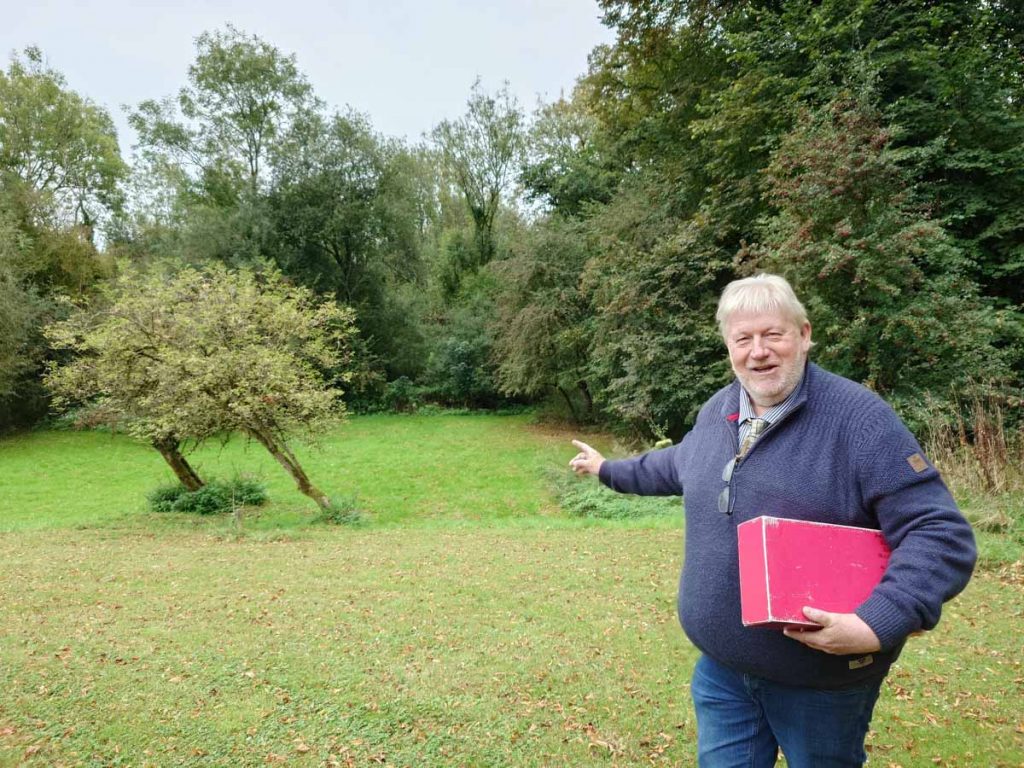
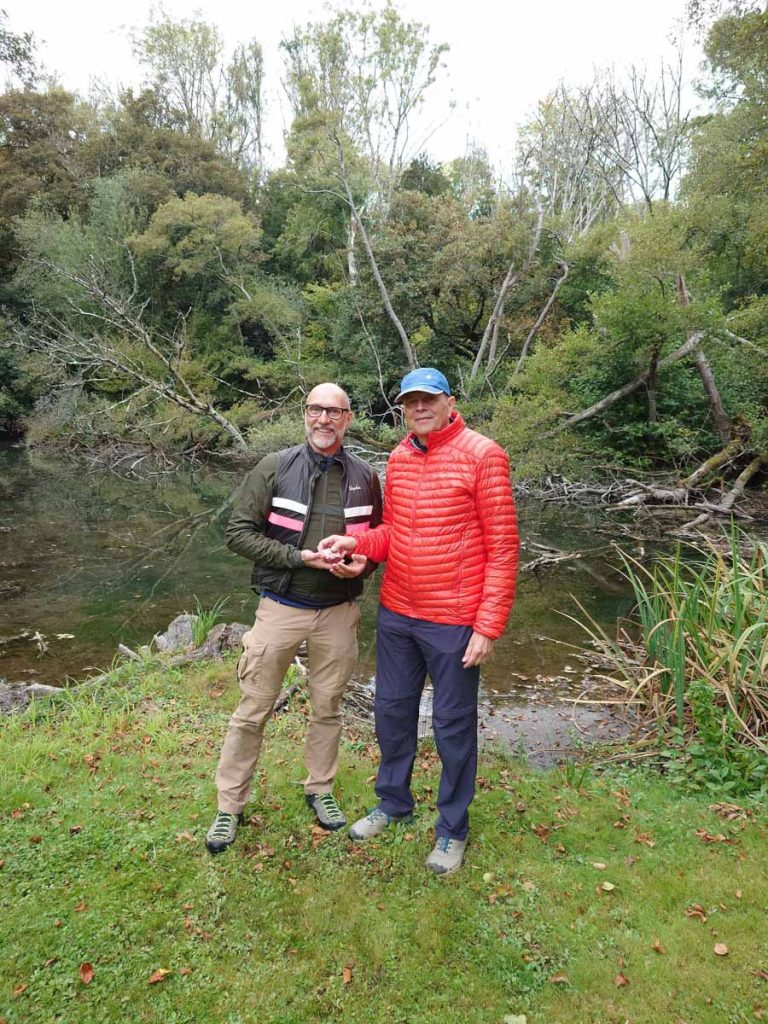
We turned the time travel clock further back into Roman times, where on the opposite side of the river Avon was the Vespasian camp, which is today still marked by huge trees. But to the side of it rests an open field which got into the focus of some archaeologists, who were interested in digging deeper into the soil than what they knew from Roman times. Andy was standing with a red box in his arm at the edge of this field explaining us more about the excavations.
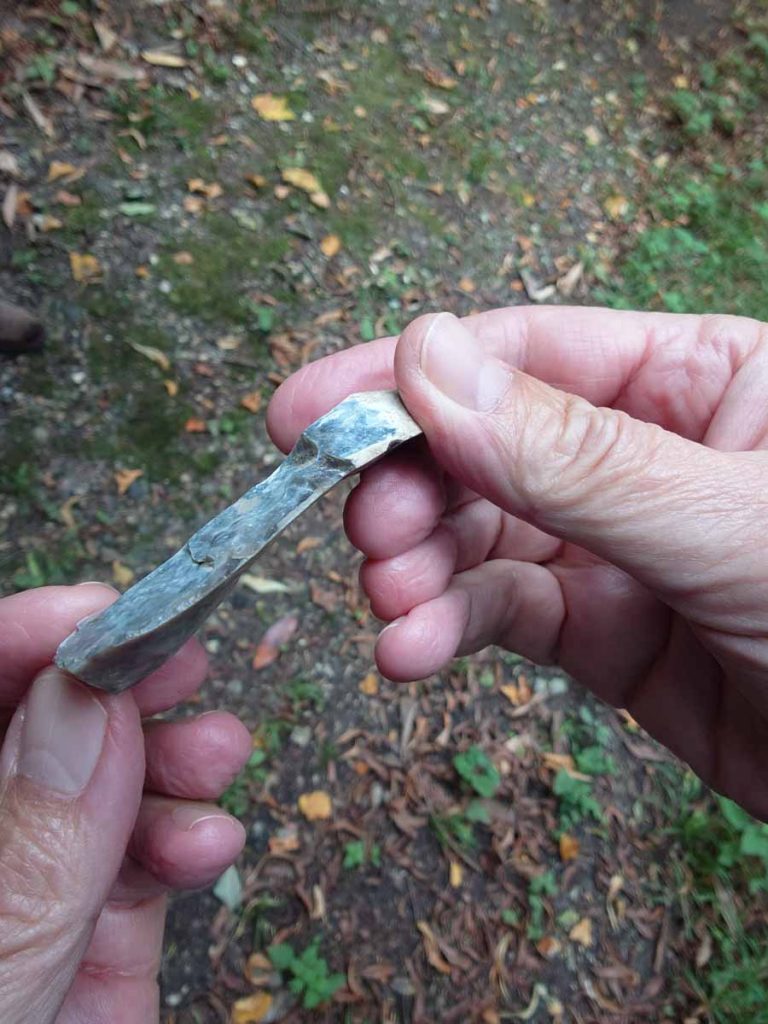
After they got beyond the fresh soil they were expected to find only chalk, which is the common ground in this area, but for more than a meter they found still disturbed layers mixed with soil. So there must have been man-treated land in earlier days still above the original ground. Getting deeper they suddenly discovered manmade flint blades, which would go beyond the time of Stonehenge, which is dating back to 2500 B.C.
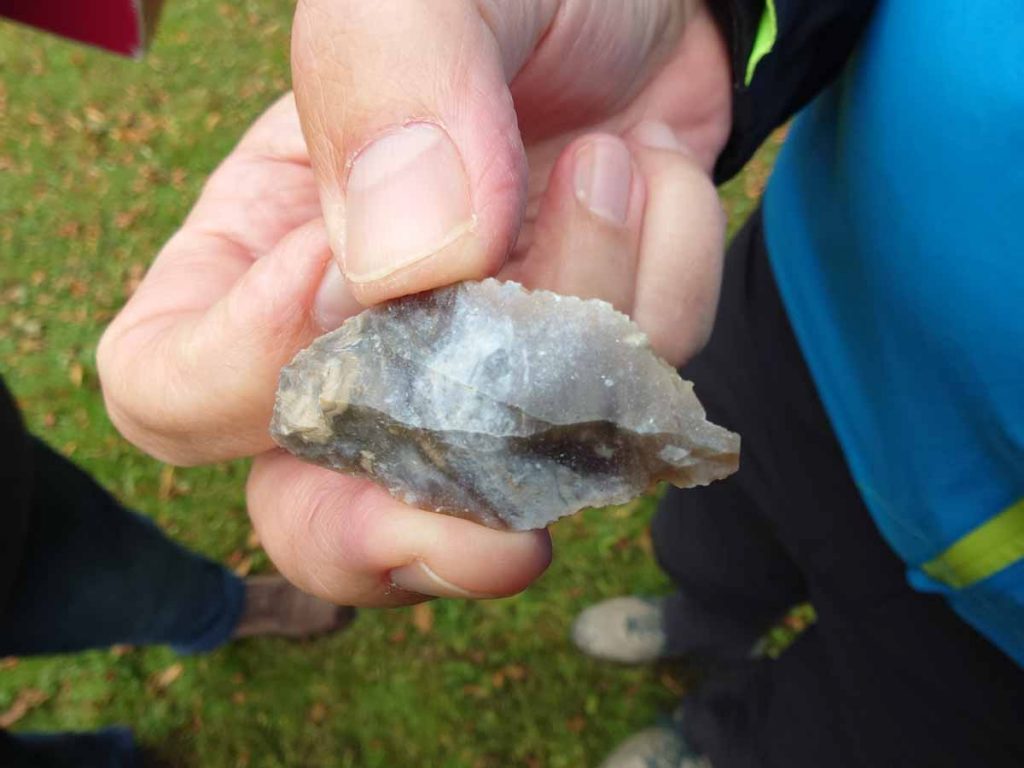
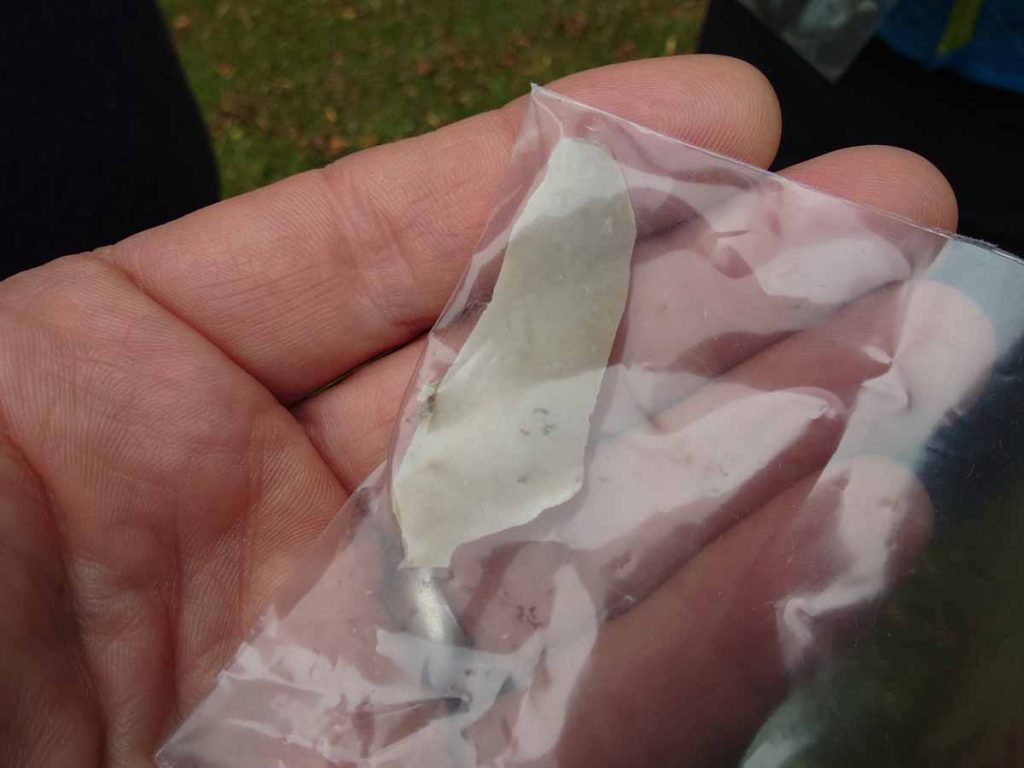
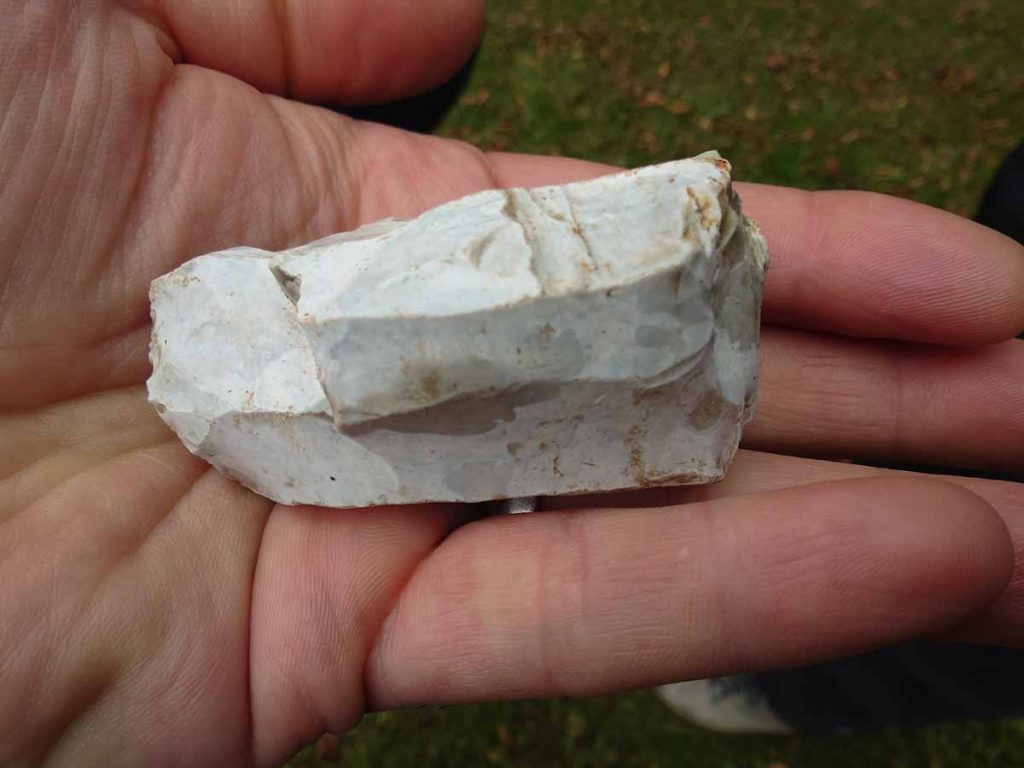
Andy opened his box and showed us some of the flint blades which were perfectly shaped and still razor sharp. The problem of cutting a flint is to direct the energy when chopping off a part in such a way that it is creating a useful blade or arrow head, because it breaks like glass. I experienced this myself as a teenager at the chalk cliffs of Rügen, when I threw a flint on a granite stone and it jumped right back next to my left eye and I was lucky to have only a cut on my cheek and a black eye.
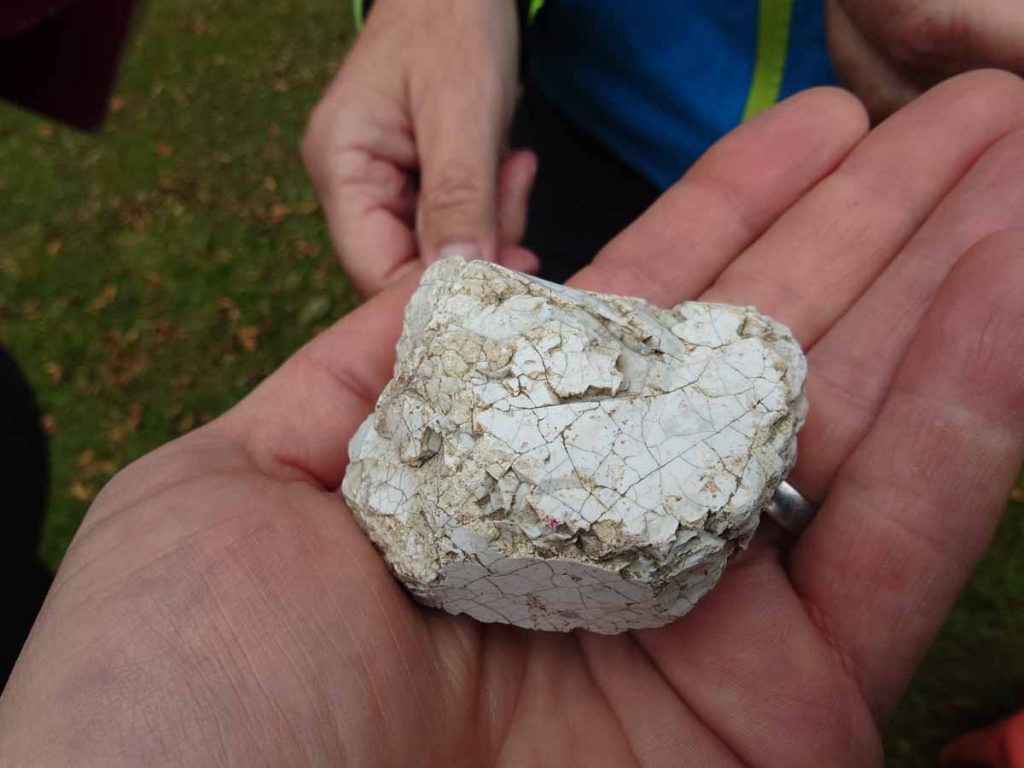
The next thing he handed over to us was something which looked different than the flint and had a quite craquelling glazed surface. It was not a mineral or rock but it was an aurochs bone, which had been cooked for more than nine hours. This way of cooking was also explained at the museum of the cave of Altamira in Northern Spain. They developed a technique of cooking in a sack of animal skin hanging over a fire for a very long time by constantly adding water, which never made the skin burn through, but left its trace on the boiled bones.
They carbon dated that bone and it was already going back to 4700 B.C.. But more layers of flintstone were unveiled and the latest strata were going back to 8800 B.C, which brings us close to the last ice age. So why where there people settling at this place over thousands of years even back in the Mesolithic times? Well the secret lies in the sources of this ground, which are thermic and have a stable temperature of 11°C-16°C
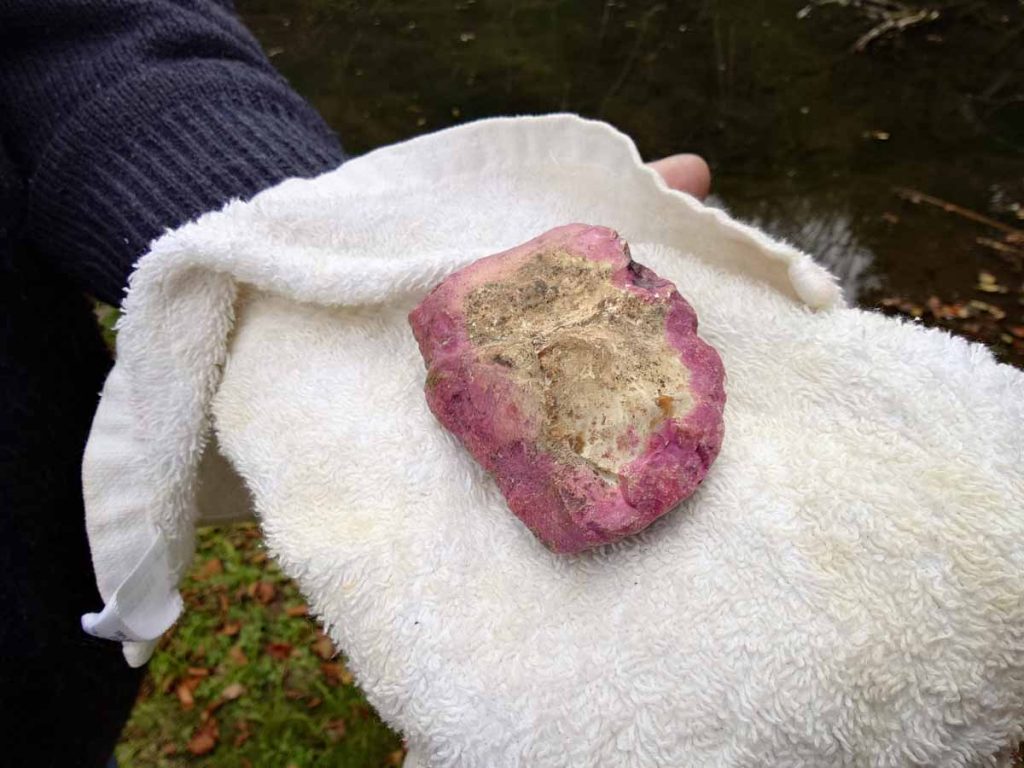
So even in the ice age plants were growing at the shores of this warm river, which made it attractive for fauna and flora, which led it to be one of the best hunting grounds. There was even a specific algae called “Hildenbrandia Rivularis” growing under these special conditions which had the effect of turning flintstones into a purple colour. That could have been used for even creating a “rouge” with animal fat. Unfortunately there were no caves around like in Altamira to paint in, but it brings us back to Eleanor of Provence’s favoured colour. Anyway human beings had left their footprints here for thousands of years, long before they set the stone circle of Stonehenge.
I said to Andy that there we are connected now through this history because the Starnberg / Würm lake gave the name to the last “Würm Ice Age”, and we had also by the lakeside close to the “Isle of Roses” remains from settlements from neolithic times dating back to 5000 B.C., but probably missing flints made in Great Britain.
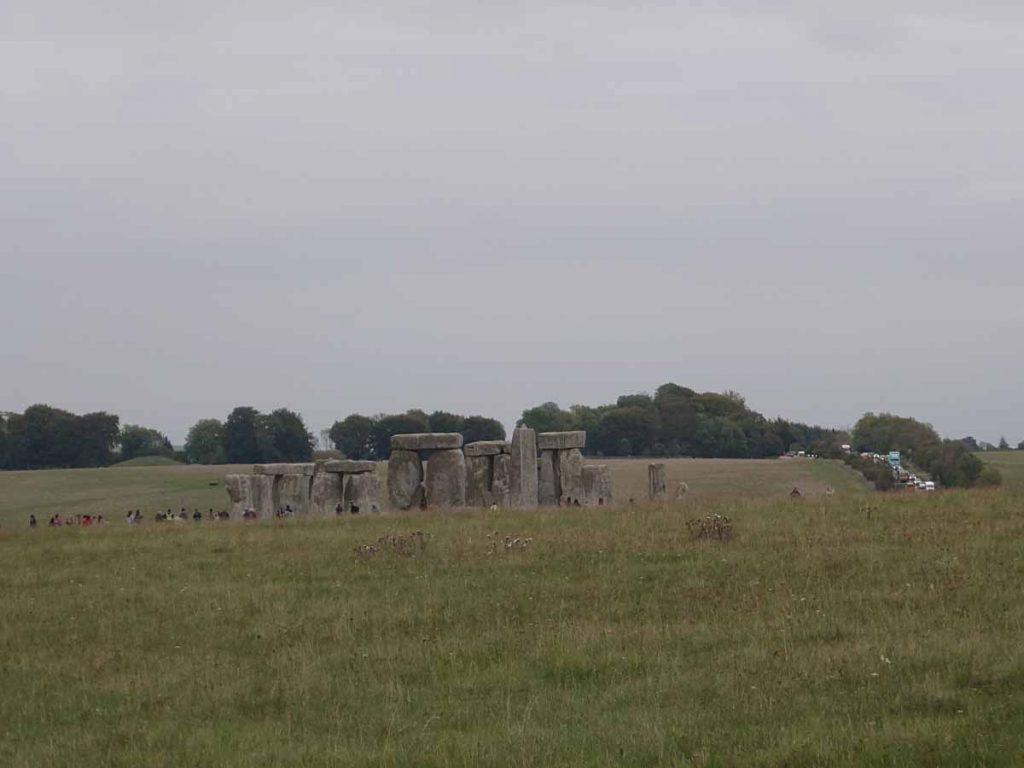
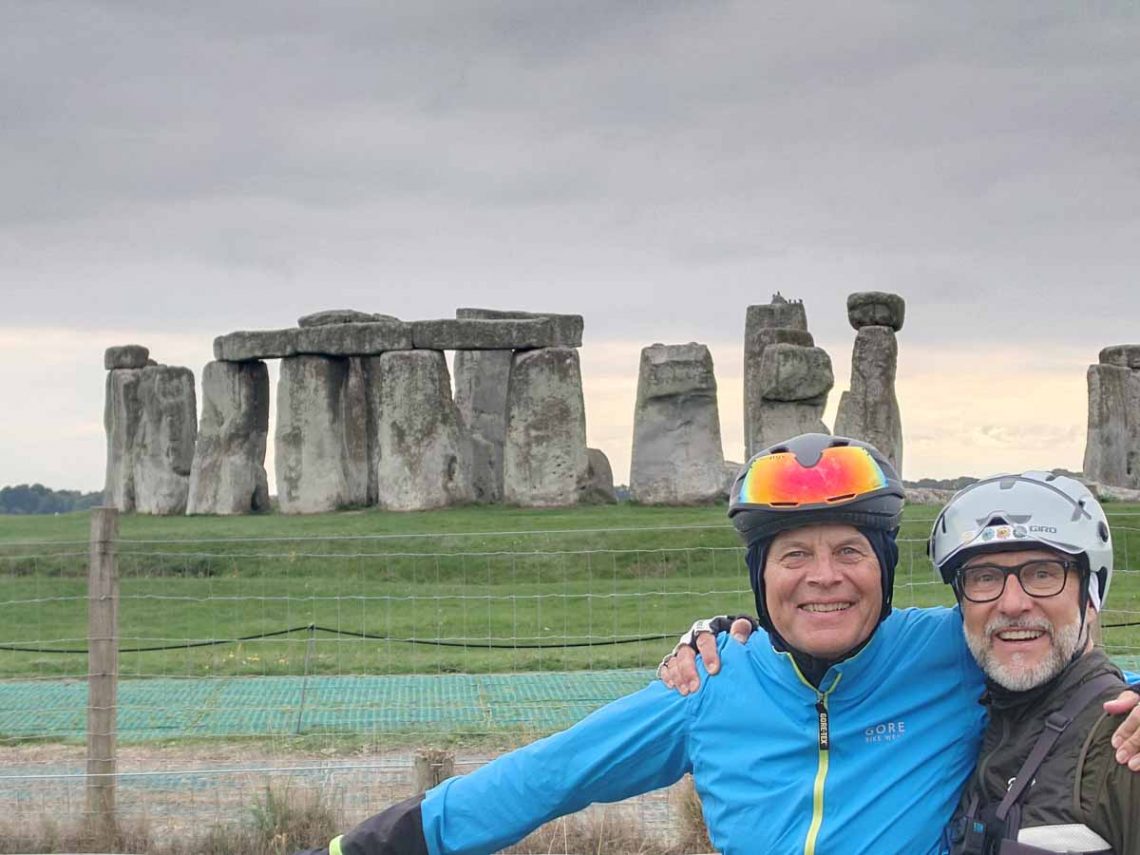
Before Andy had to leave he still showed us his private route to Stonehenge that would allow us to get there without having to pass through the visitors centre and pay a fortune to be taken there by bus.
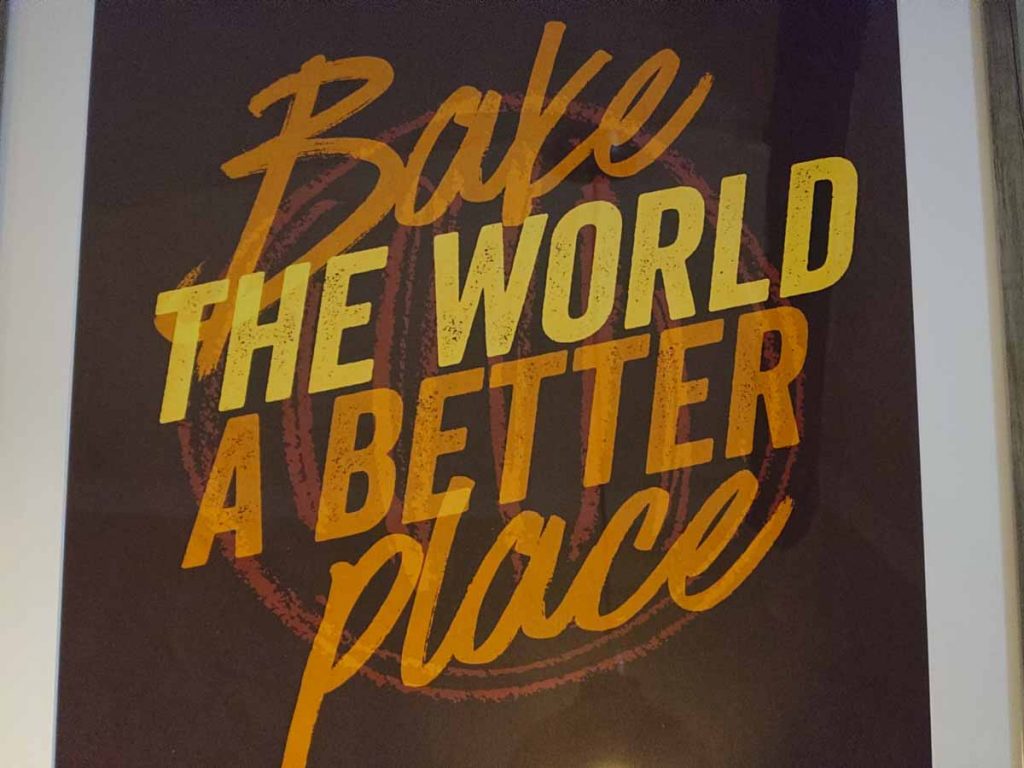
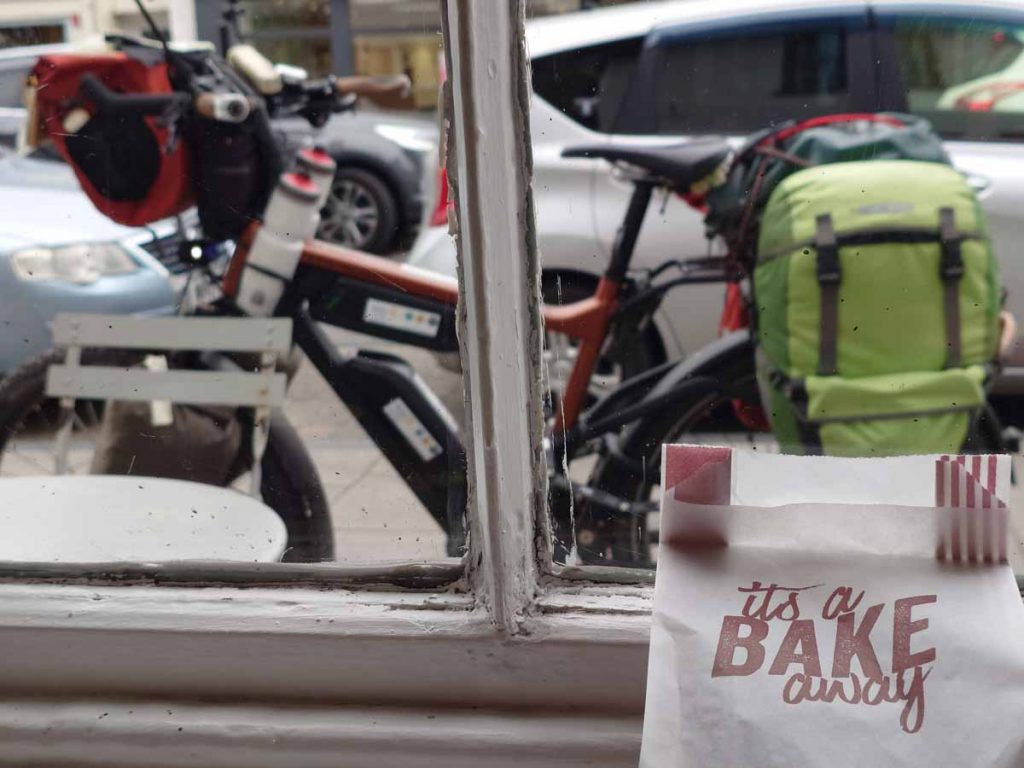
We had lunch at a bakery in Amesbury with cool posters carrying slogans like “Bake the world a better place”, and after having heard all these incredible stories of what this world was all about we headed towards Stonehenge. What a crazy planet we were living on.
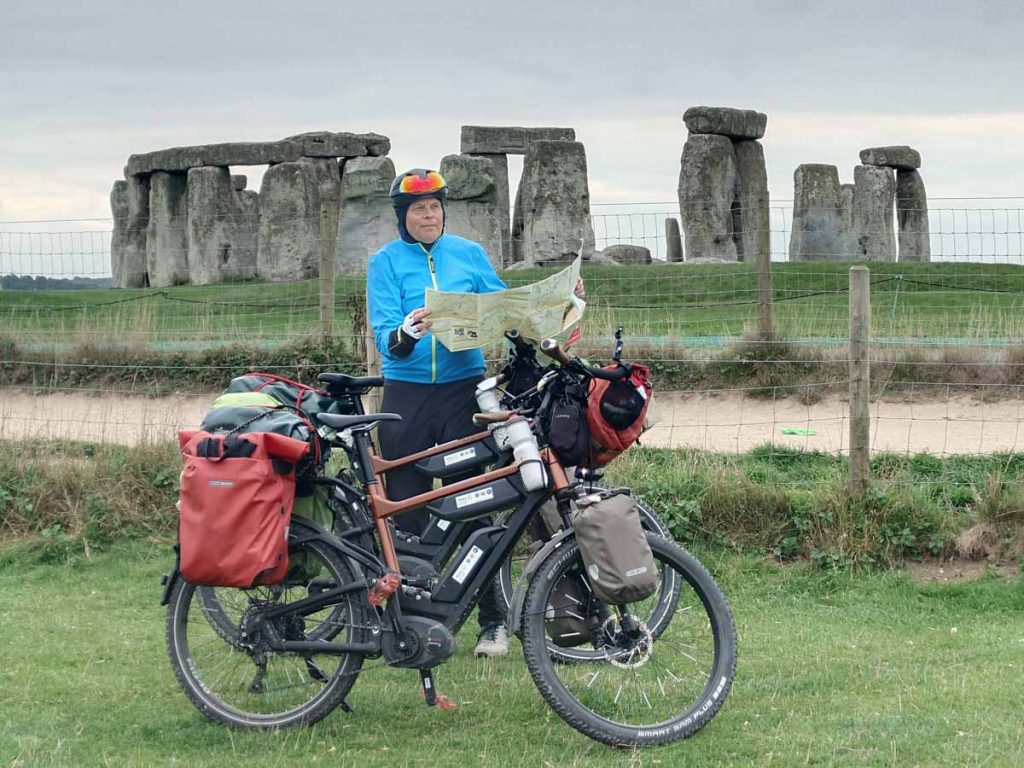
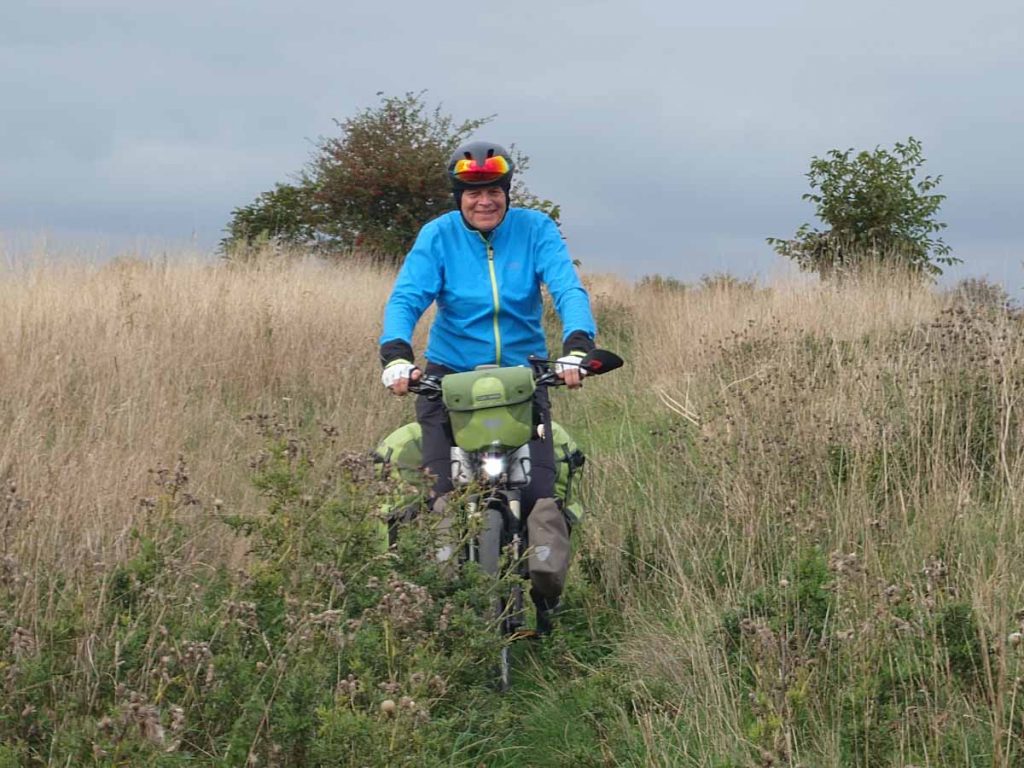
It was quite majestic to be biking towards this prehistoric megalithic structure through green fields without being in any traffic jam or forced to be pushing our bikes due masses of tourists. We were just on the other side of the fence. But the trail we were biking on was full of flints and after experiencing how sharp a broken flintstone can be, it was not very reassuring to constantly be on biking on it, but we had no choice. You could still see the hills of Stonehenge from far distance, but we were completely alone and made pheasants flee out from the fields as they didn’t expect us at all.
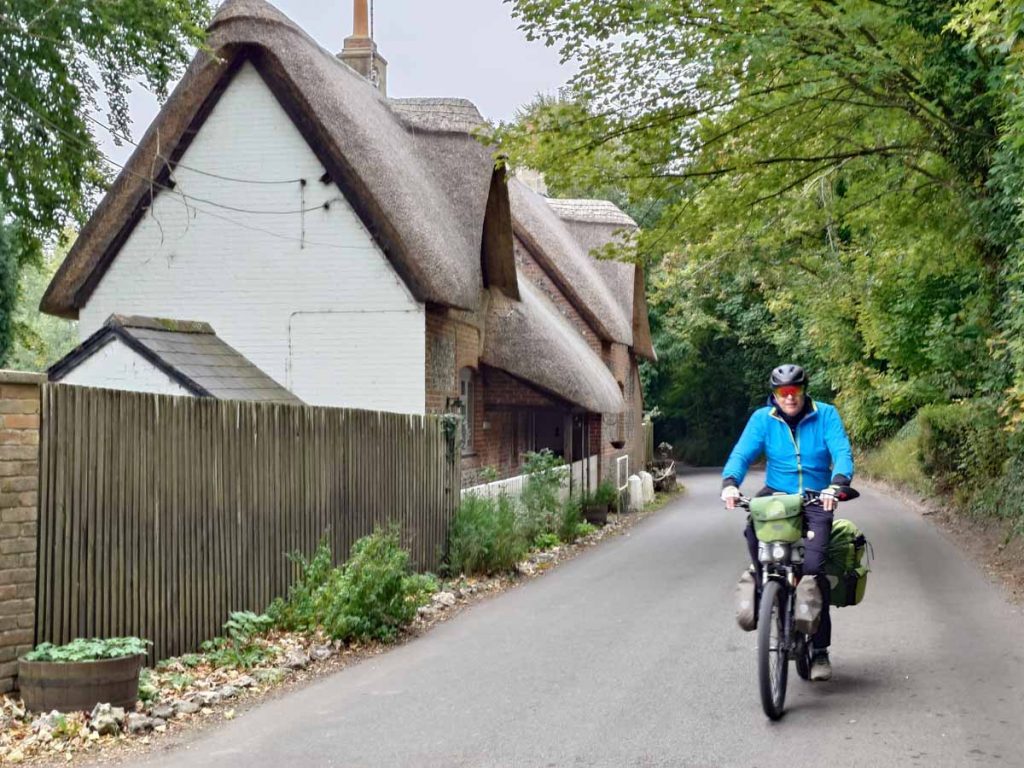
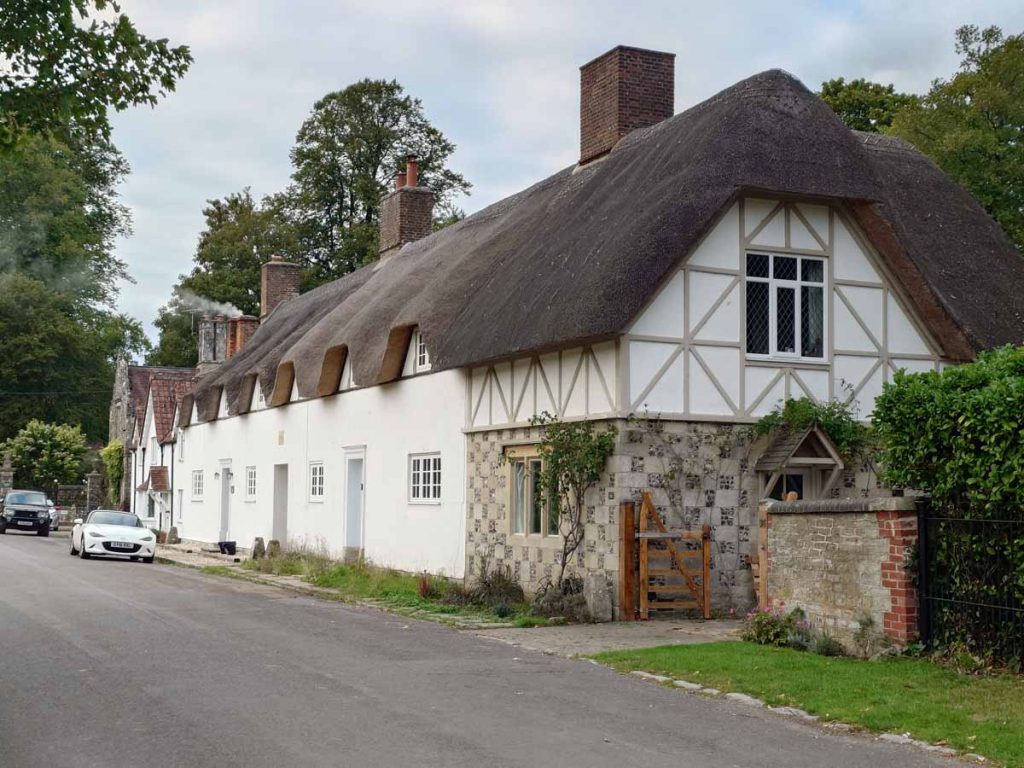
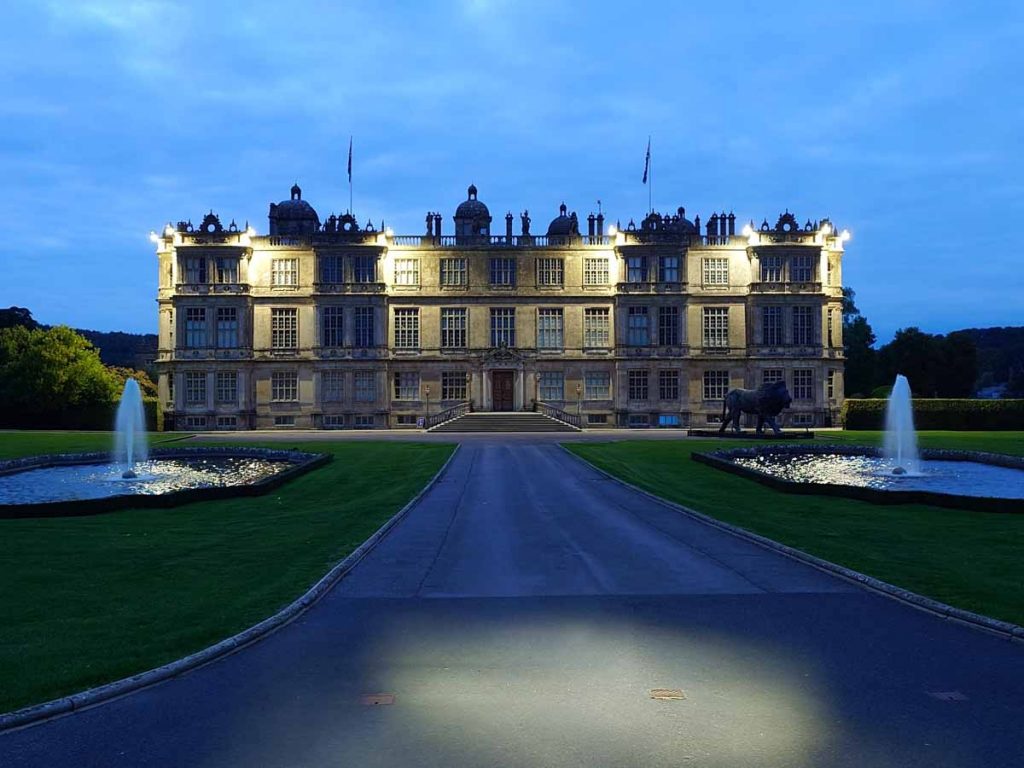
We still had three hours to go and passed through beautiful Miss Marple villages, fields and big forests. The sun had already set when we had to cross a huge Safari Park, where we passed some animal grid barriers and were afraid of running into hyaenas or monkeys as they were shown on huge posters. But at the end we were safe and saw only a beautiful English Park with a castle at the foot of the hills. We were rolling down, while I was happily singing surrounded by so much beauty. At Longleat House it would have been great be guest in such a castle, but unfortunately Robert hadn’t had booked the West Wing for us.
We continued into the night and finally made it to Frome, where we stayed at the Cornerhouse. We had dinner at the Cordero Lounge and couldn’t believe what an intense experience we had had that day.