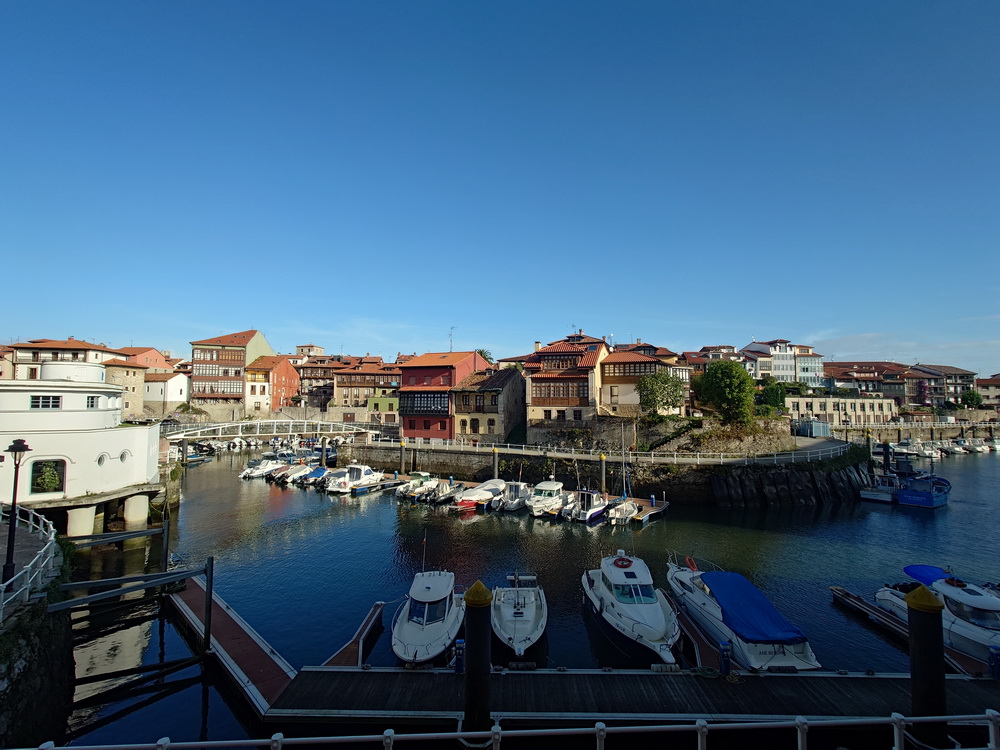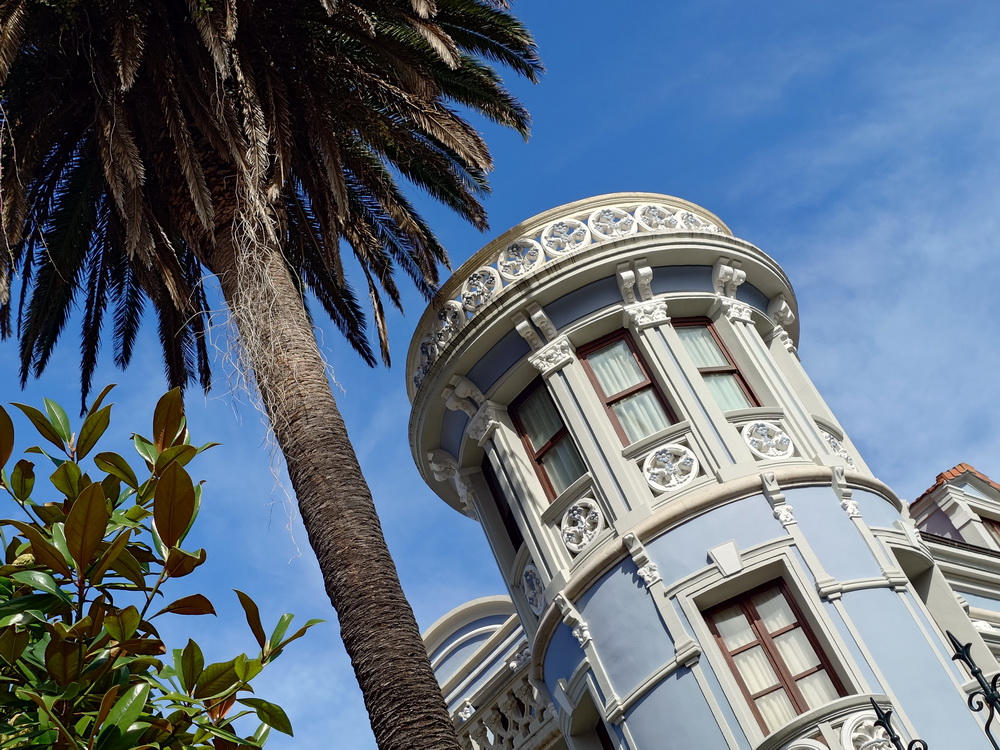

The harbour of Llanes presented itself under a crystal blue sky this morning and the sun was already warming up the colourful facades of the buildings. Time to get on our bikes and keep on moving into a completely new direction. But first Robert went to the post office to send a thick envelope with maps that we no longer needed back home. After that we had breakfast in town as the hotel breakfast was not very impressive. On our way out of town we passed ornate mansions from Spaniards who had made their fortunes in the former Spanish colonies in the Americas.
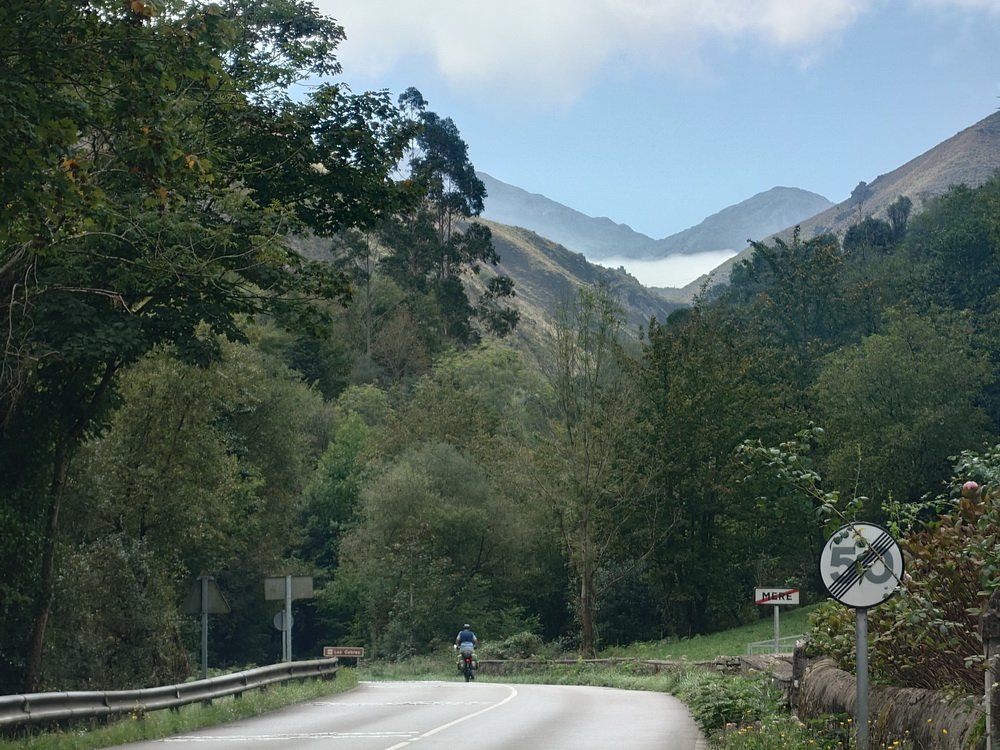
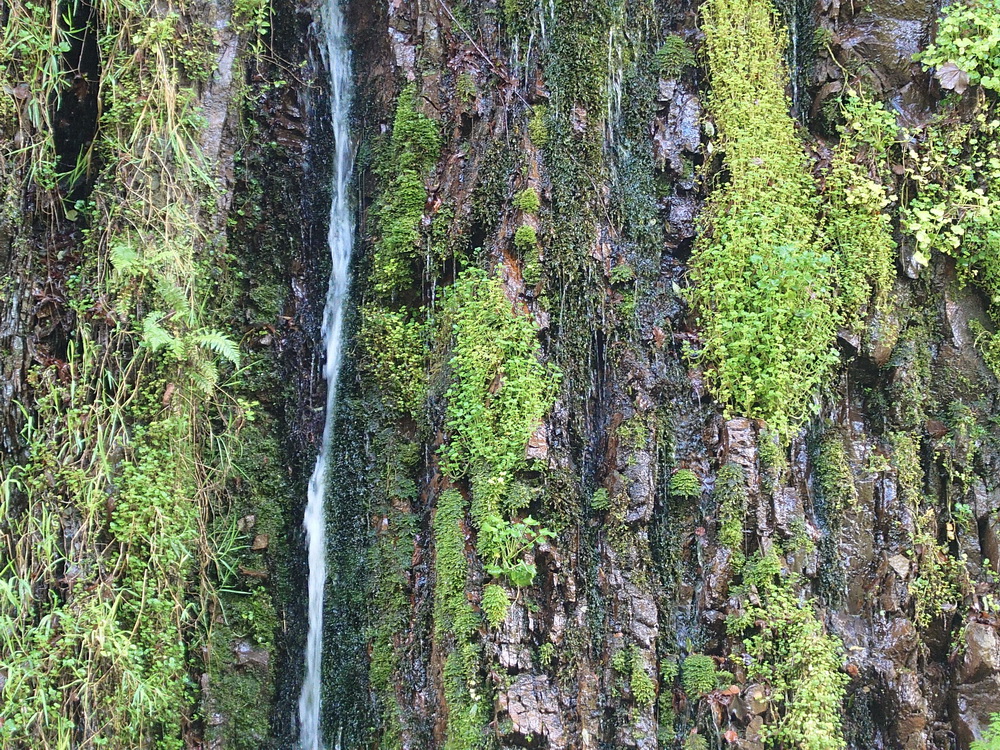
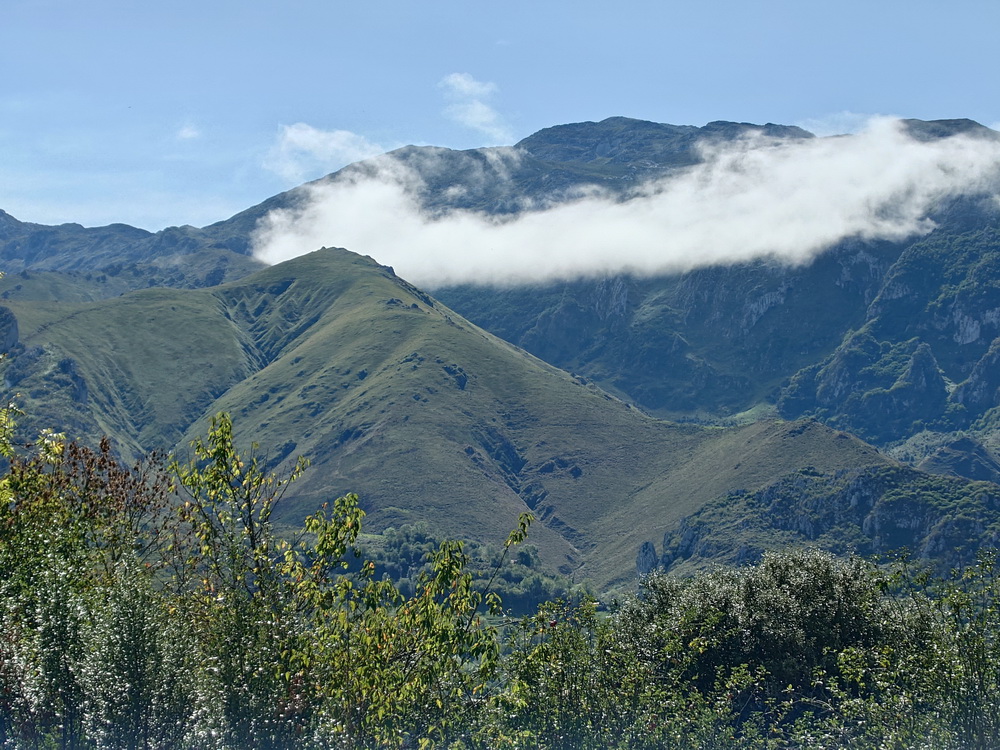
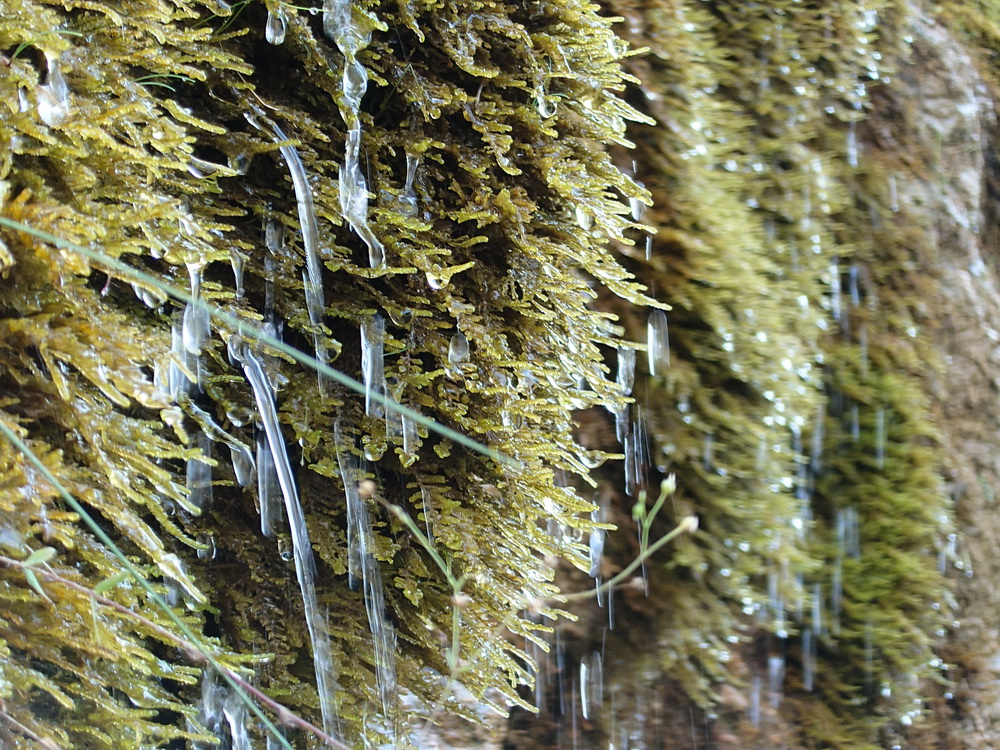
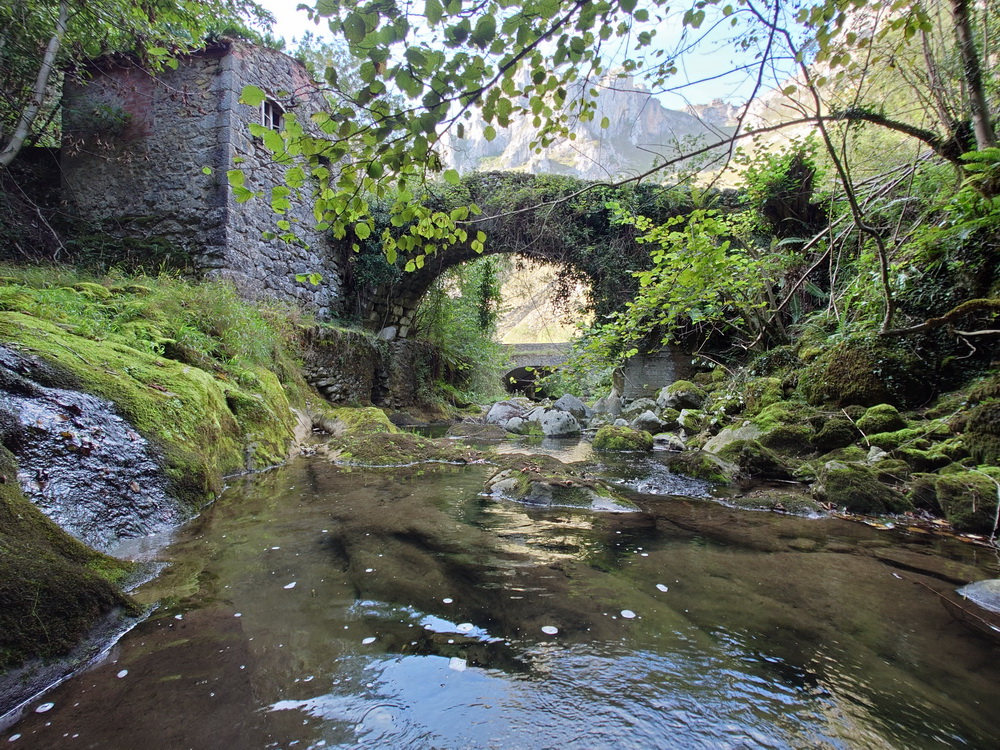
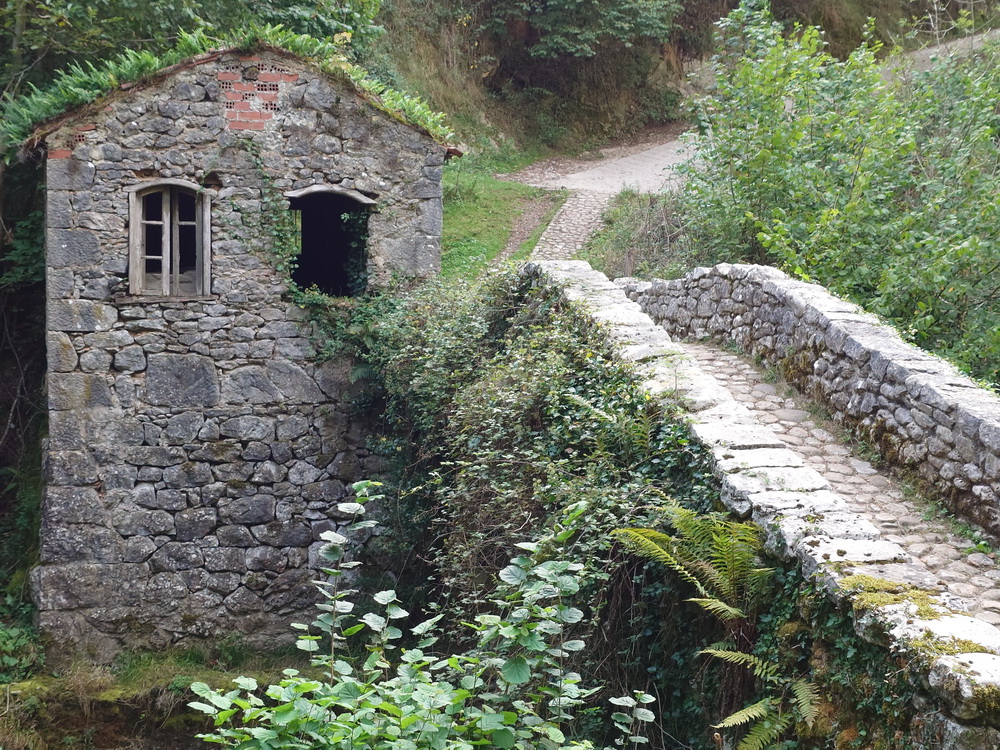
Today we would leave the coast and the official Camino del Norte to make a detour up into the mountains of the Picos de Europa. We had even to repeat a short part of the way, returning in the direction from which we had been arriving the day before yesterday to Llanes. Once we crossed the highway we were back in unknown territory. At Posada we had to take the road up into the mountains following the Riu Beón. Some low ocean fog had moved in from the coast and was already touching the first mountain range inland. We made a right turn to climb into the valley of the Riu de las Cabras. After the rain from yesterday everything was like a tropical rain forest and water seemed to come from all sides. There were waterfalls which were leaking through pillows of moss.
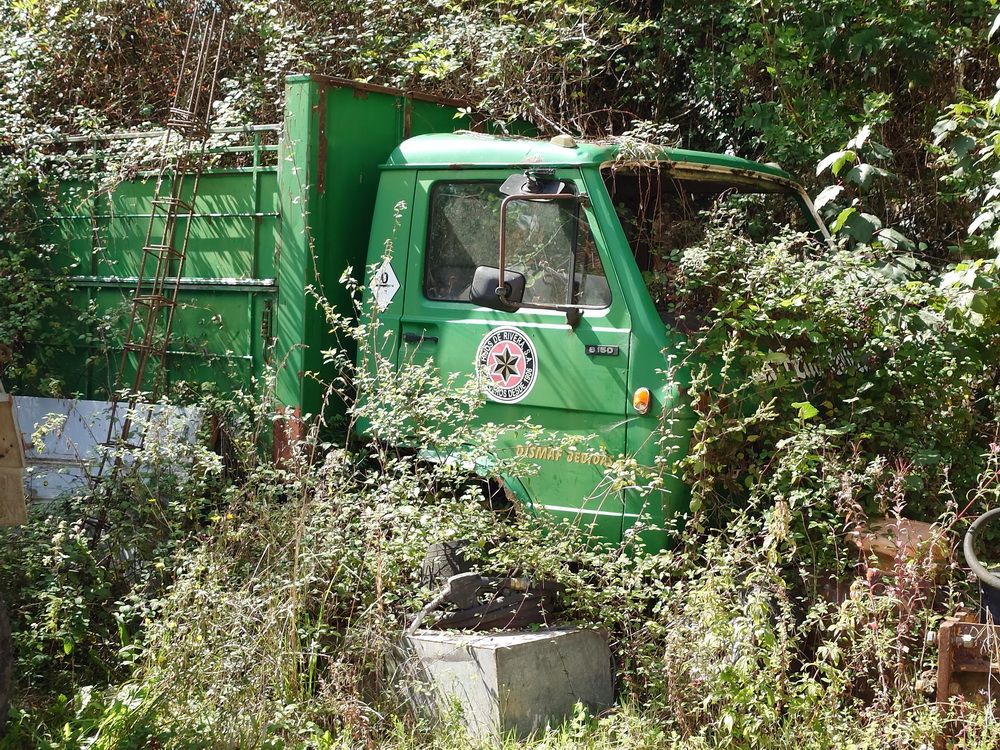
Clear water filtered from the plants, dropping vertically through steep rock walls. Everything was lush, and it looked like the vegetation reconquered any traces left by humans like trucks being completely grown over by climbing plants.
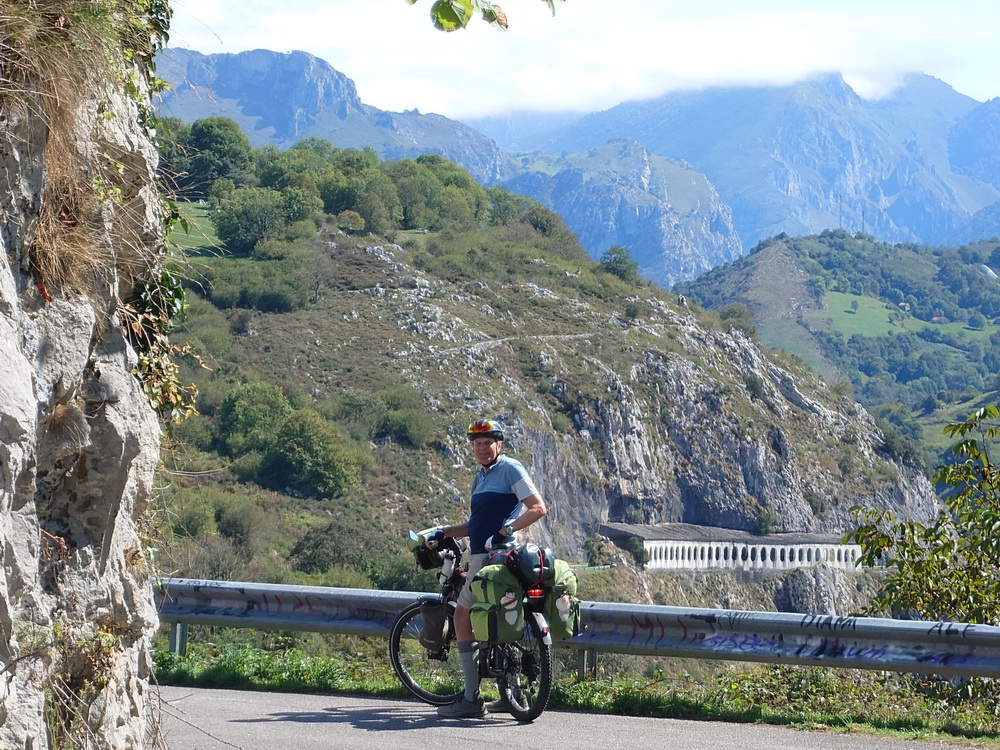
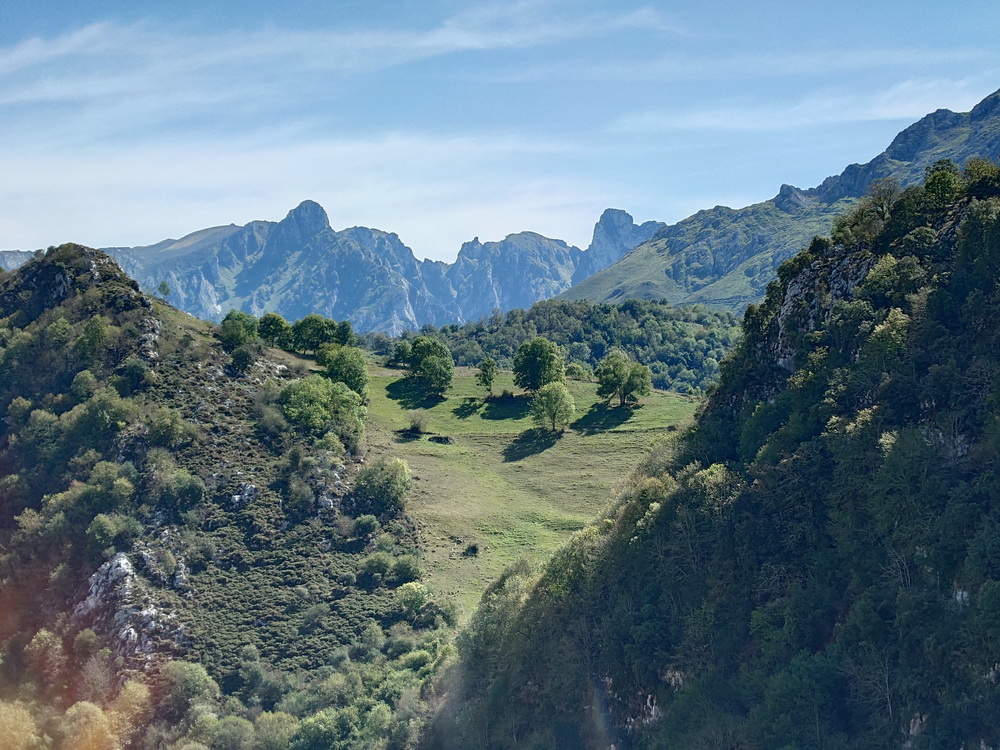
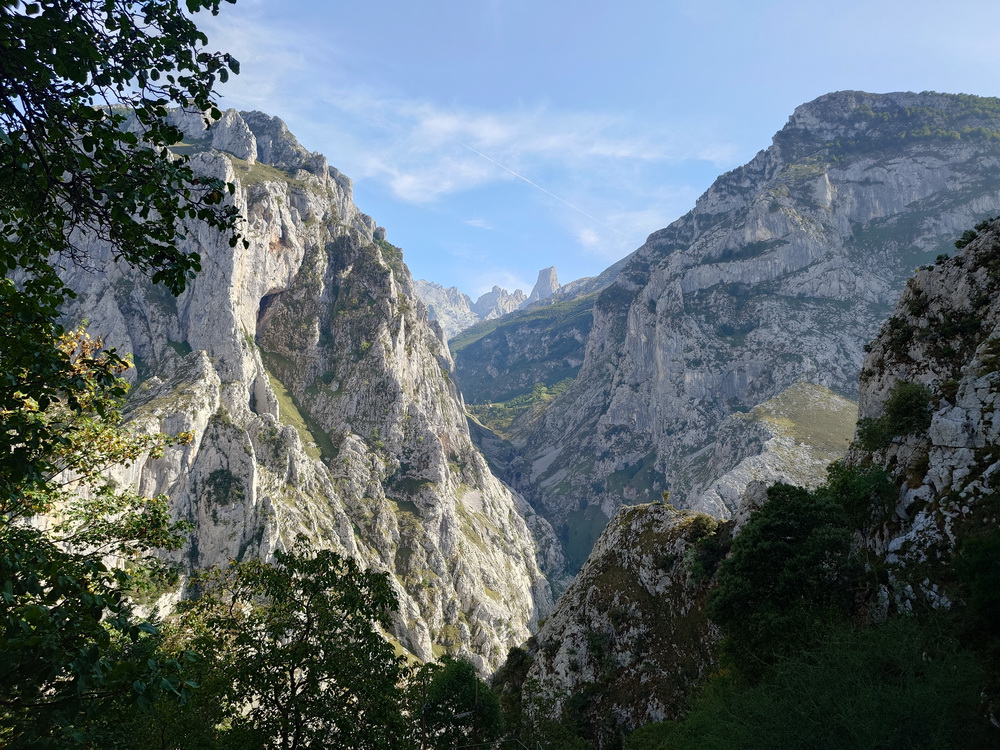
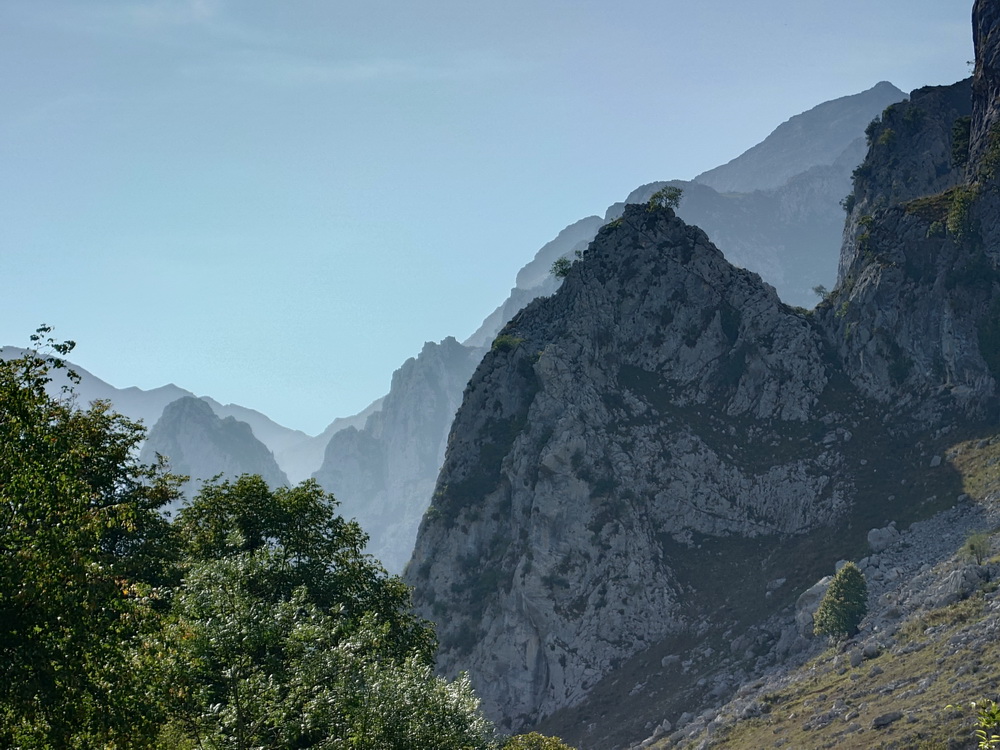
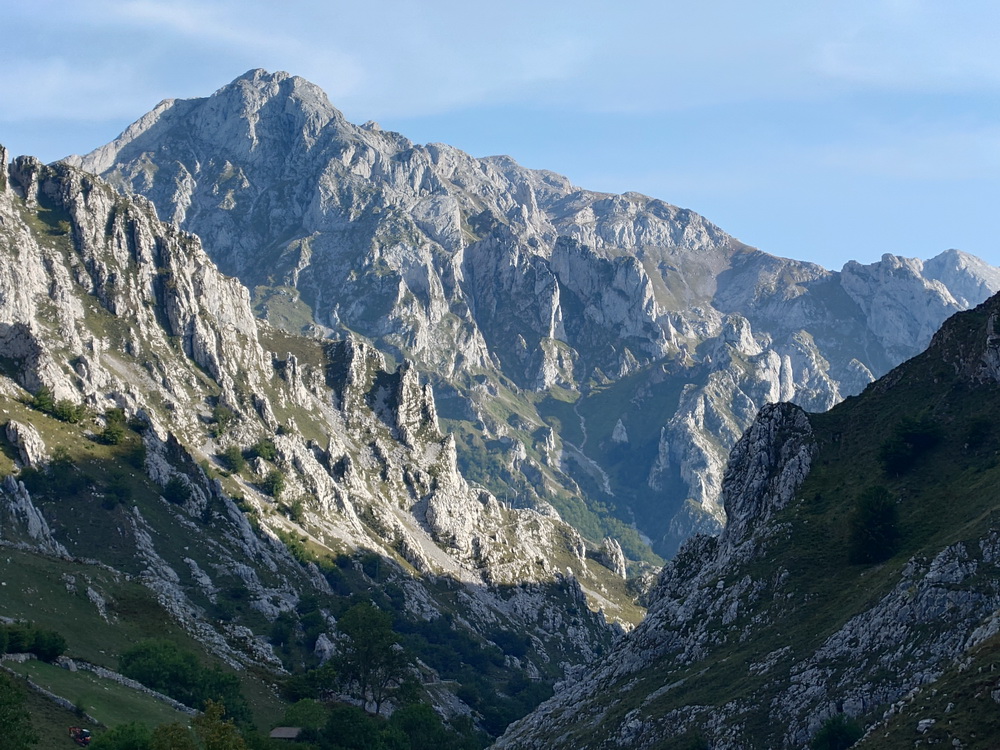
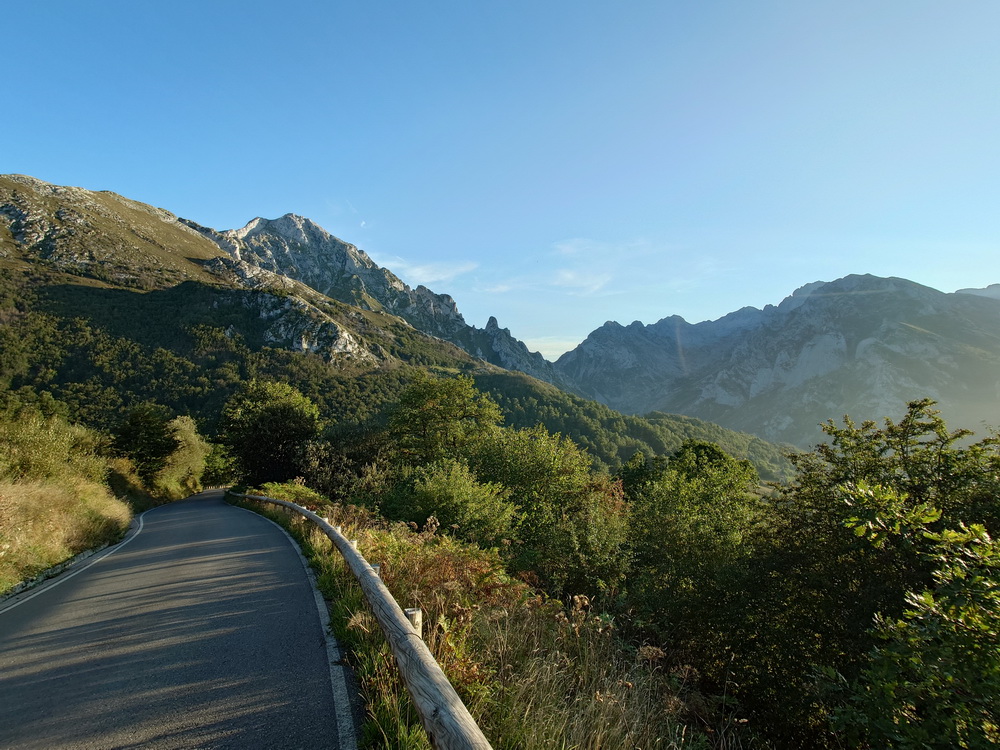
The higher we got the more we were regaining the sunshine breaking through the clouds. Before Ortigueru we joined a busier road where especially the motor bikers were enjoying their rides. We reached a first little pass, where we were facing the higher mountains with their peaks already standing out above the clouds. From here we had to follow the Riu Casañu and lose again about 300 metres altitude. Fun rides down the road made us feel like also being on a motorbike. We were getting to the most beautiful viewpoint of the valley, where it opened up after a steep canyon at the Pozu de la Oración, giving the view free to the main peaks of the Picos de Europa with the most famous Picu Urriellu. The panorama looked to me like we had biked somewhere into Patagonia.
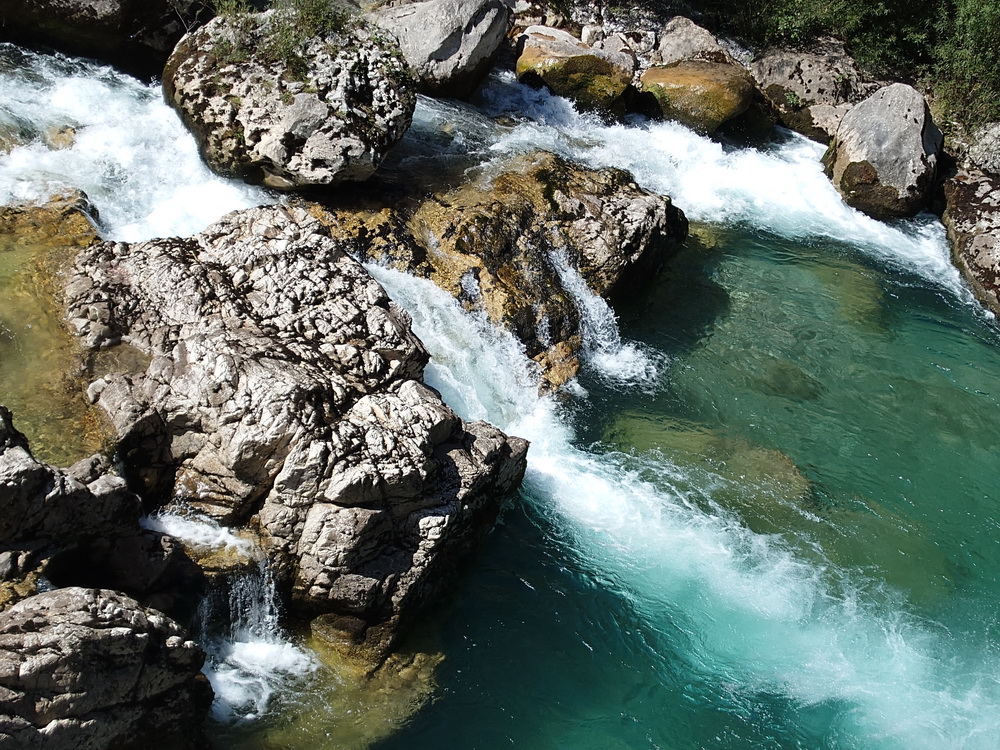
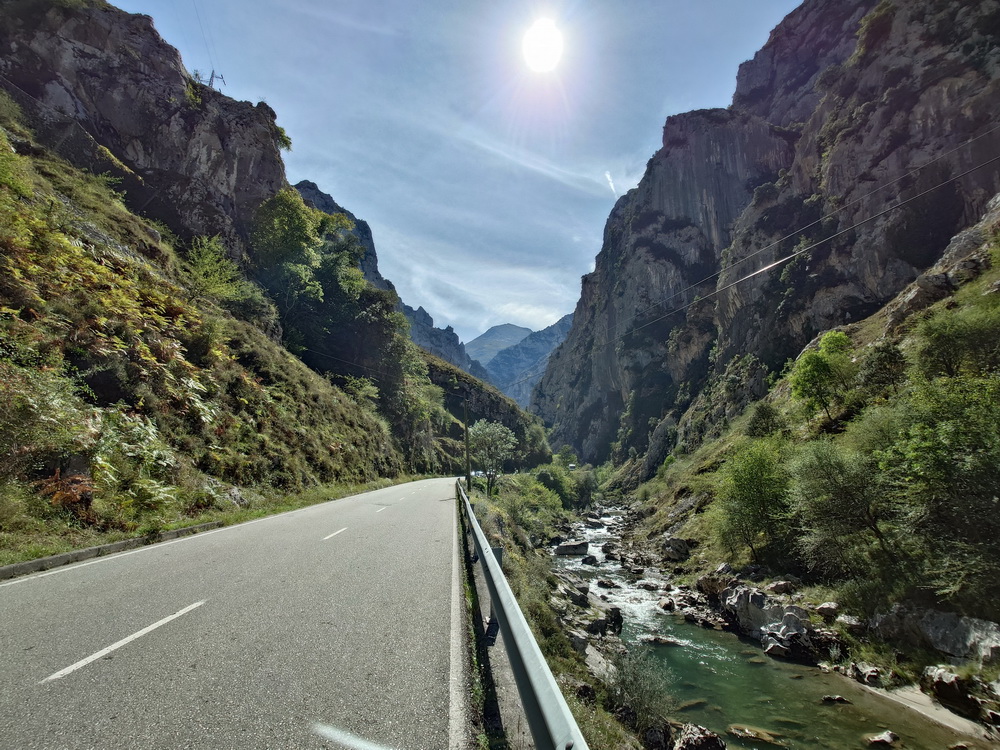
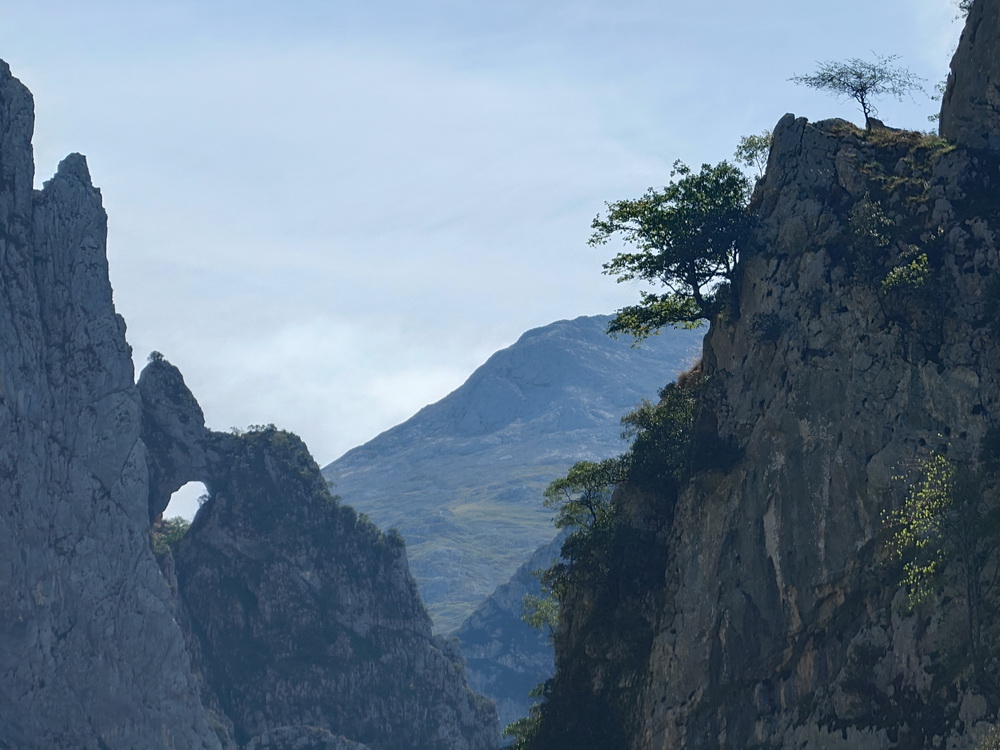
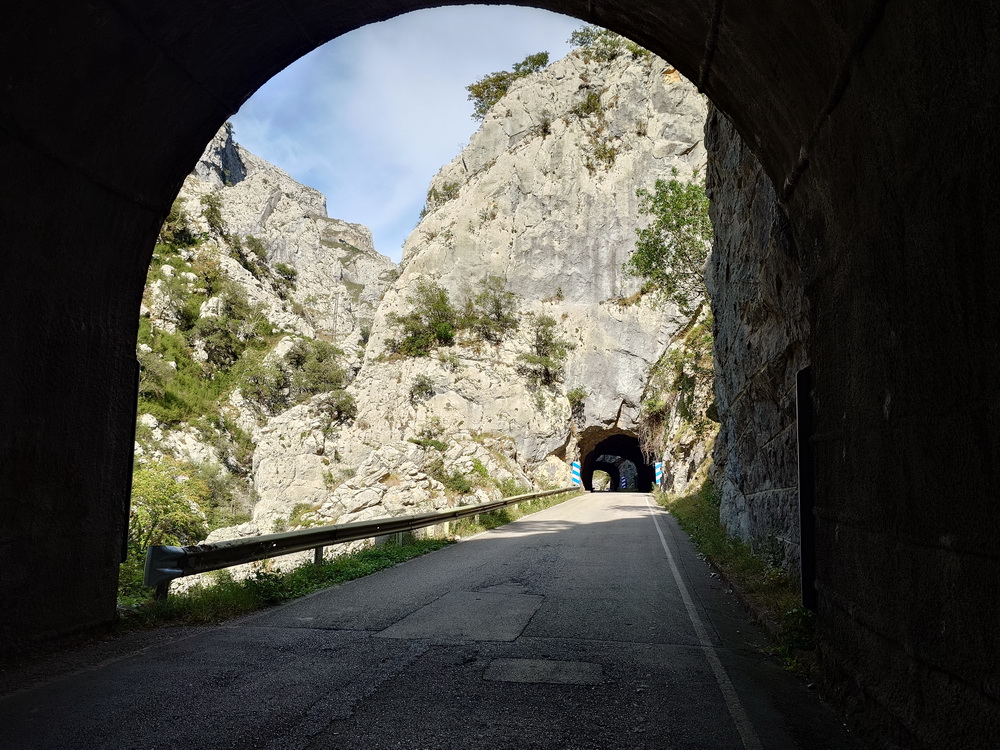
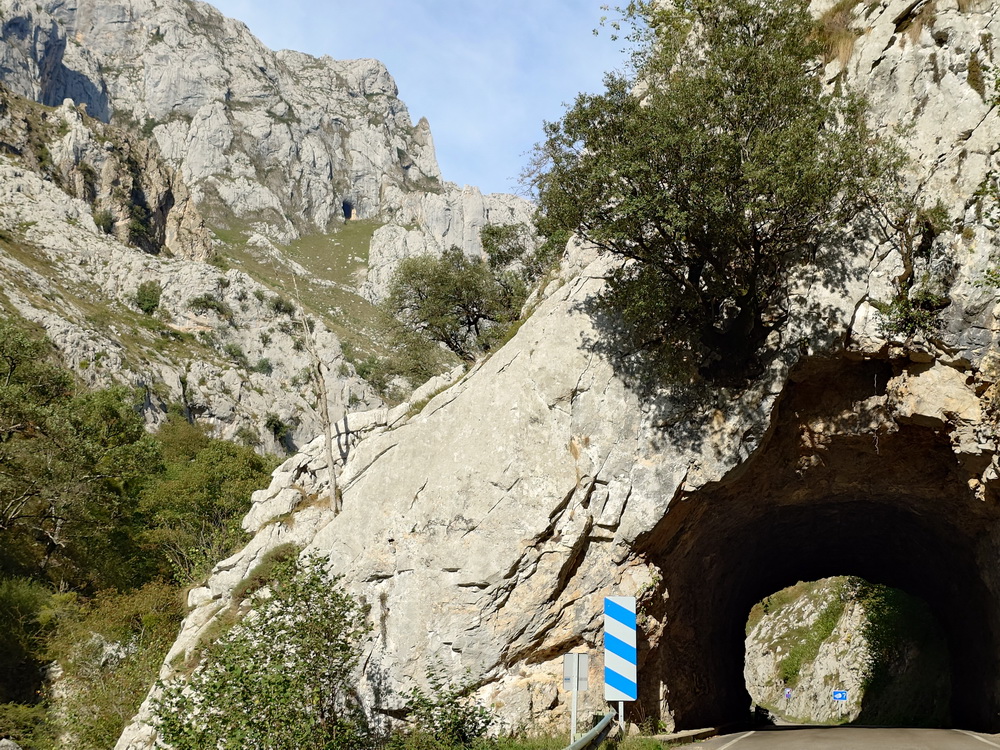
At Arenas de Cabrales we turned right and south into the valley of the Ríu Cares, which cut deeper and deeper between the rocky walls with turquoise clear water accompanying us. Everything looked so lush and green, but it was just a week ago that a drama took place at the end of this valley when a German tourist was deadly hit by a rock due to the forest fires having destroyed the protecting vegetation.
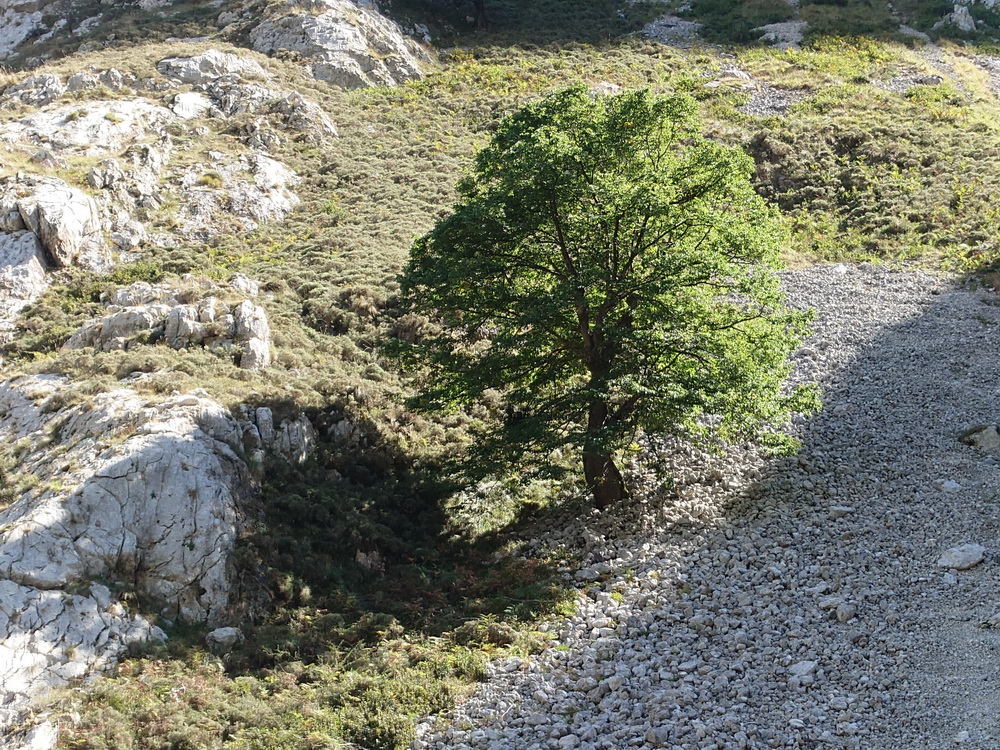
When we were staying at Casa Carmina at Muros de Nalón we had a long talk with Sara and Laura, who told us about a friend who visited them and who was a ranger here in the mountains. They reported us how he was totally devastated by the horrible destruction by the fires and they could tell by the look in his eyes that his life’s work was completely destroyed. It is not only the trees which were burning, especially in the steep terrain the animals were trapped and the wildlife had no chance to escape from the flames. The aftermath left nothing but ash and instable rocks, which caused even weeks later this horrible accident killing this young German lady although the trail had been reopened. The Ruta del Cares through the canyon of the Riu Cares was usually a famous hike for tourists which was closed now.
At Poncebos we reached our hotel Mirador de Cabrales and had some lunch.
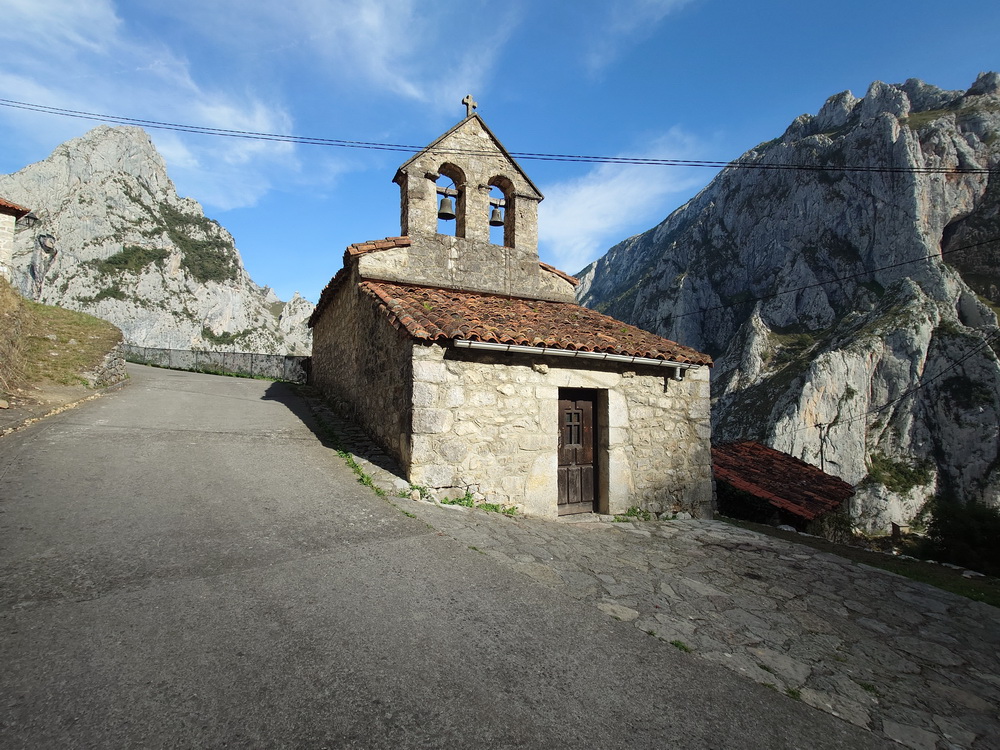
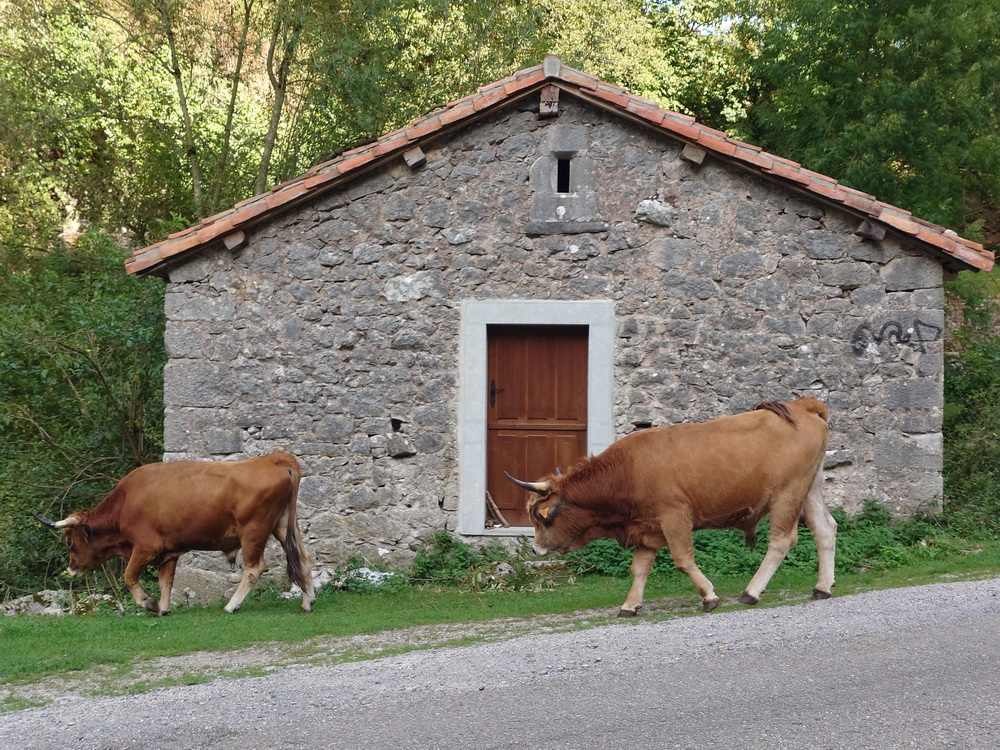
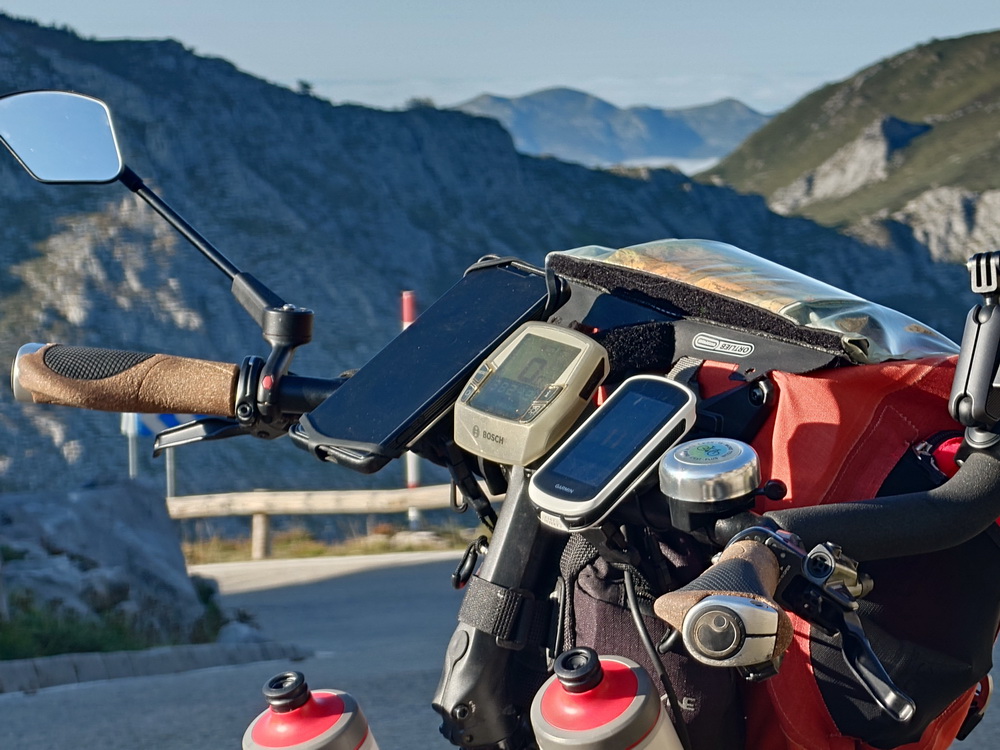
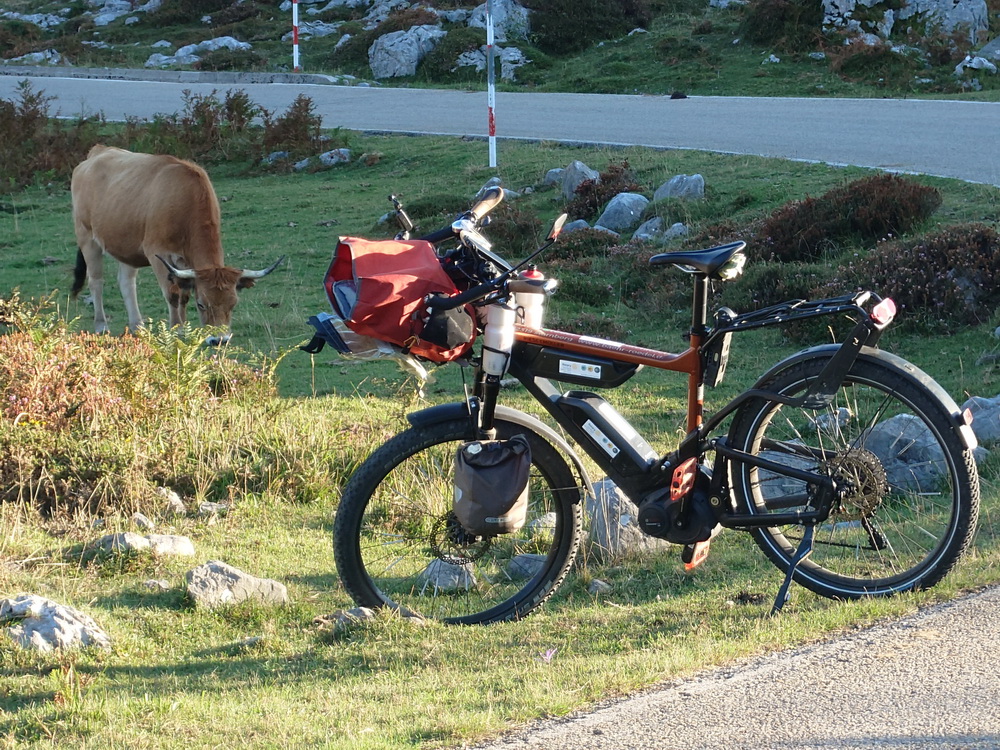
I still felt energy and was being pulled to continue up into the mountains. Robert was happy with what he had reached for the day and wanted to stay at this place. I convinced him to just bike up with me to the Mirador de Urriellu viewpoint at Camarmeña, from where I started my tour up the Ríu Duje in the direction of Sotres. As it was already later in the afternoon most tourists had left this dead-end valley, but nevertheless my Garmin gave me a traffic warning about animals being on the road. At Tielve I saw two cows walking down the road, but they caused no traffic jam because they were happily alone on the road. There was only the public bus coming from the opposite direction and a helicopter team transporting heavy charges for road constructions and food supply for the mountain cabins.
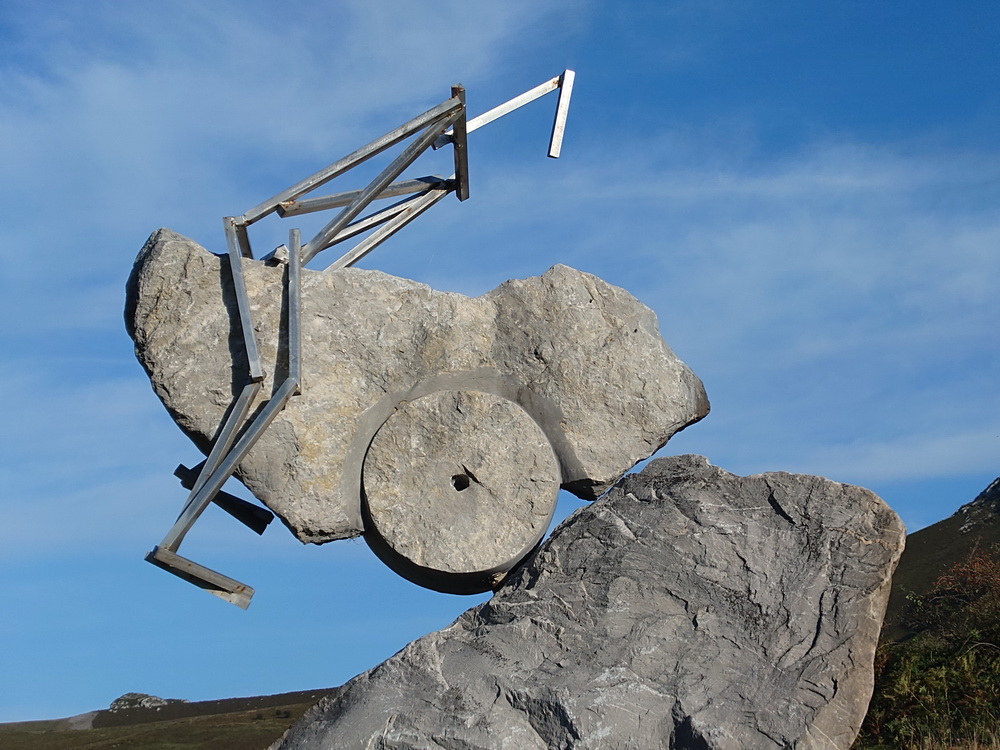
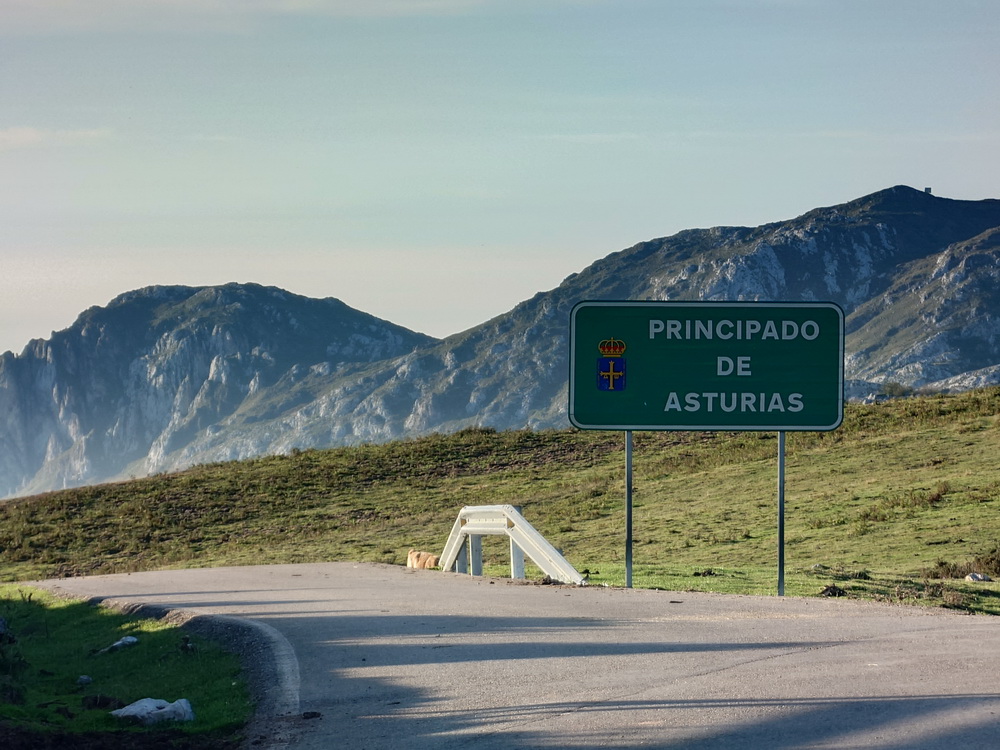
Other than that there was pure silence and mountain scenery. I thought I could have made it up to another view of the Picu Urriellu, but it was hiding behind the Cabeza las Moñas. I didn’t want to take the risk and follow the dirt road to get around it and stayed on the road to Tresviso. This sounded nearly Italian to me, but meant just the place with three views. After the village of Sotres a rock statue for the bikers of the Vuelta reminded me at Caballar that I was on sacred ground, being close to reach one of the Spanish Cycling Olymps.
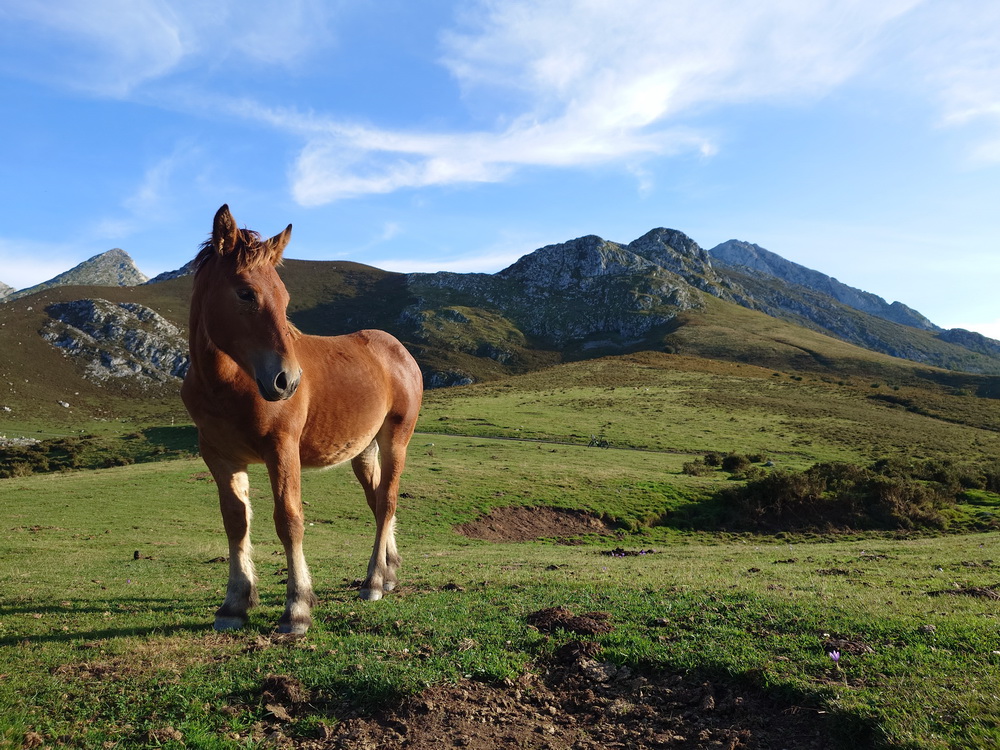
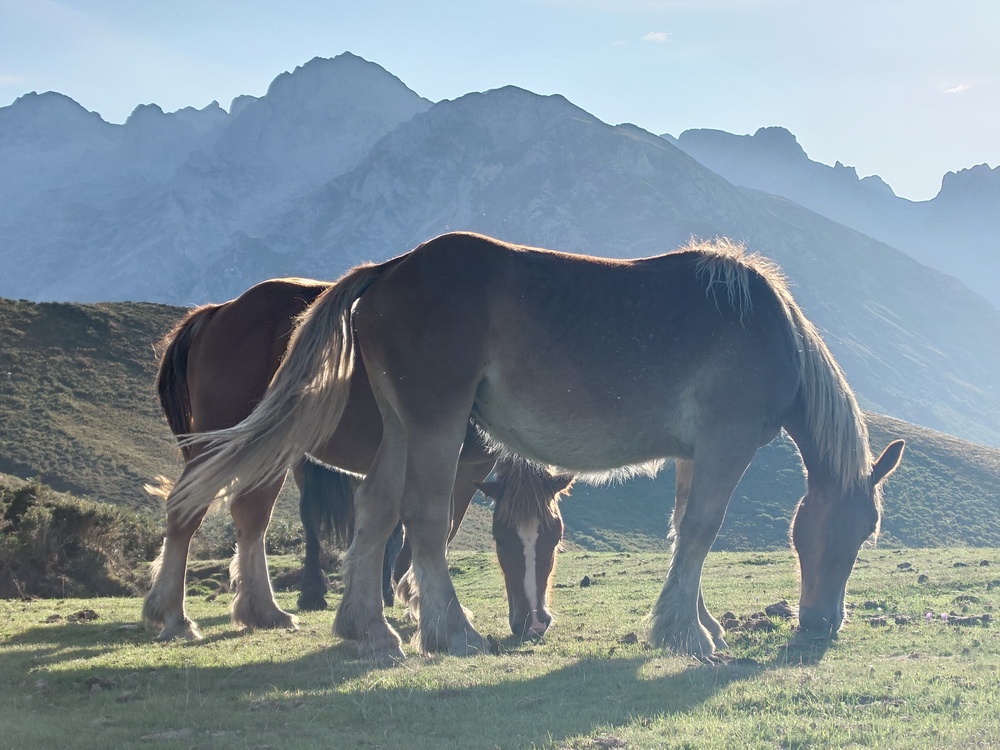
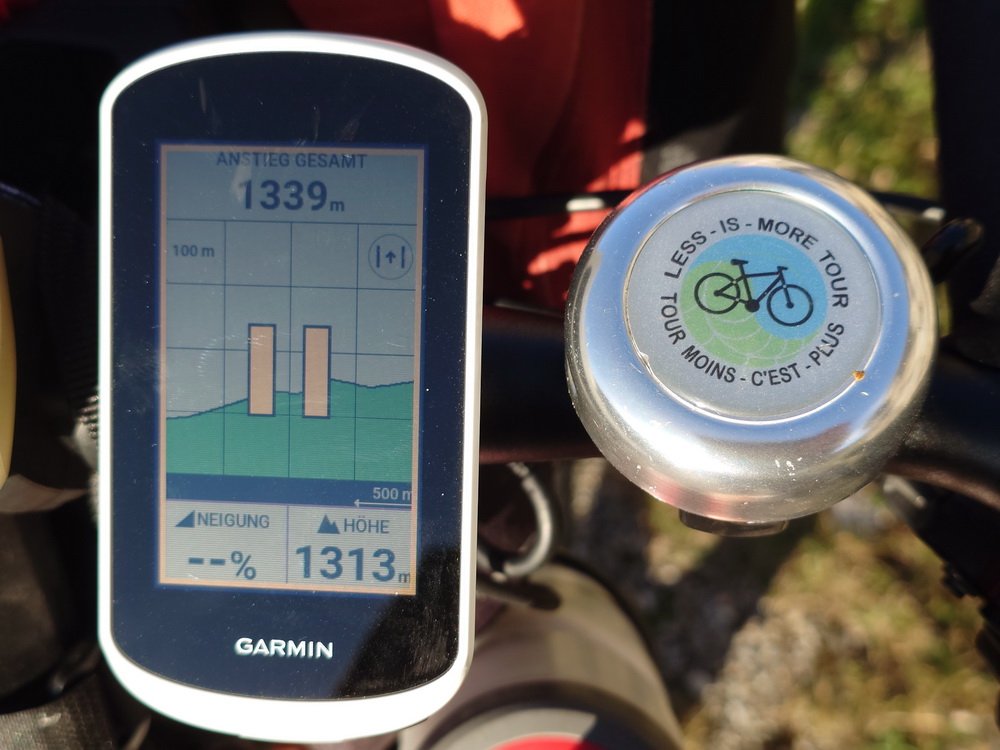
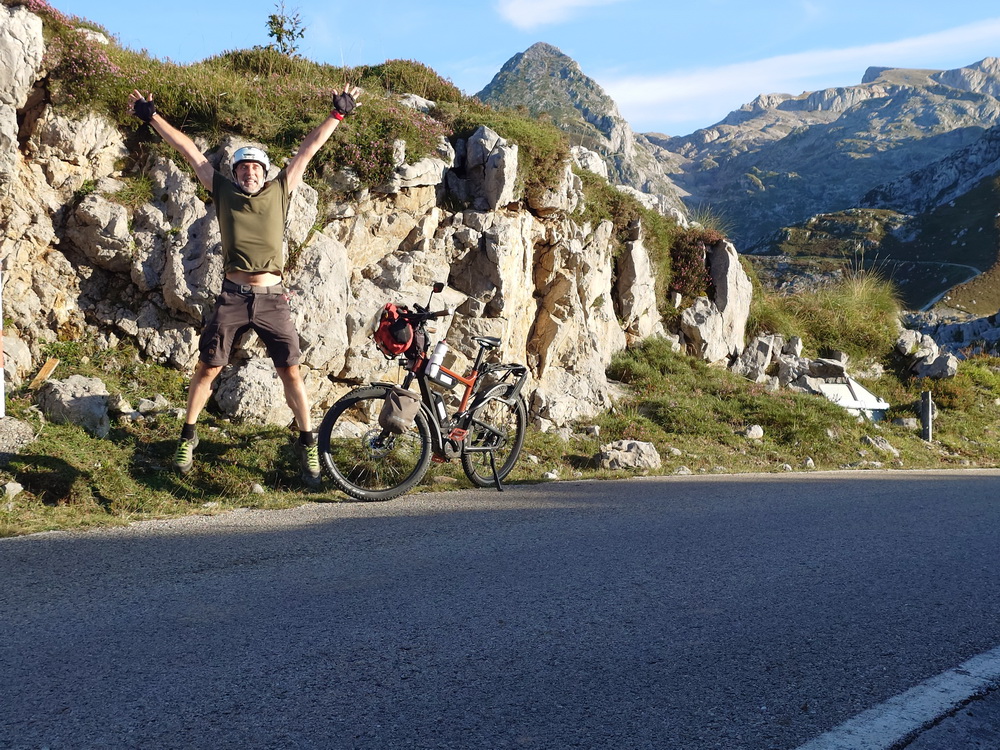
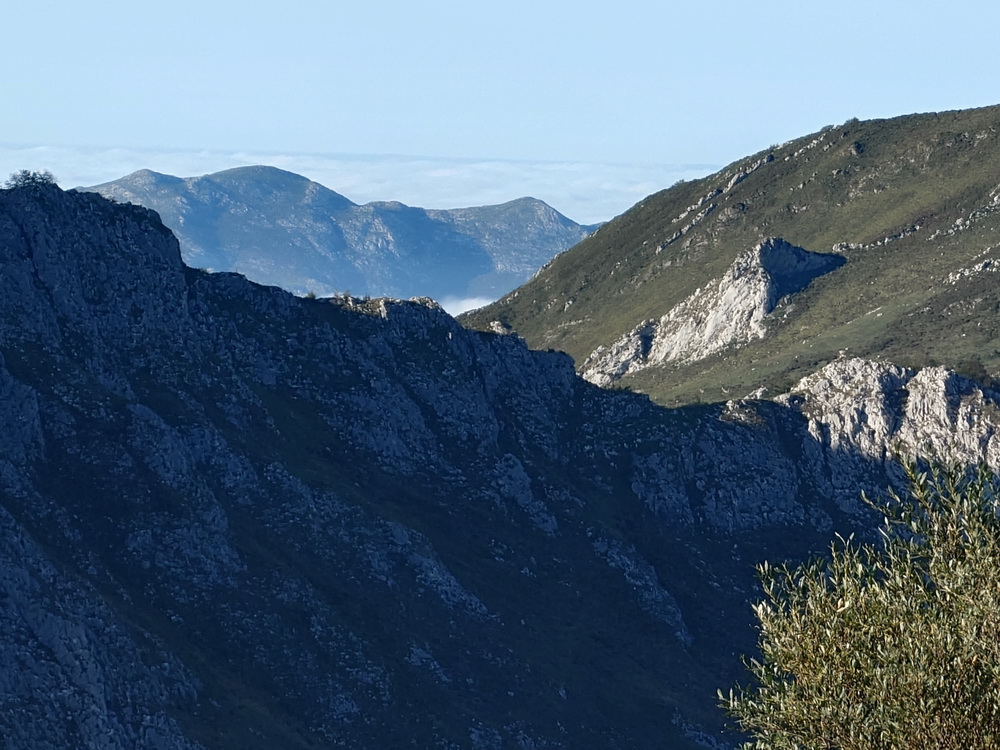
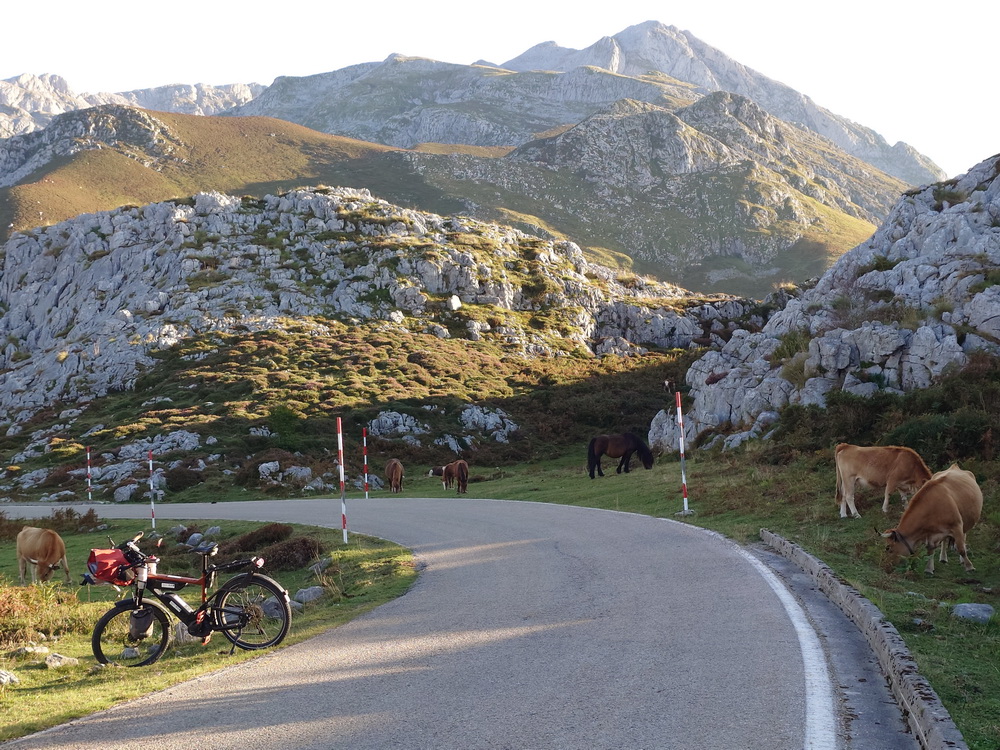
The landscape opened up to a green Alpine meadow where horses were enjoying their freedom to graze in the golden evening sun. The highest point after Hoyo del Tejo was exactly at 1313 m altitude, and from there I could even see the ocean fog at the horizon through the Collau la Piedra. All in all I had made 2.140 m in altitude that day and I felt fitter than ever. I was so proud of myself that I wanted to call Robert and tell him that everything was fine but there was no connection at all.
On my way back I met two motor bikers who had a problem with a Ducati that had lost hydraulic liquid from the brakes. Their two other biker friends had already left to Tresviso to make a telephone call as they had the same problem with their phones, being lost without mobile network up in the mountains. At least their BMW-machines were still working.
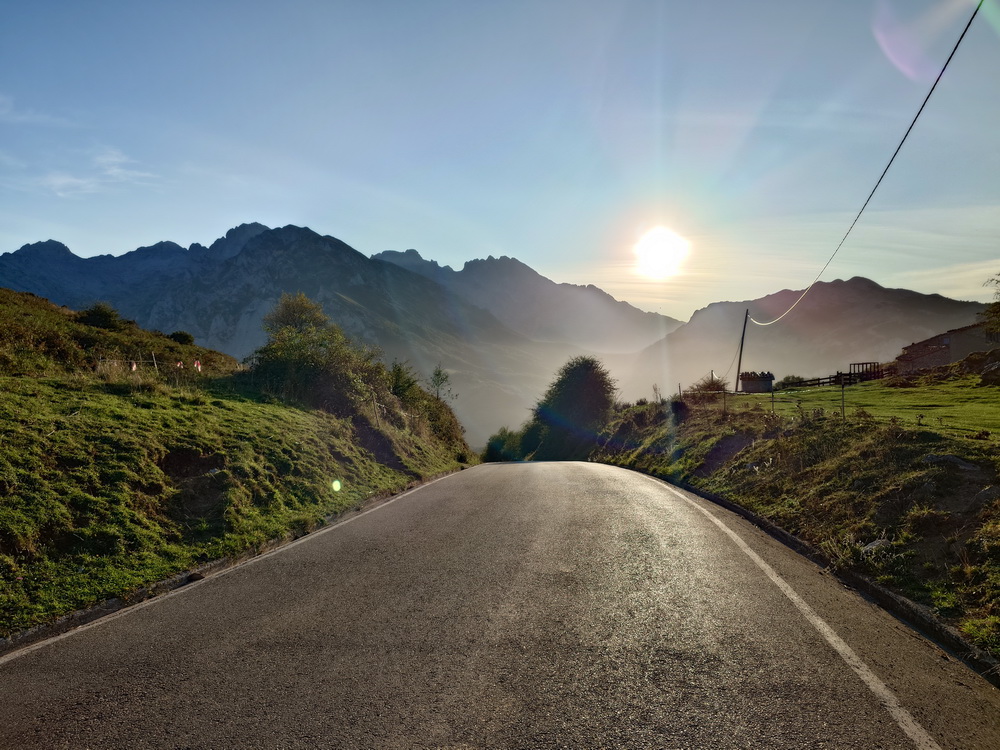
Now I was ready to leave the scenery into the sunset and to put on my GoPro to document a lonesome downhill ride into the valley. What a day and so much to tell Robert during dinner.