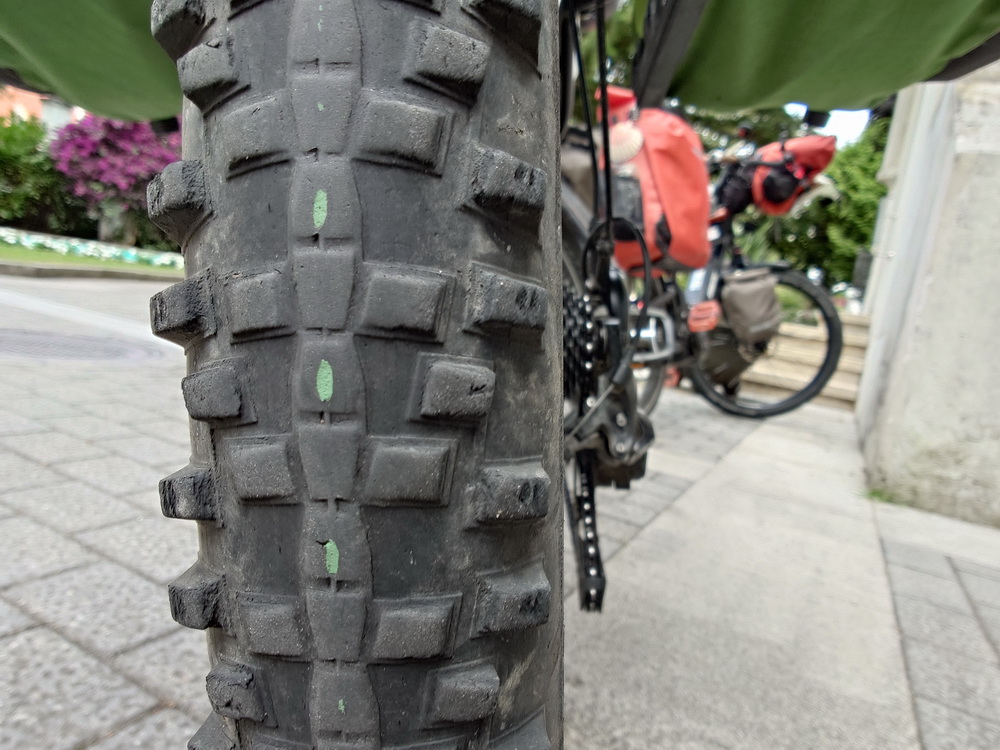
In the morning we had a close look at Robert’s rear tire and it looked already quite tired and used, because the inner material started to show. We saw there was a bike shop in Navia, but it was closed and we took the risk to continue. But for the pilgrims there is always a Saint watching us.
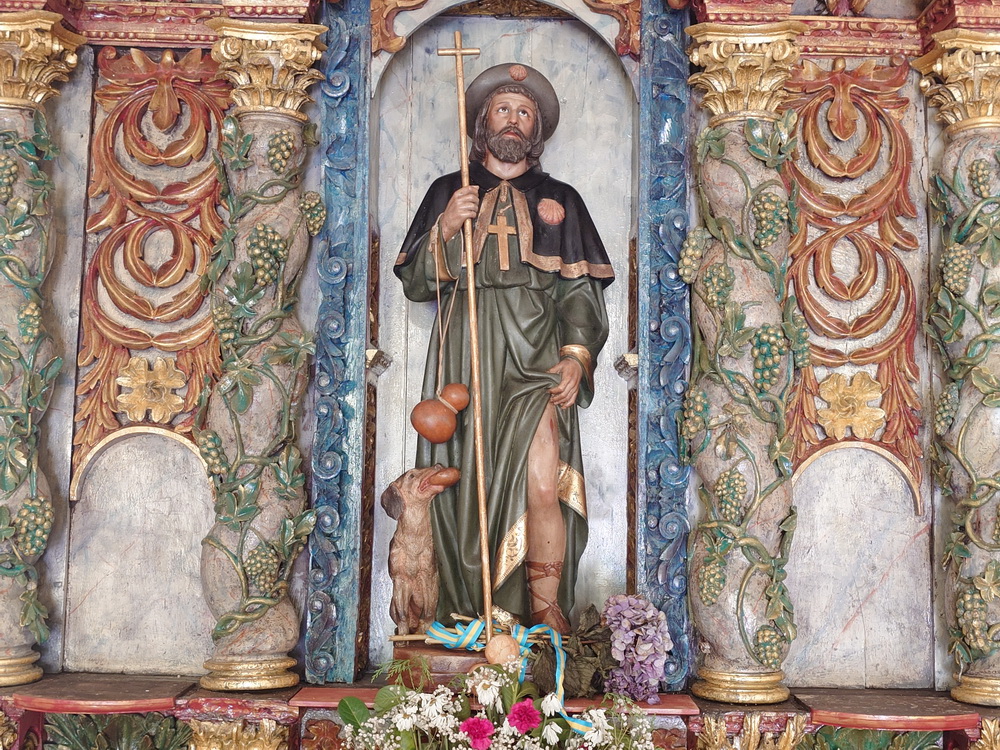
There was one which we saw very often, who was not Saint James as we originally thought. He wore a coat with a shell on it and had a bottle gourd hanging on his walking stick as seen on the historic images of Saint James pilgrims.
It turned out to be Saint Roch de Montpelier. A pilgrim, who had been on his way back from his pilgrimage to Rome in the 13th cetnury, healing victims of the plague. When he was finally infected himself he was hiding in a wooden cabin near Piacenza, and a dog brought him some bread every day until he was healed. Returning to the people, they didn’t recognize him due to his scars, and imprisoned him as a spy for five years until he died. That’s why you see him always showing his scars, being accompanied by a dog carrying some bread in his mouth.
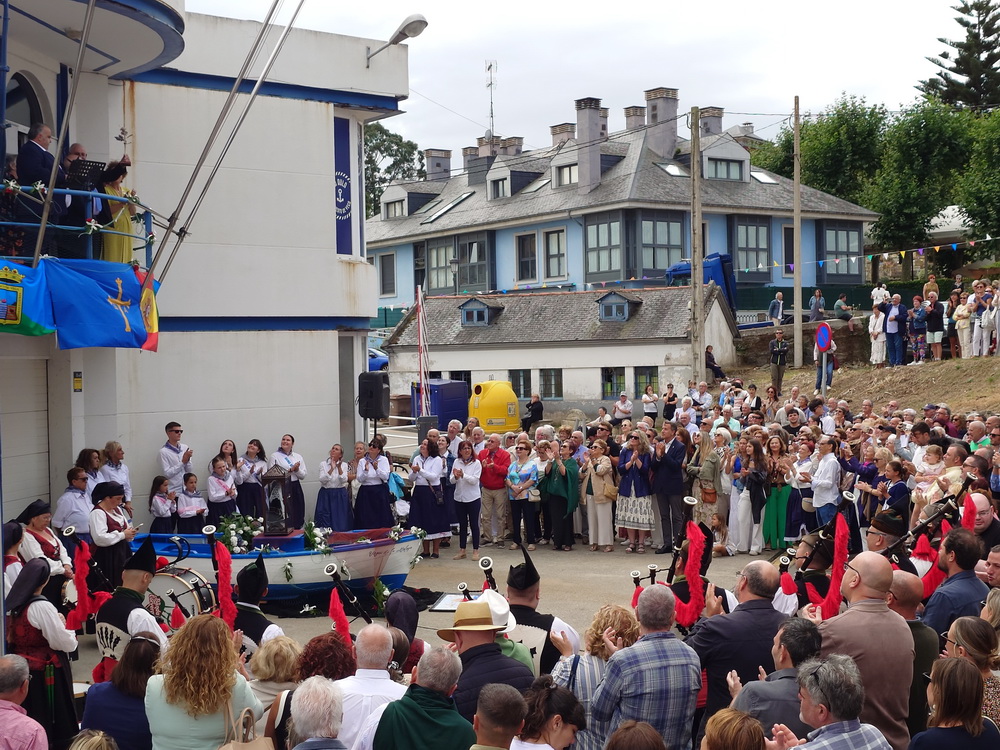
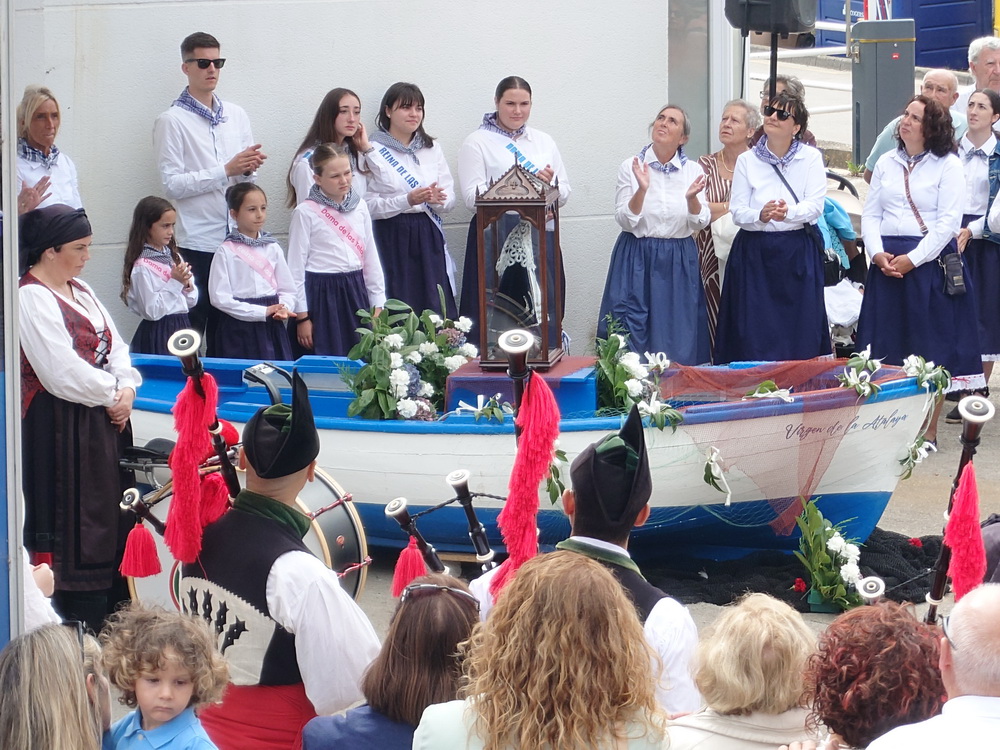
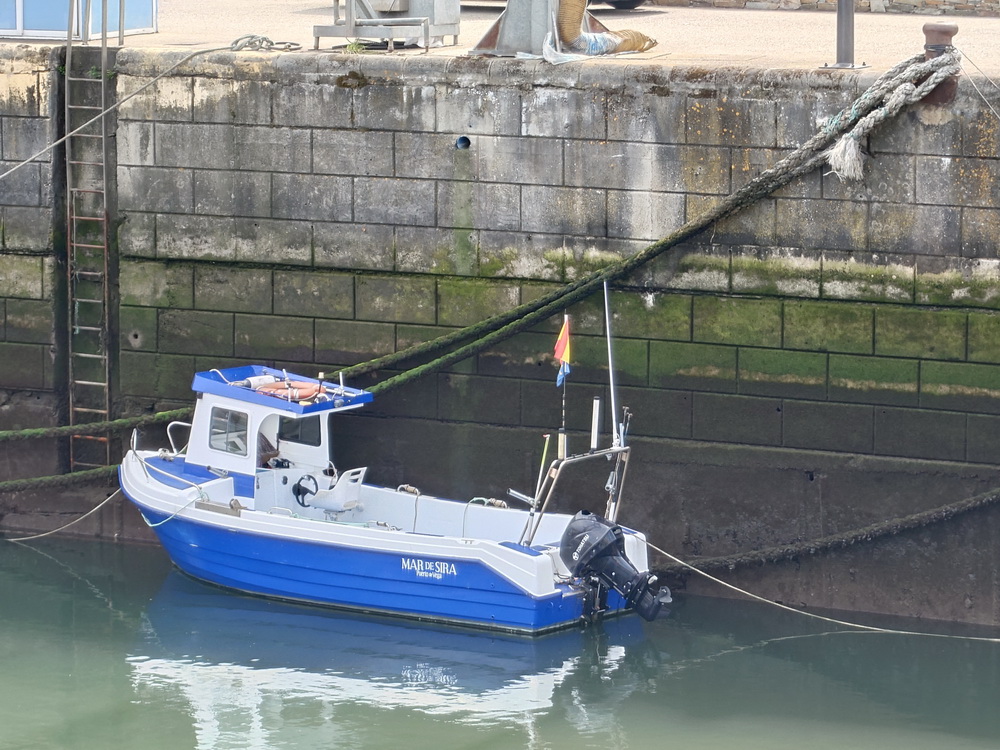
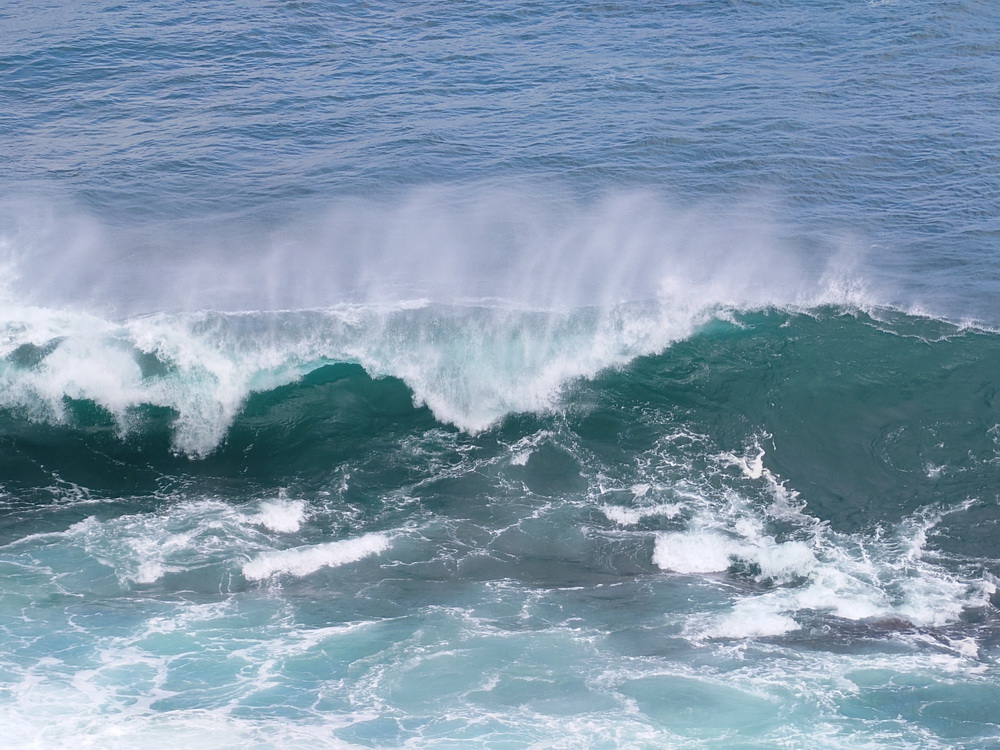
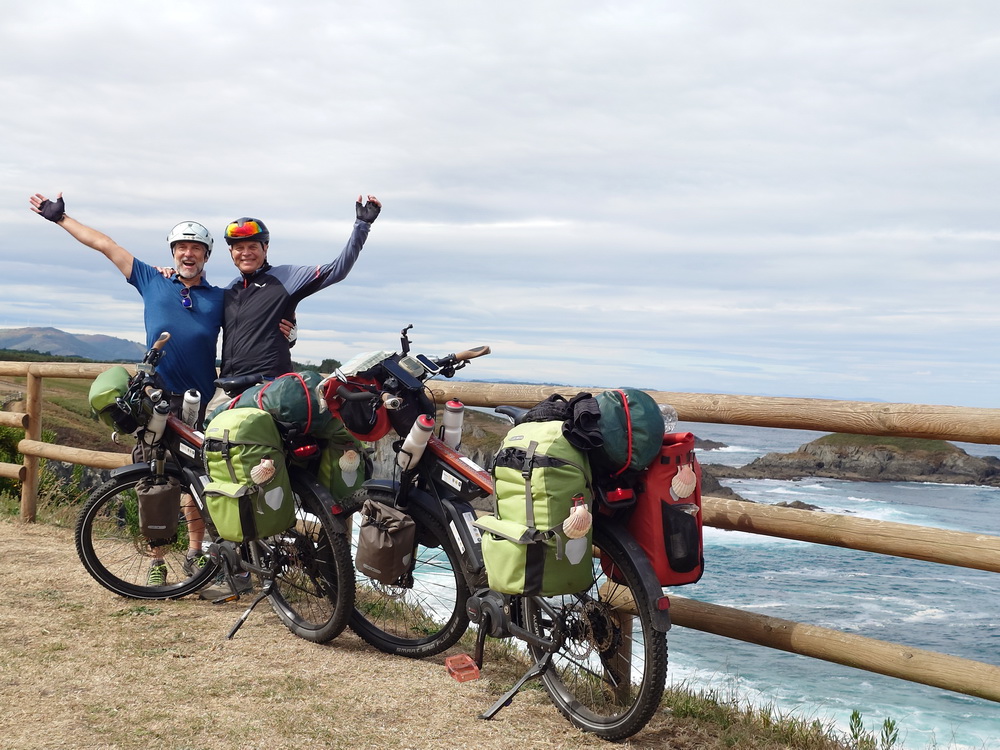
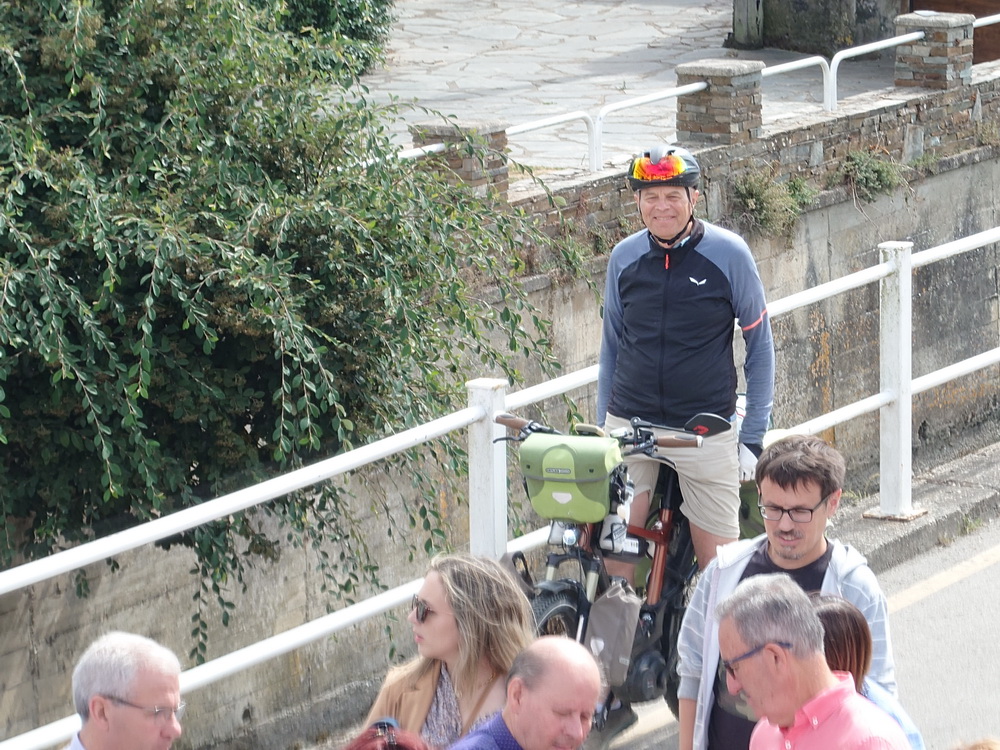
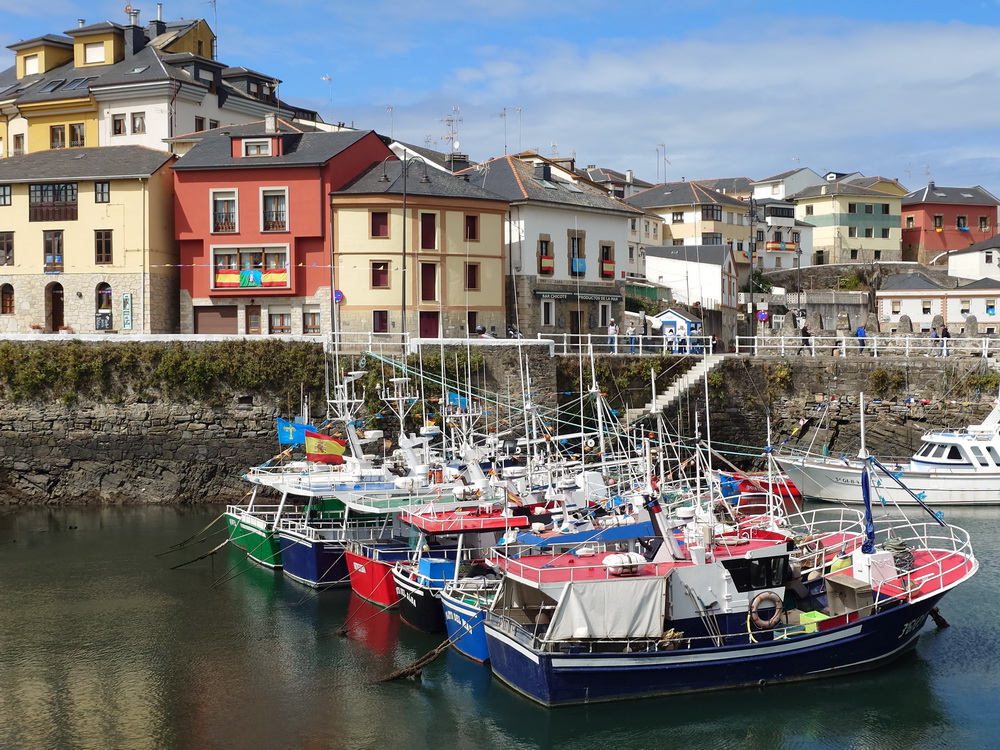
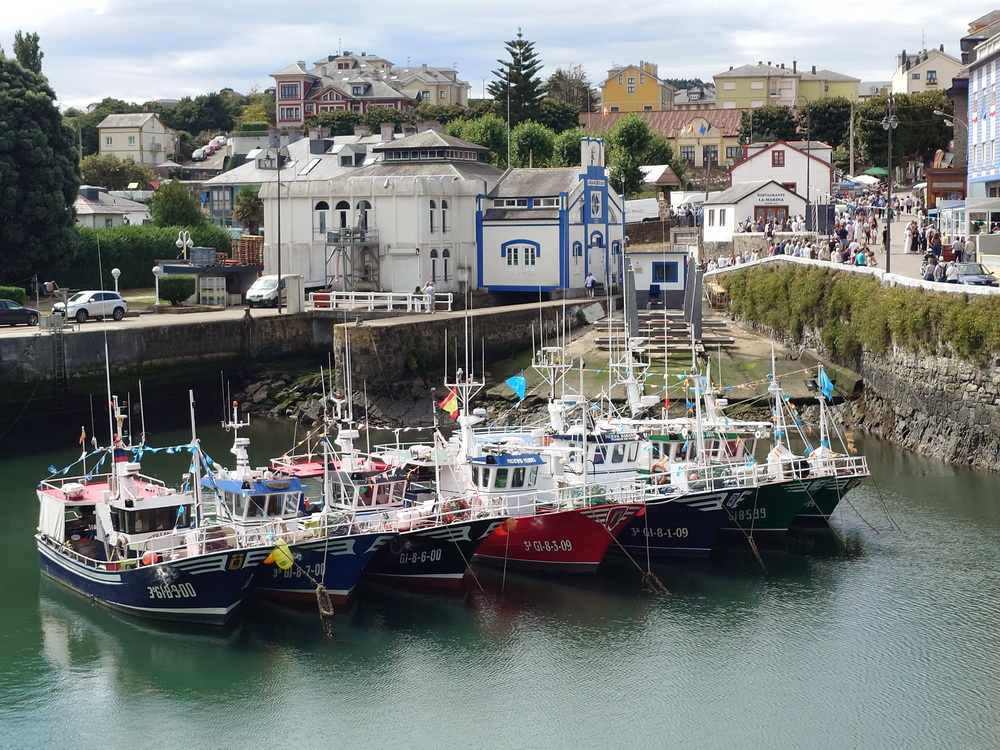
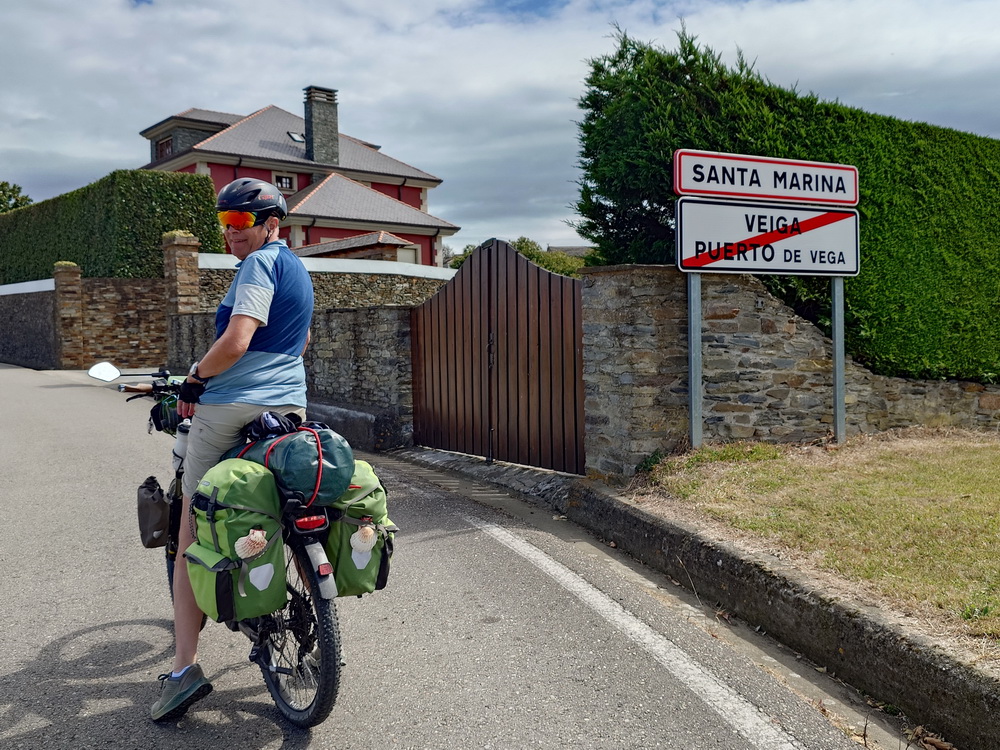
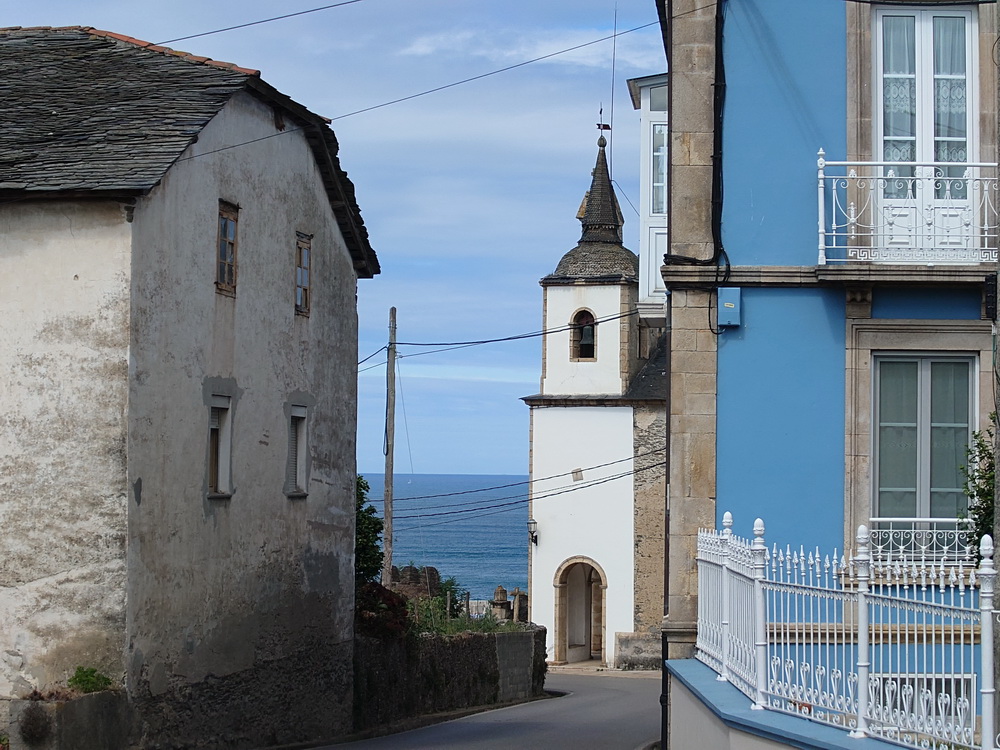
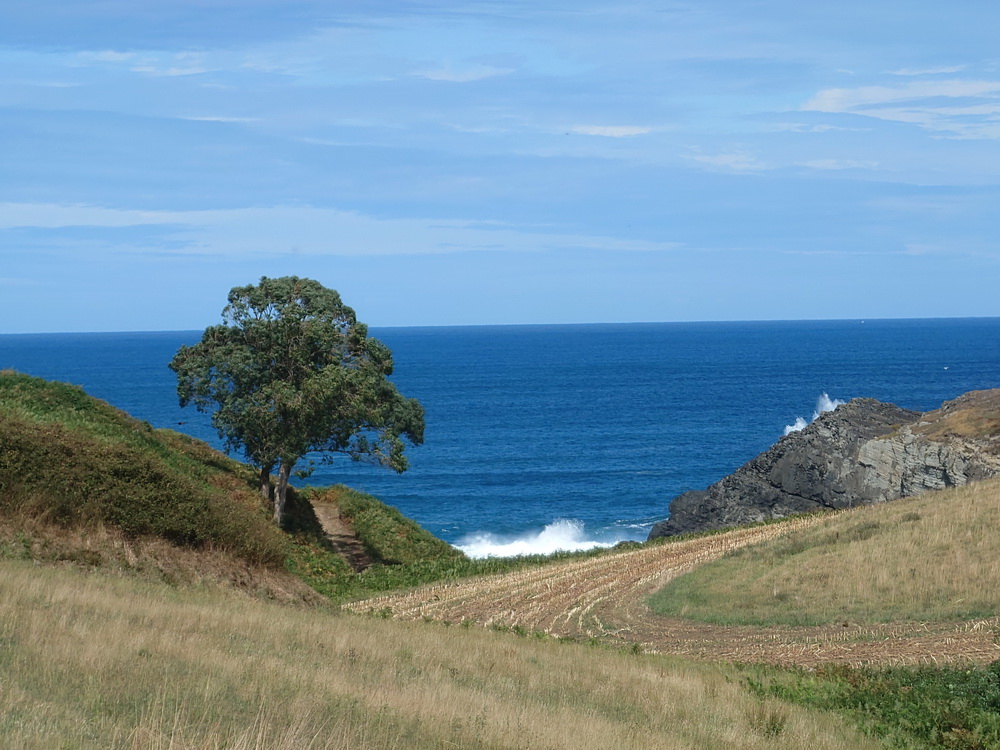
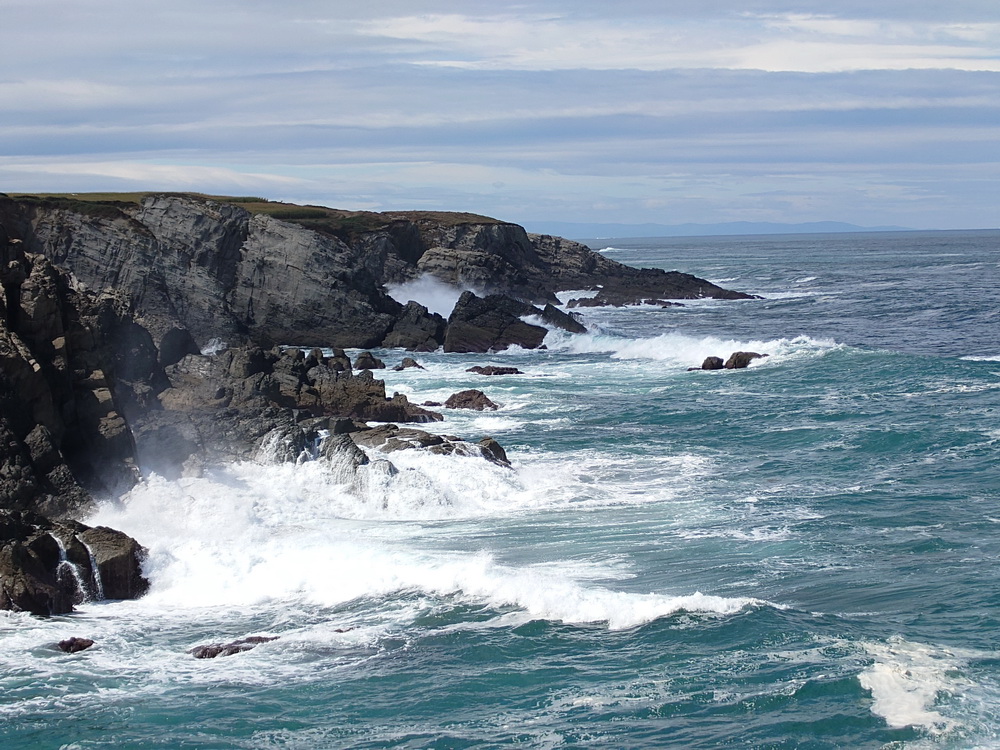
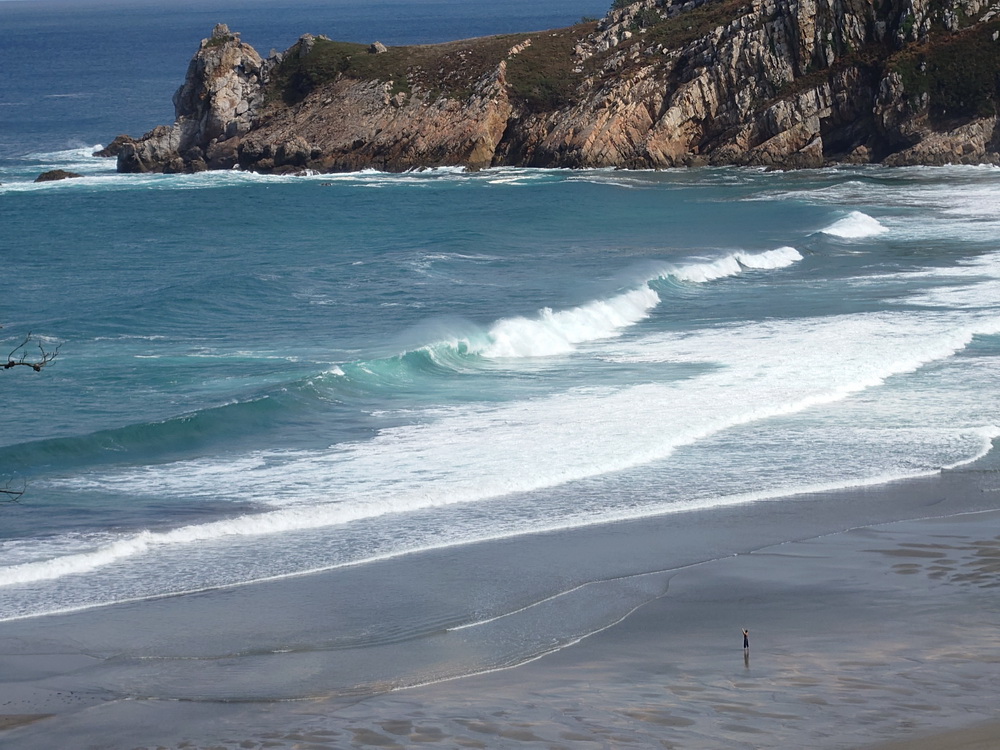
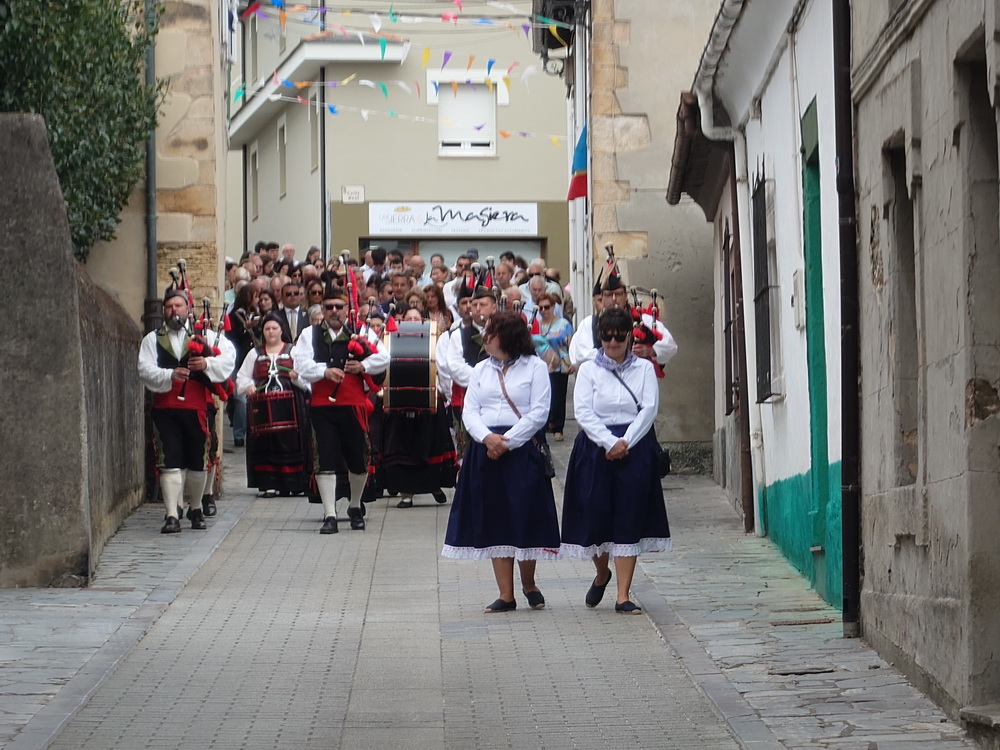
Now we followed the Camino del Norte against the direction to Santiago, which unfortunately ran more inland on this stretch and not by the ocean. So we decided to make a little detour to Puerto de Vega to have a good view of the sea. There was supposed to be a beautiful panorama from the Ermita de la Atalaya. This is a little church on the cliffs, but we had no chance to reach it as the whole village of Vega started from there a procession behind the bagpipes of a band from Corvera d’Asturias to the harbour. Loud cannon shots were thundering over the natural harbour of the town for the festival of Telayina. While the flower giving ceremony took place, we sneaked out to reach the chapel with its great view over wild waves rolling in from a stormy ocean.
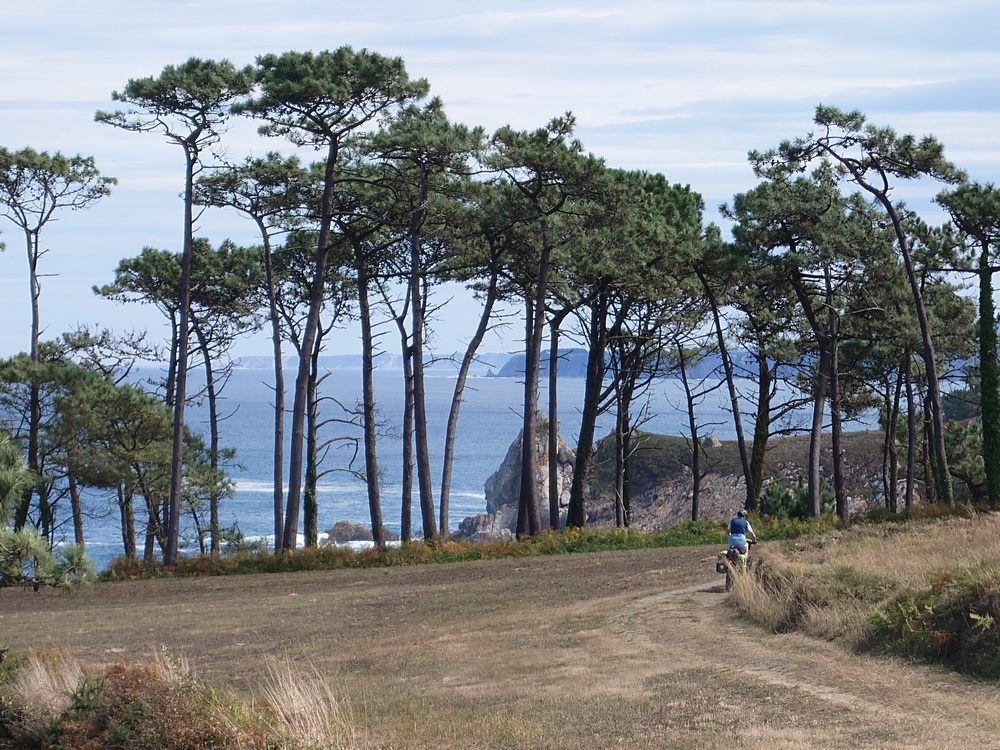
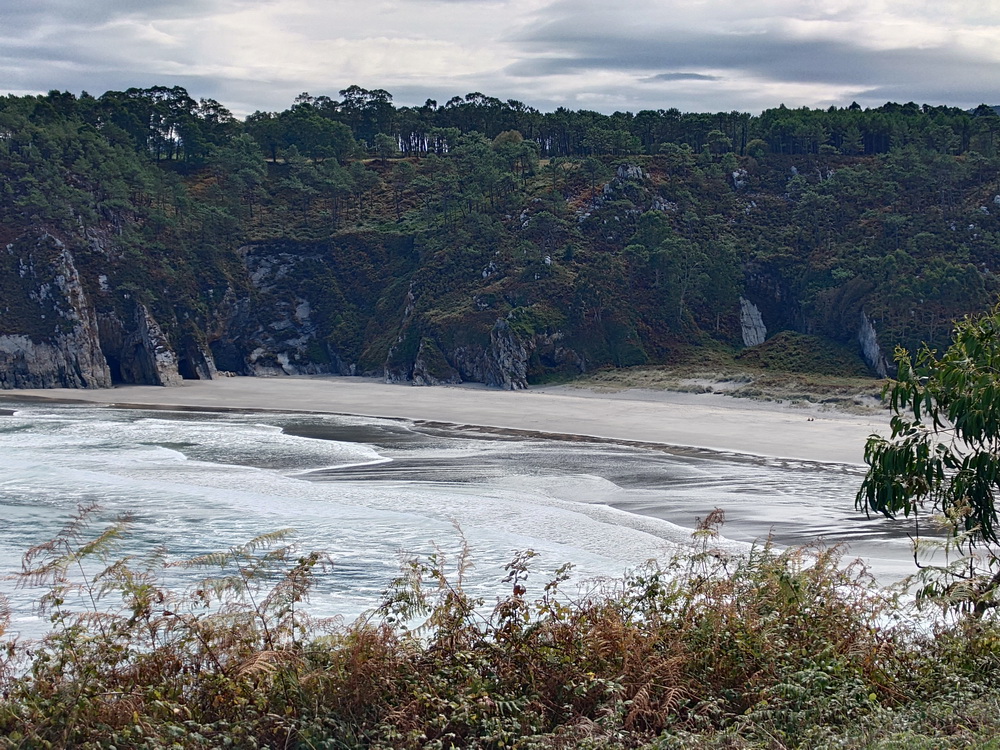
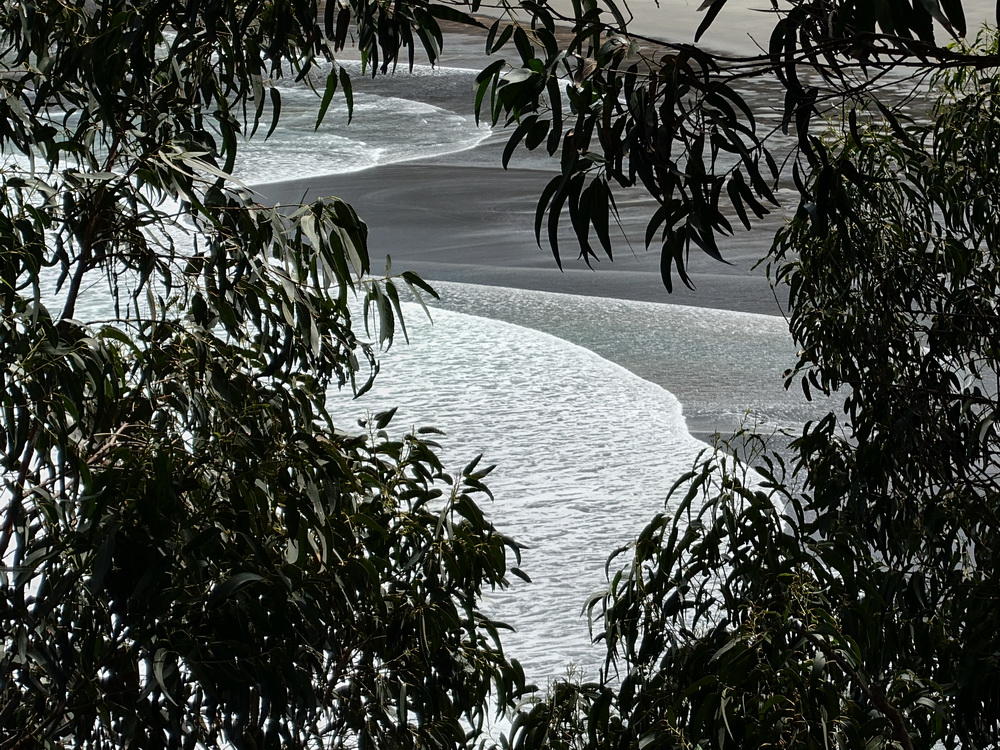
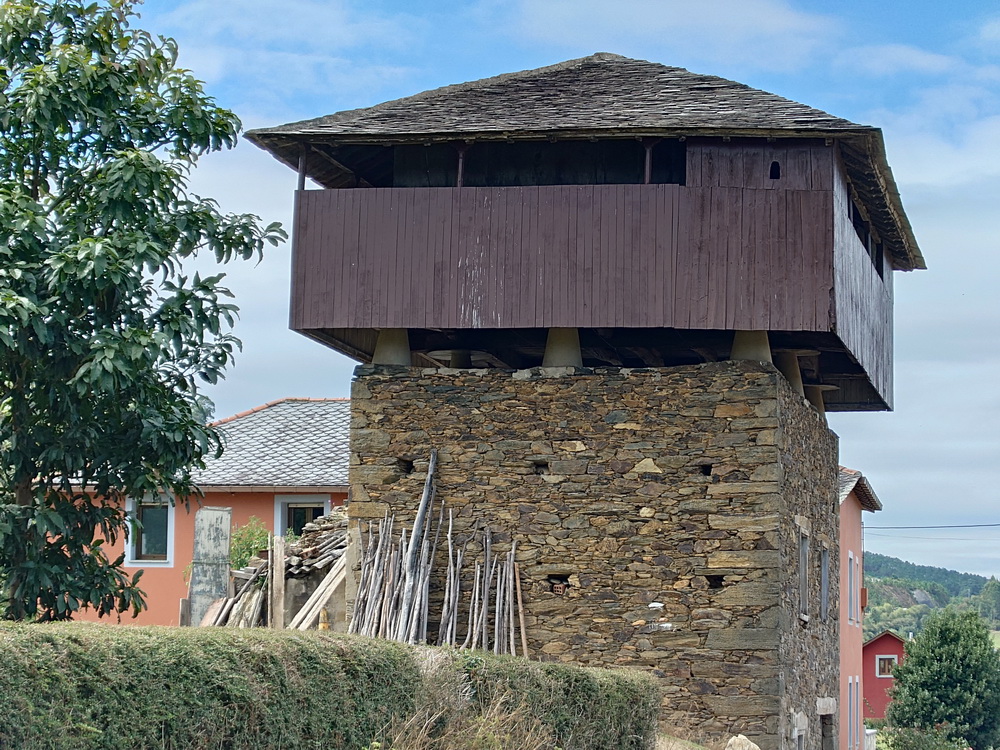
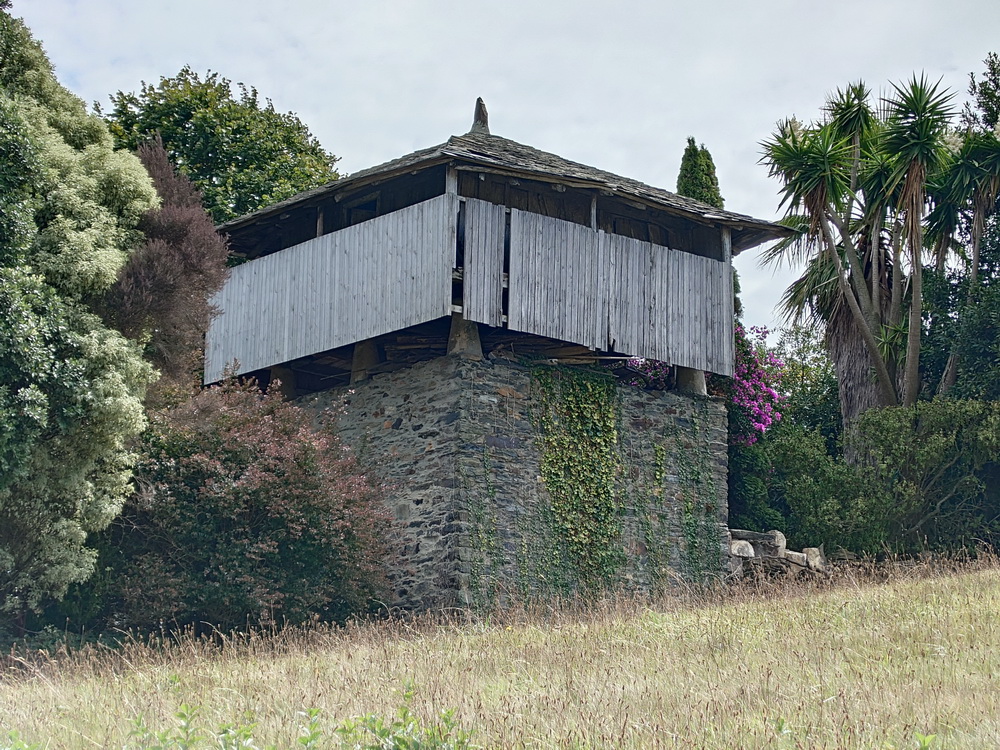
Back at the festival the citizens of Vega were so friendly to offer us some of their traditional treats which they handed over to all the participants. We were happy with these small little bites, as they helped us to keep going along the beautiful coast line. We found lonesome wild bays lying in between ragged cliffs like the Playa de Barayo. We discovered all different kinds of “Horreos”. It seemed to be a quite fertile region compared to the size of Horreos we saw in the mountains, because here they developed more and more into towers dominating even the farmhouses.
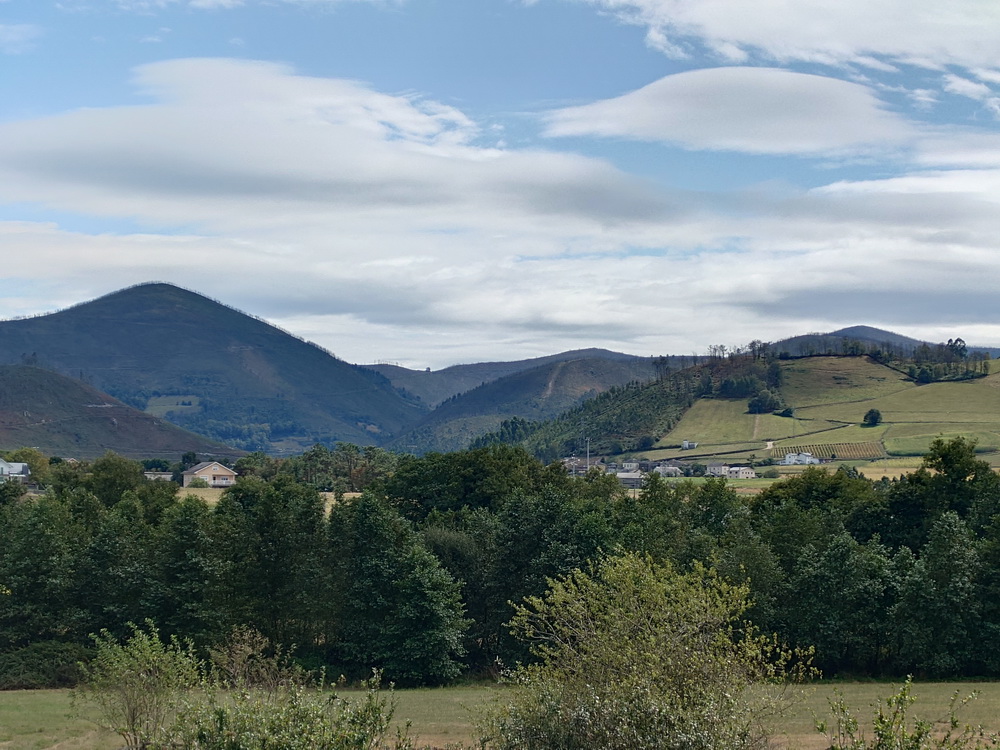
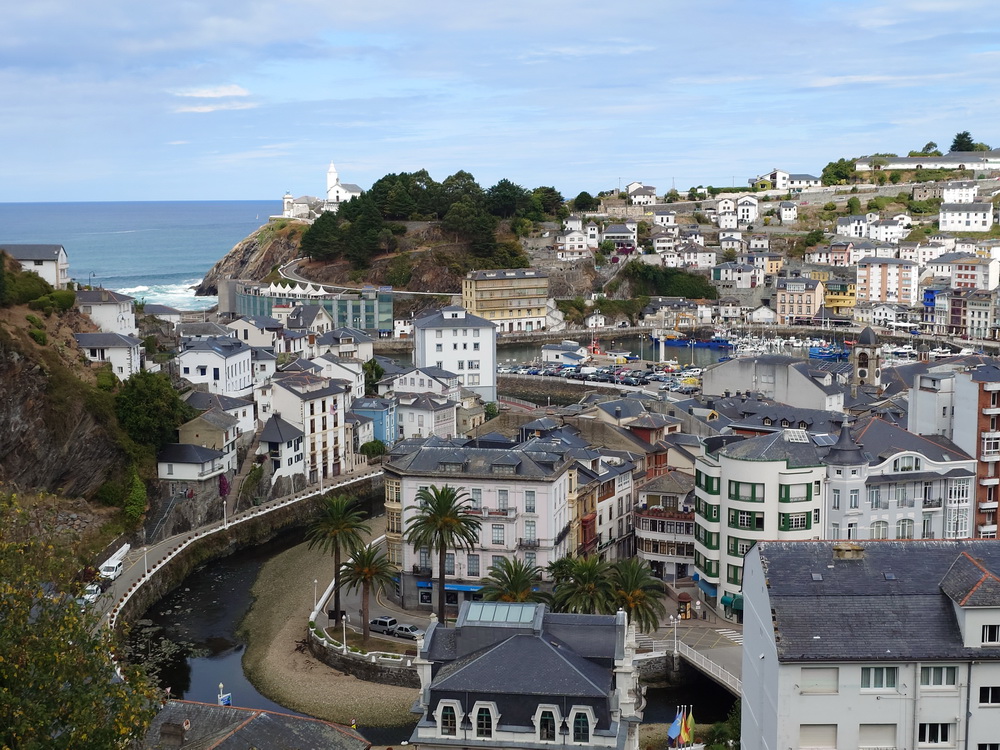
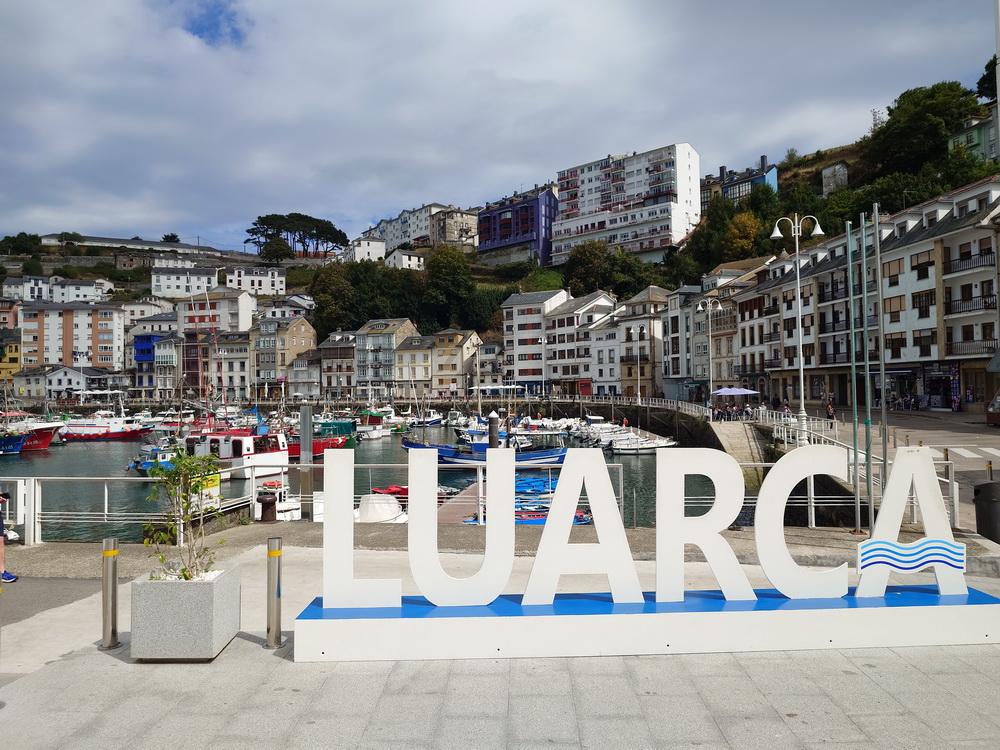
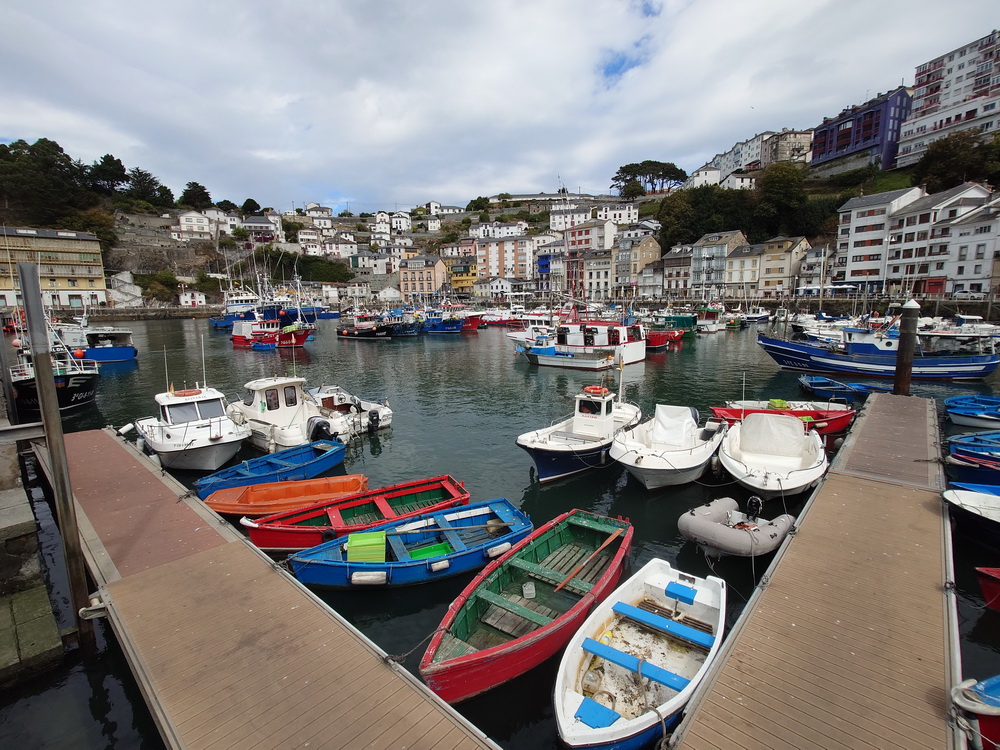
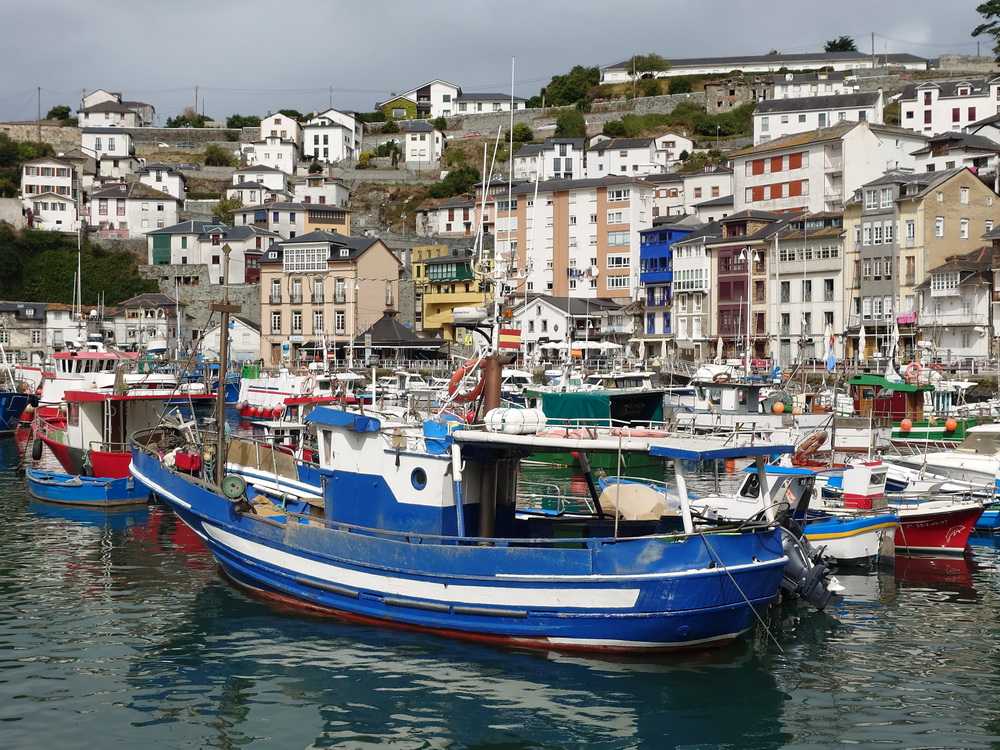
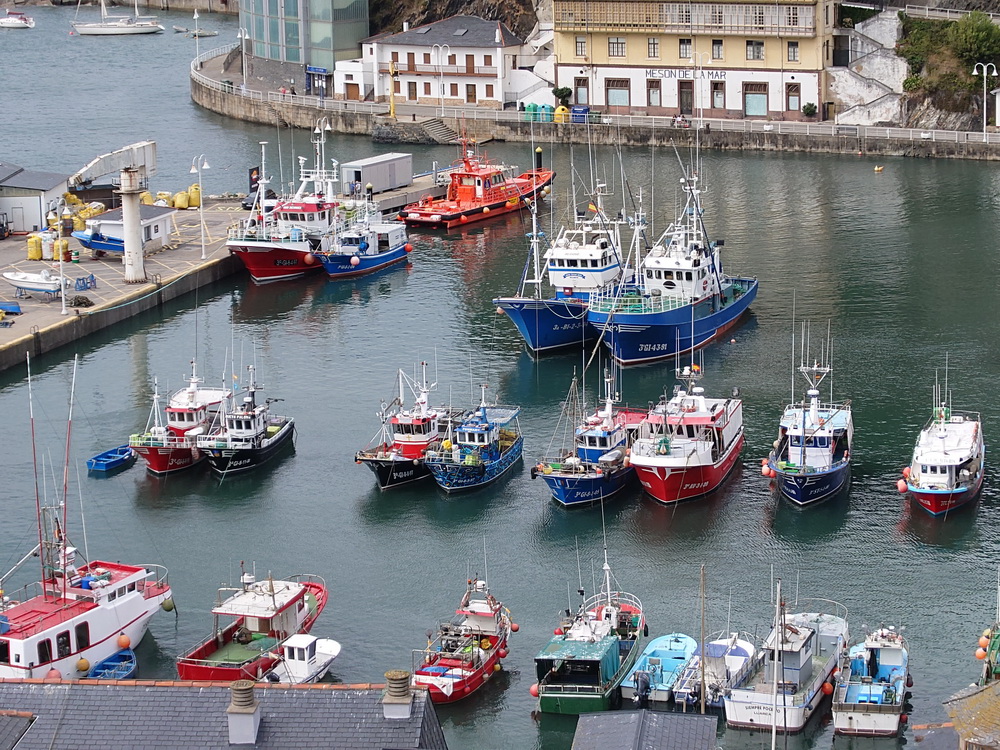
Our next stop was the natural harbour of Luarca, which was hiding behind steep cliffs at a river mouth. Robert knew this place already, because he once had sailed to this port with his friend Diederik. We had lunch at the restaurant of the hotel Baltico and were enjoying seafood. At the next table we saw for the first time a machine to add air to cider from a bottle. We would see a lot more of those in the coming days. After a visit by the pier we tried to find our way out of town, but there was a complicated system of one way streets, which kept us busy zig zagging from one river side to the other to finally climb the steep roads out of the place. Being back up on the cliffs and the fields behind them we could see from the mountains to the sea a huge rain front rolling in.
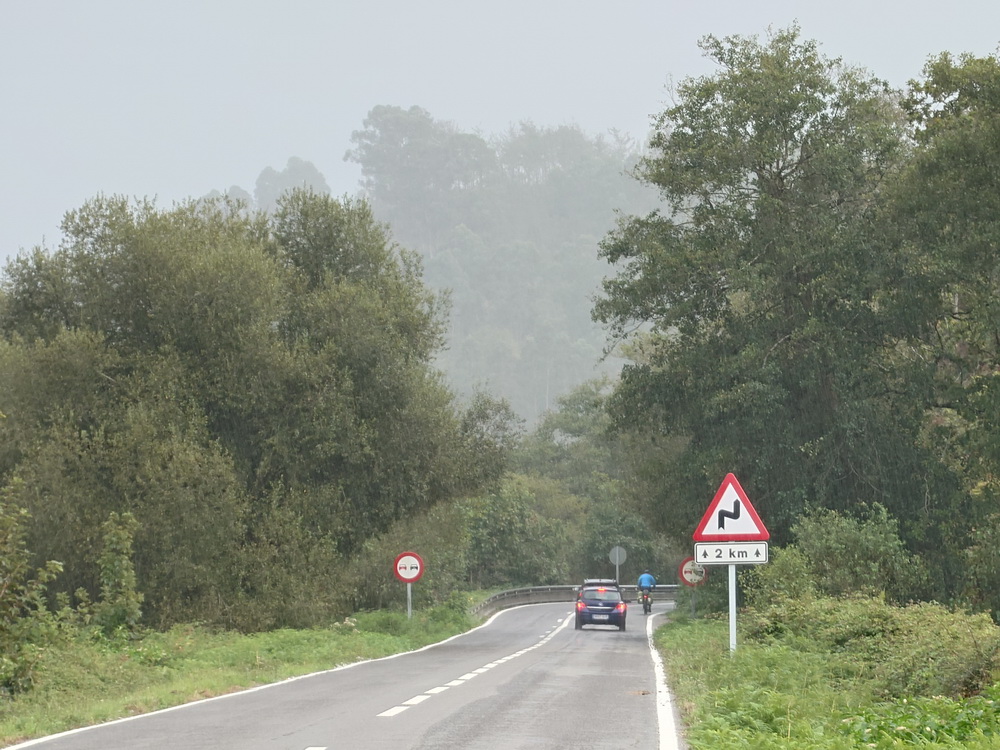
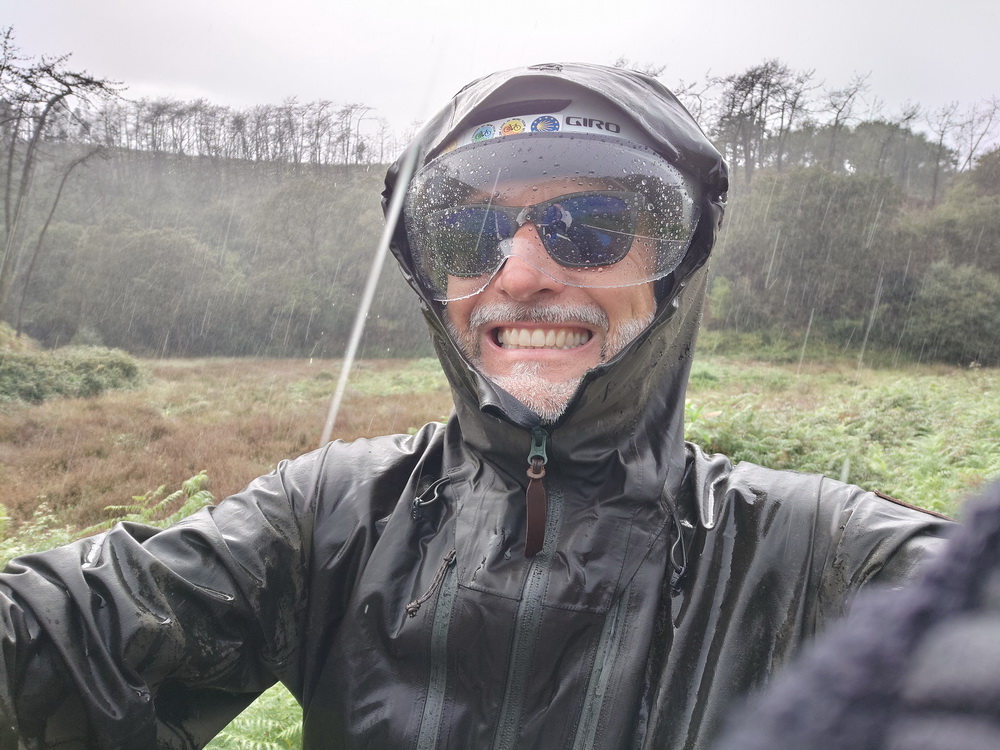
As I always was good in reading clouds I could exactly tell how much time was left until it started to pour and we found a place to dress up in our raingear just before the first drops reached us. Rolling downhill into the valley of Rio Esva we were completely washed. We decided to stay on the National Road and were lucky that we had to pass only a few more villages until we reached our destination at Villademoros, and by then the worst rain had already passed.