As the pilgrims started earlier from San Julián to continue on the Camino Primitivo than us two bikers, we had a quiet morning and after breakfast could talk a bit with Mynhardt and Séan.
We told them that our original plan had been to go much further south to meet Robert’s nephew François and his family in the Estrela mountains in Portugal, but as we had to catch the ferry from Santander our time was limited.
They suggested we could come back next summer for a special astronomical event taking place in their region. There will be a solar eclipse in August, passing the moon’s shadow over their mountain range. They told us that some guests had already booked ahead, but cancelled as they preferred to watch the solar eclipse from the coast. After our experience with the quick change of weather close to the coast, I thought it might be strategically better to be in the mountains to get the opportunity to be above the coastal mist. As Robert always says: “We have to keep something for the next time”. So with this plan in our mind we were leaving their welcoming place with a friendly “See you maybe again next year!”
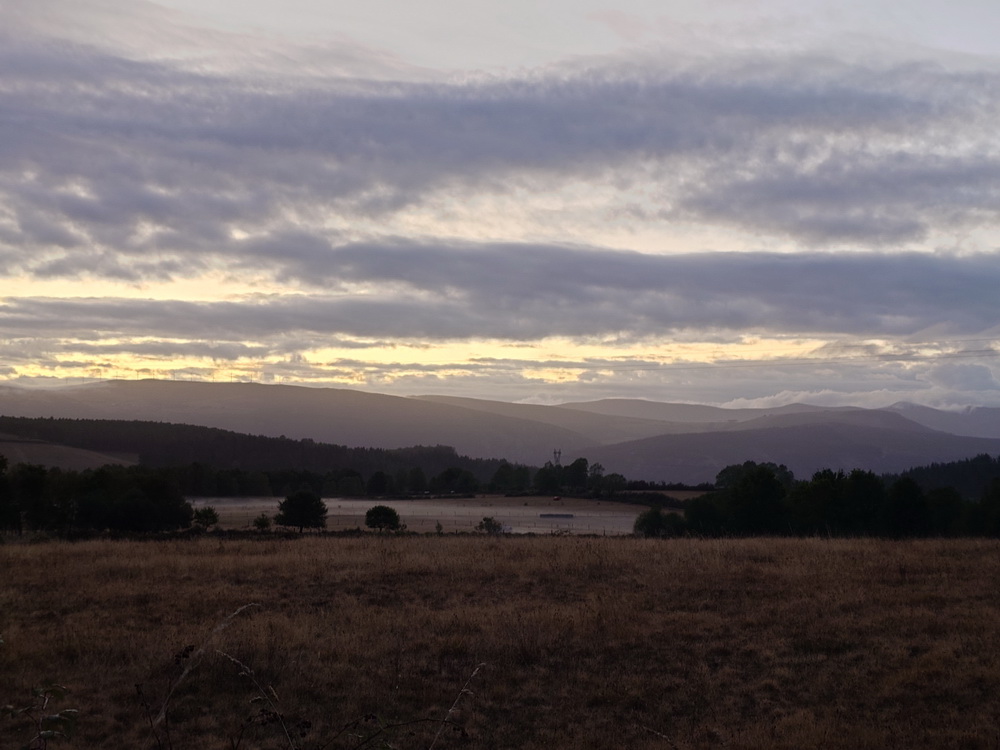
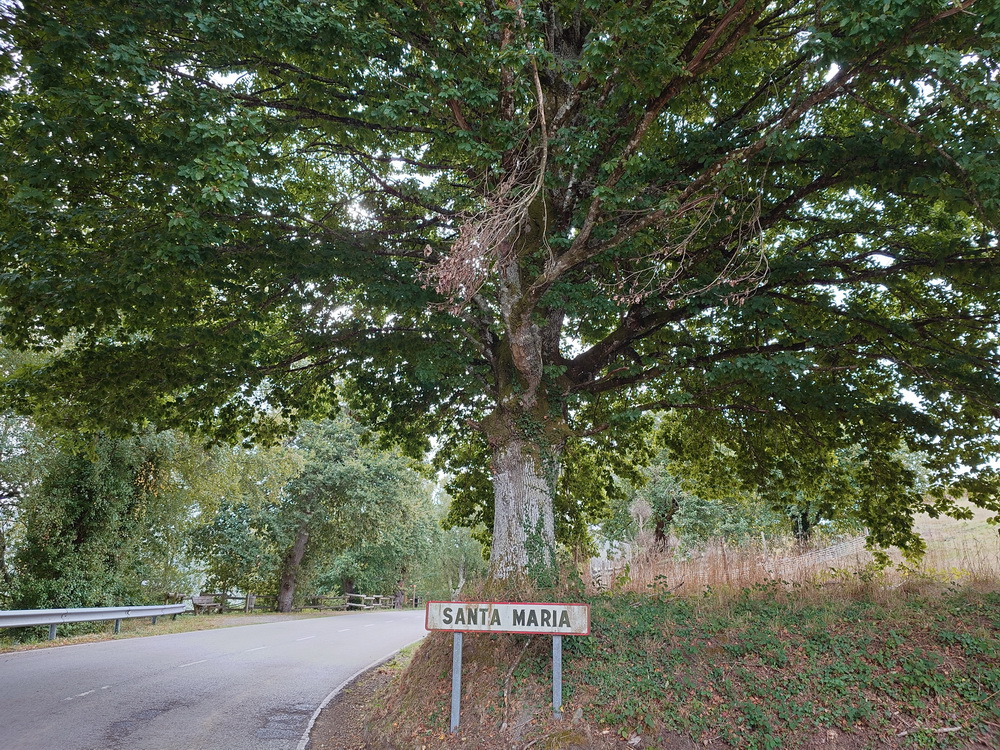
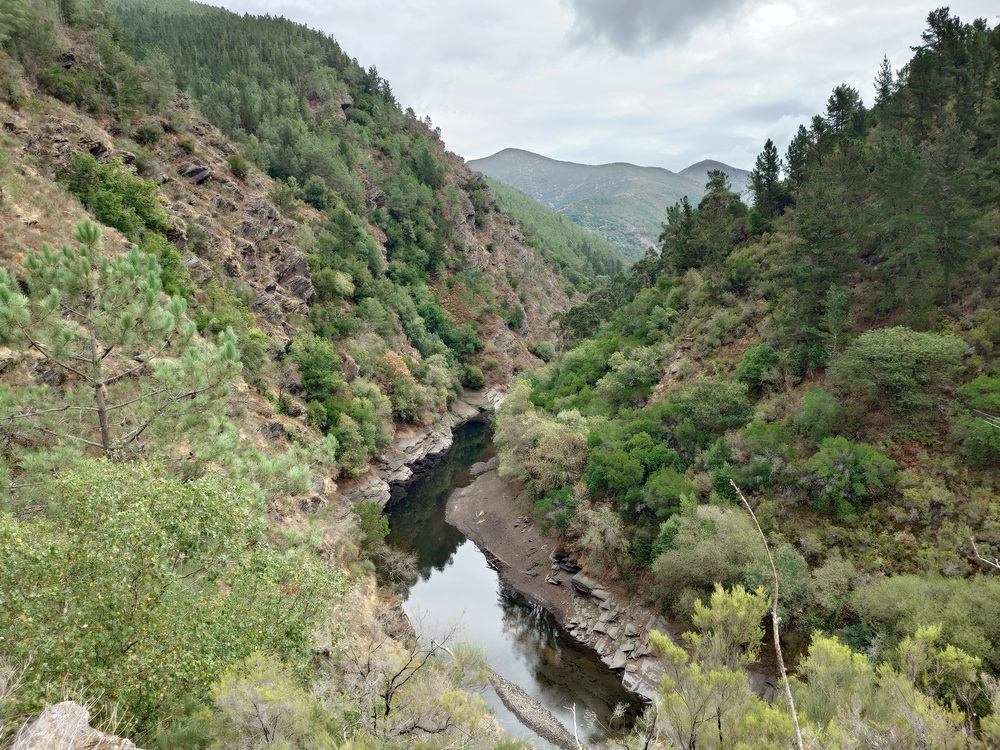
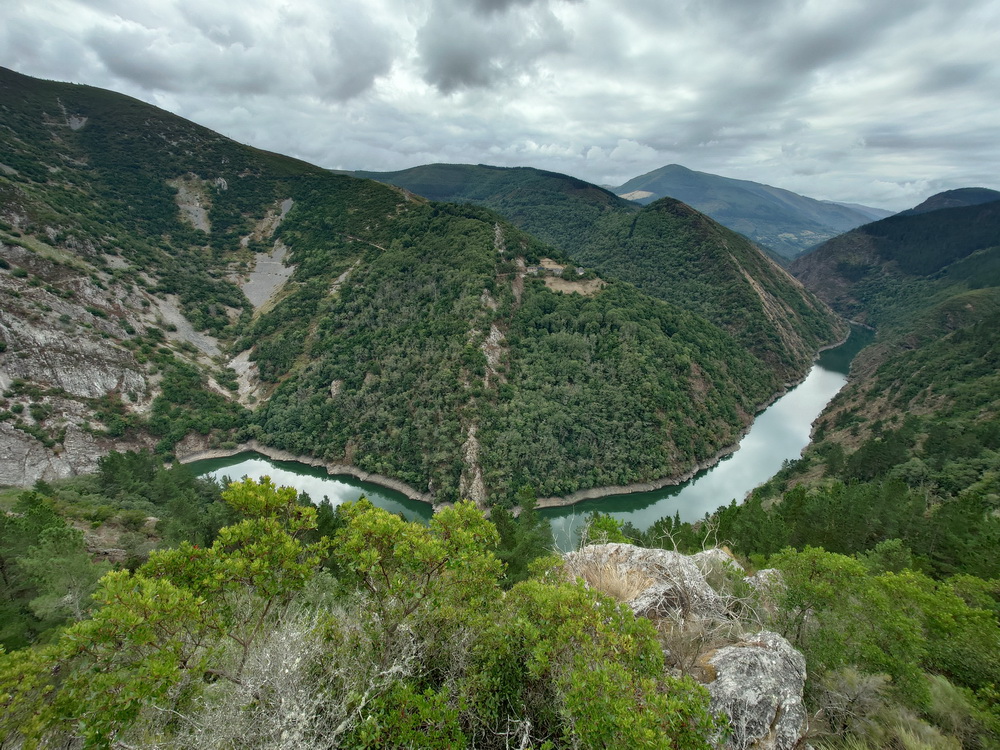
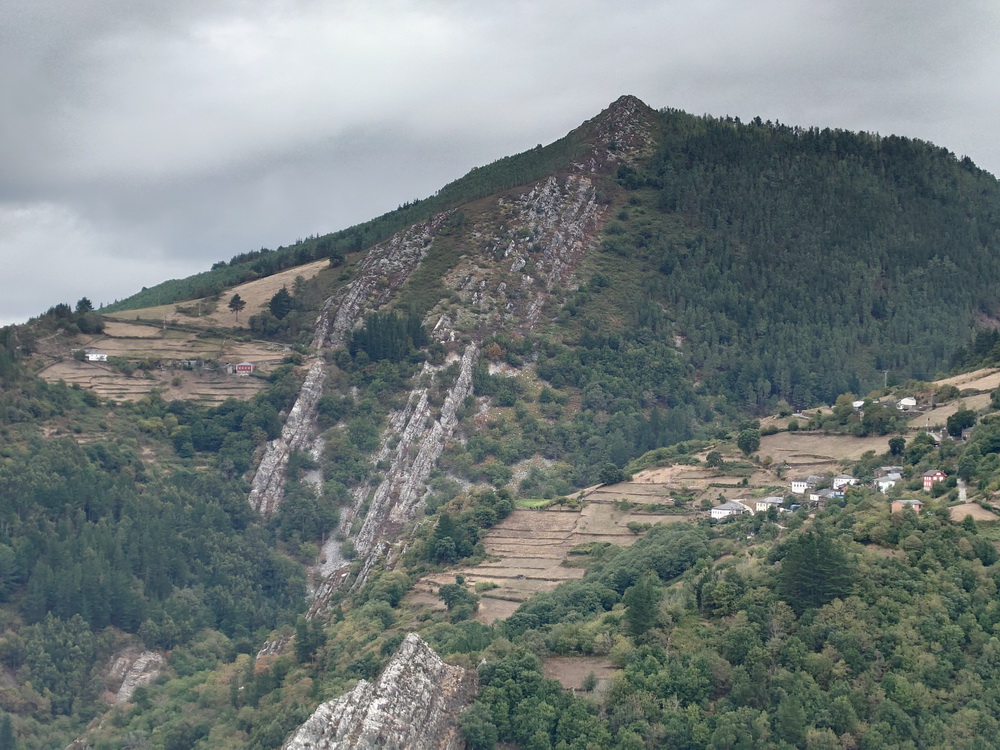
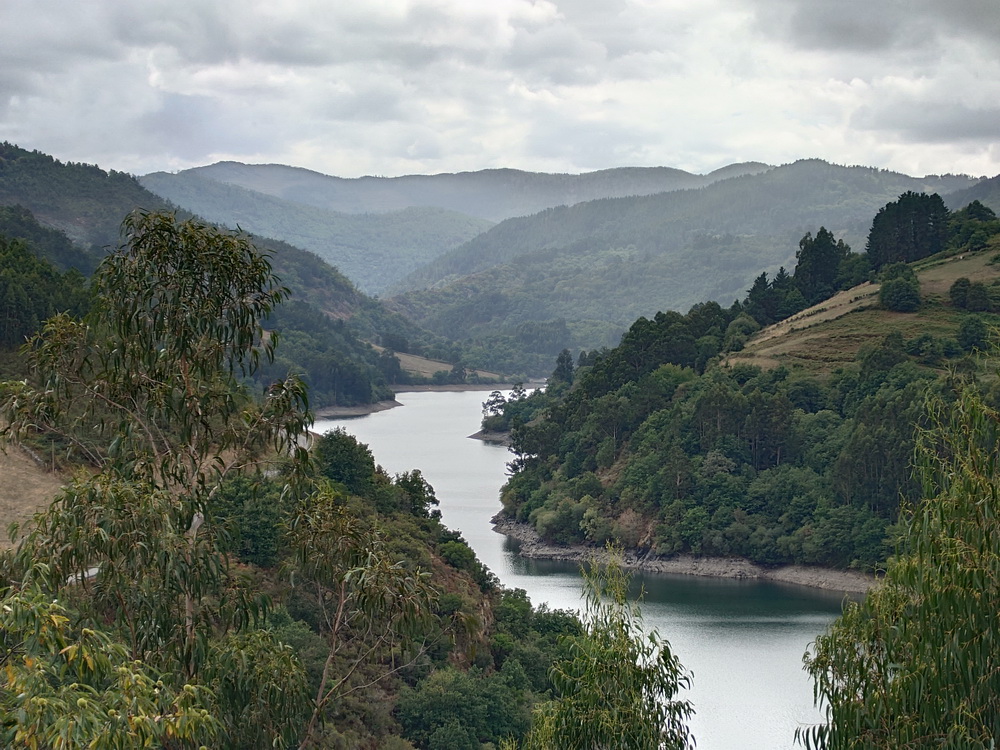
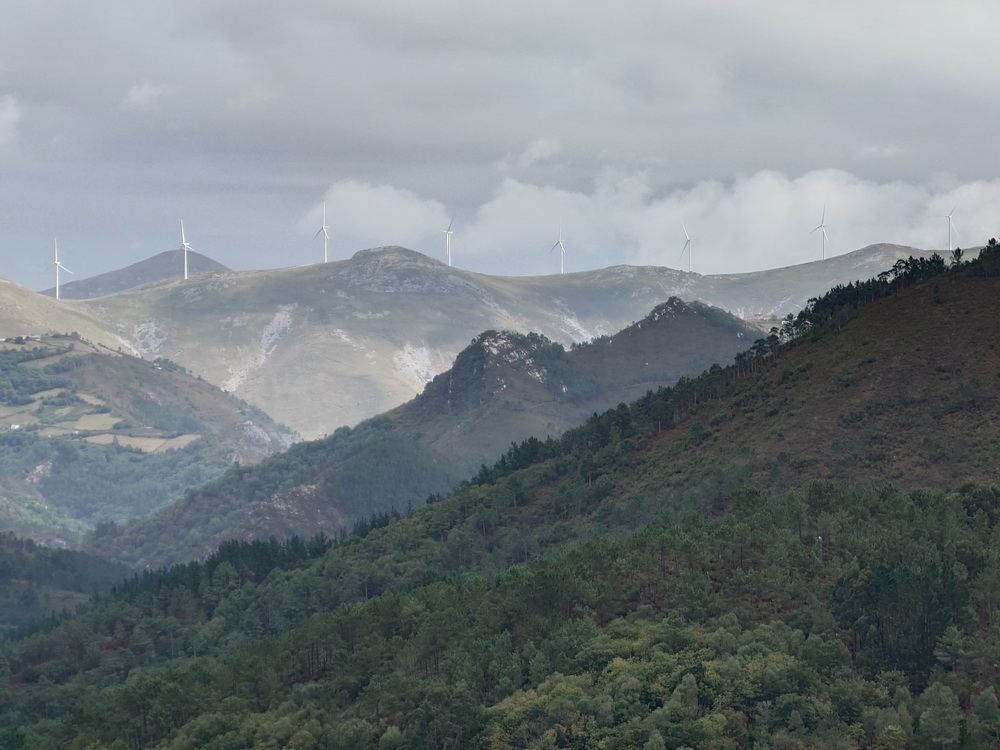
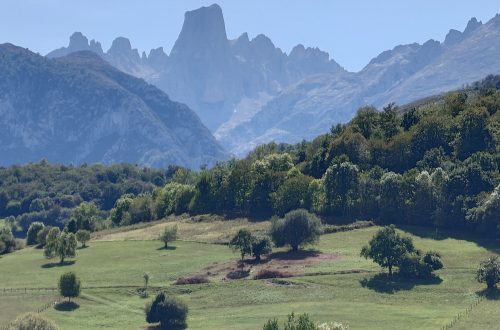
The river Navia cuts its river bed quite steeply into the mountains and you could see the zigzagging trails of the Camino Primitivo on the opposite mountain range. Soon we reached our first downhill on a wild mountain trail passing a village called Santa Maria, and there was again the next catchy tune in my mind by German singer Roland Kaiser, who sings about an island with this name.
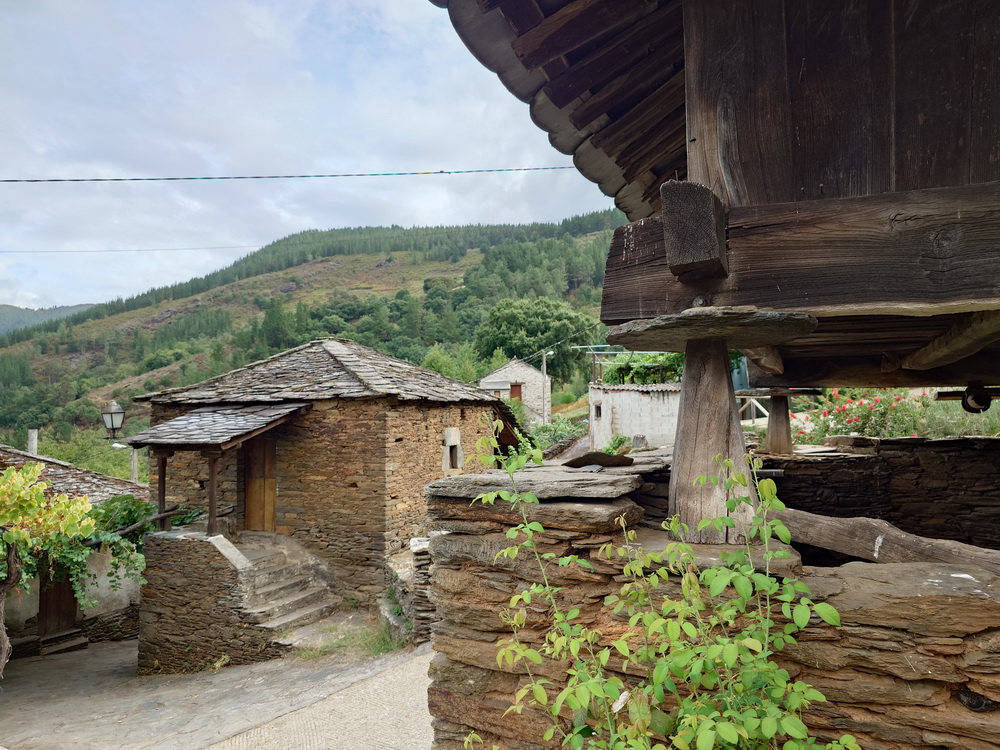
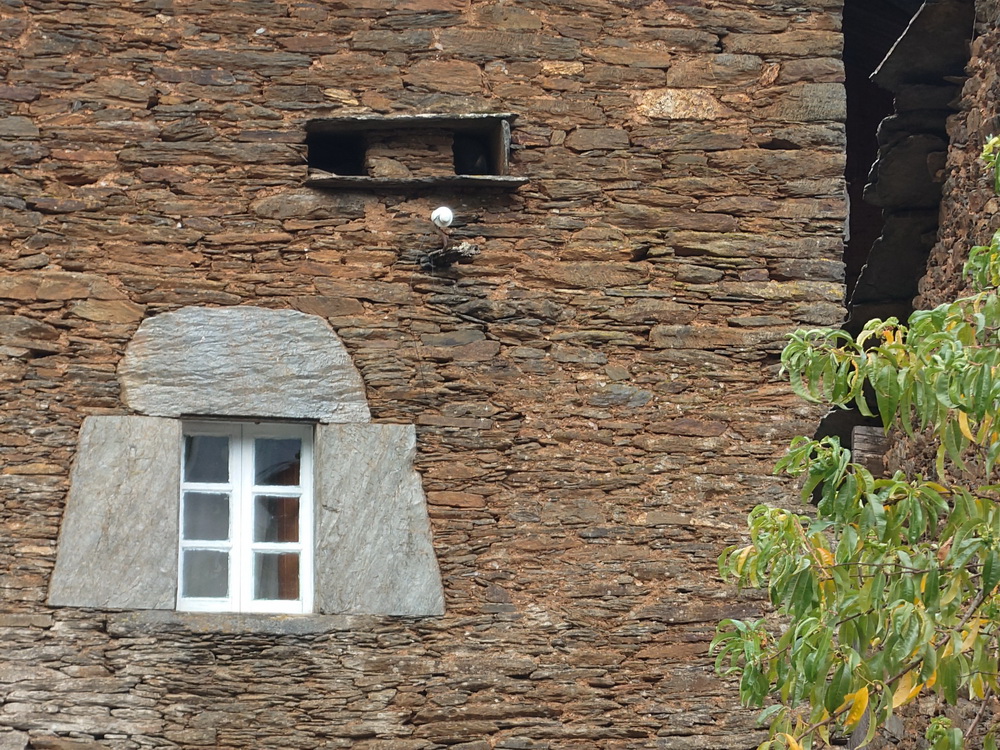
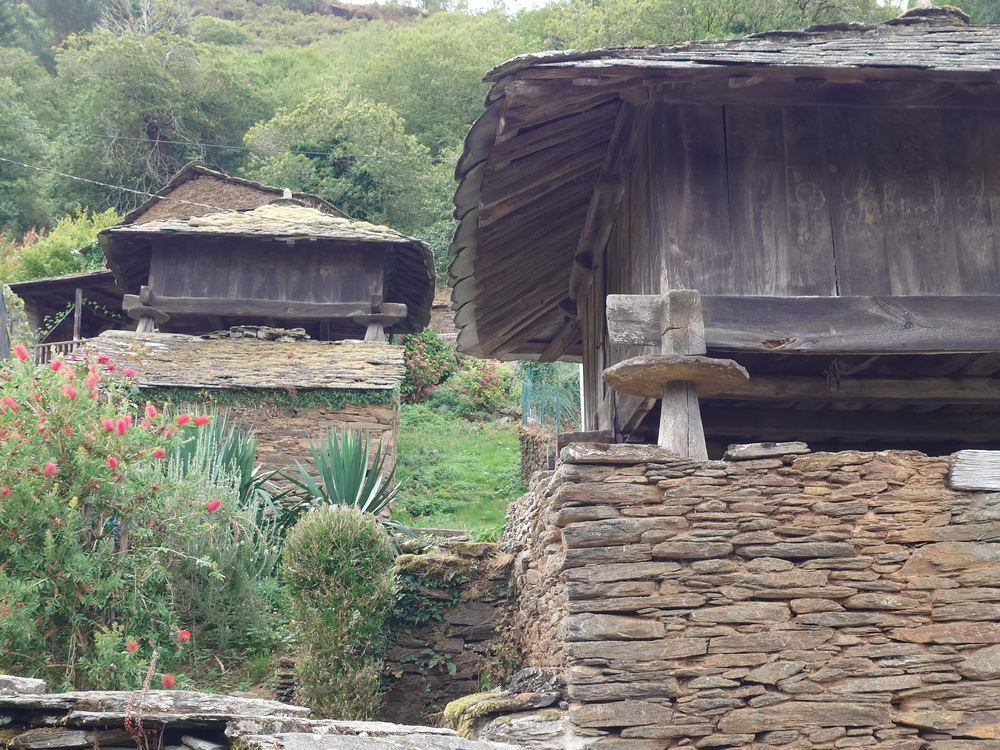
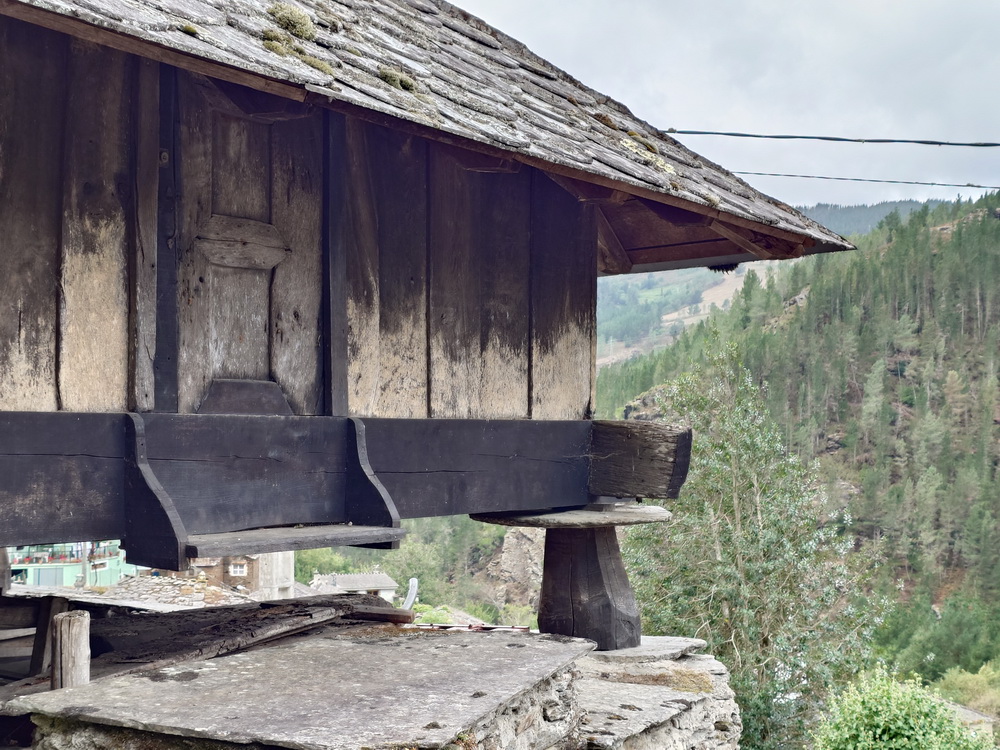
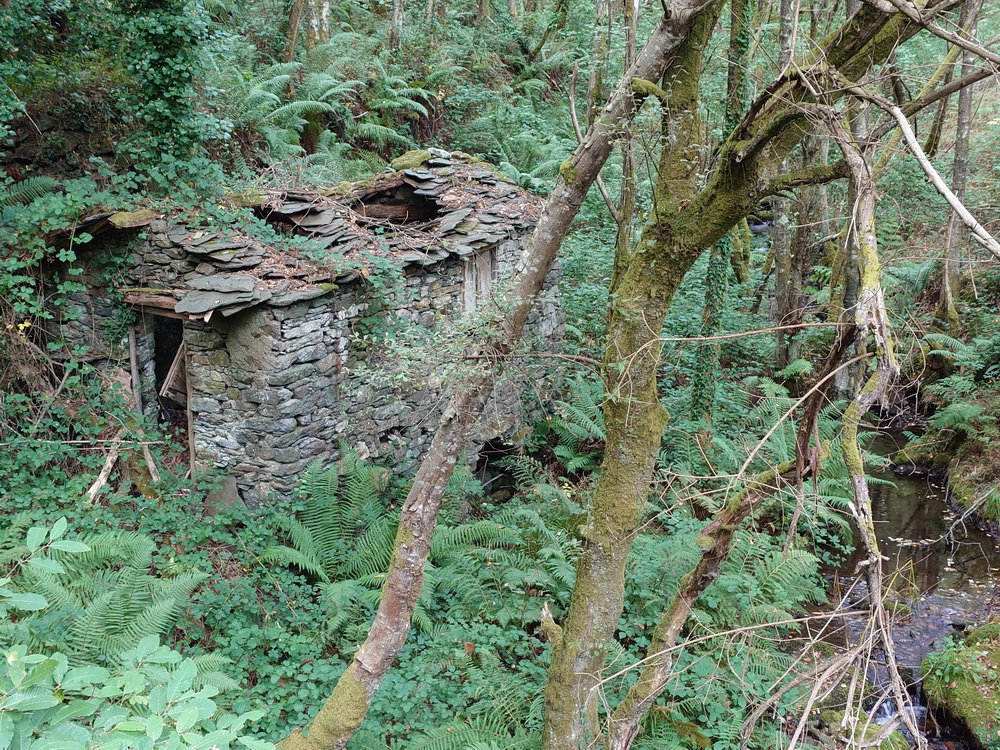
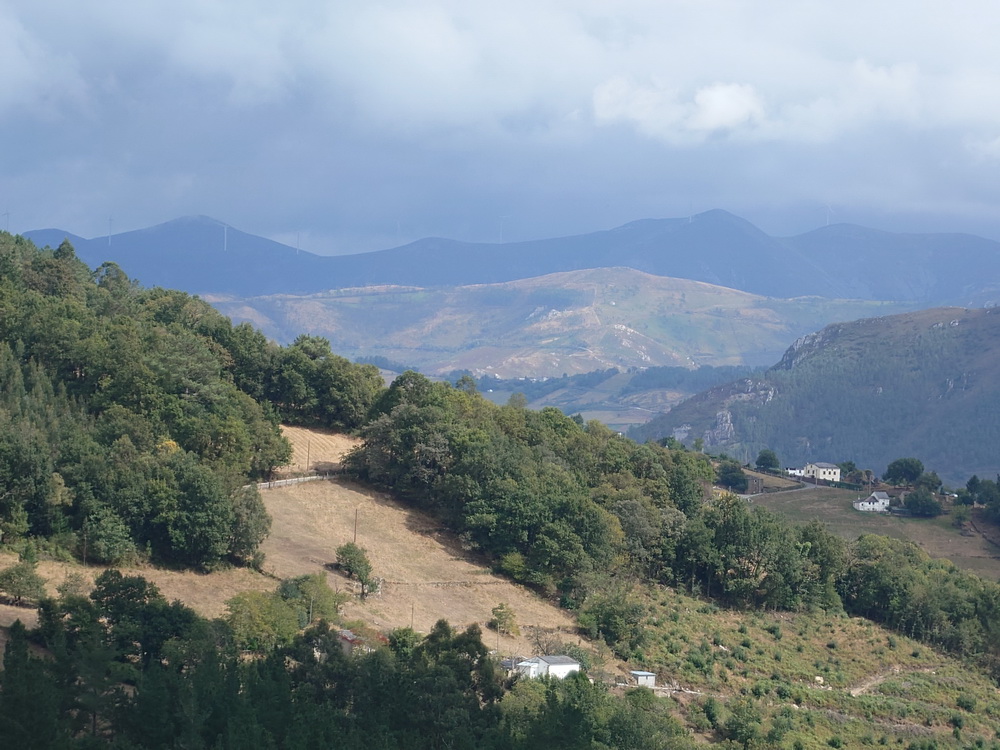
A beautiful downhill ride followed through small mountain villages very rustically built out of stone. It was no longer the granite rocks as we had seen in Galicia. Even the traditional granary with vertical cut ribs of granite stones was not used in that region. Here the so called “hórreo” or “horriu” in Asturias is a granary built on four pillars ending with a flat staddle stone to prevent rodents from climbing up. The name comes from the Latin word “hordeum” which means barley, and here we have again another catchy tone by Sting, singing about “fields of gold of barley”.
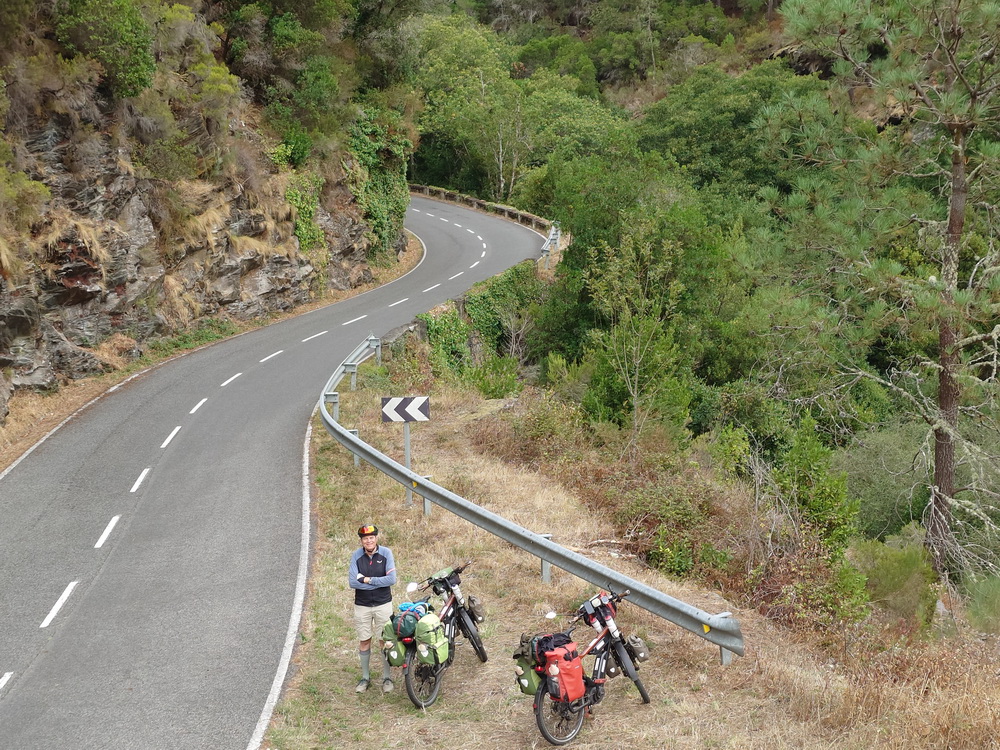
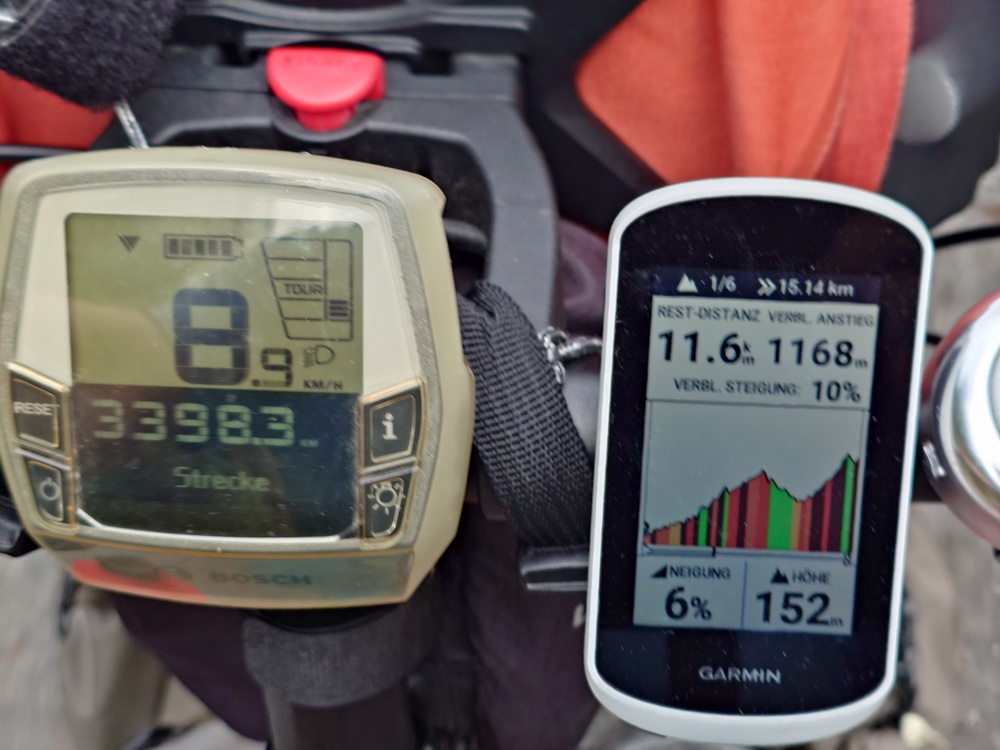
The downhill run let us just reach the lake level of the “Embaise de Doiras”, from where it was nearly 1.000m to climb up to the Mirador de los Buitres. From there we had a beautiful view and could already see that the next river bend where we were heading to was disappearing into rain clouds. There were only a few villages along the way, but not a single place was open on a Sunday and we started to get really hungry.
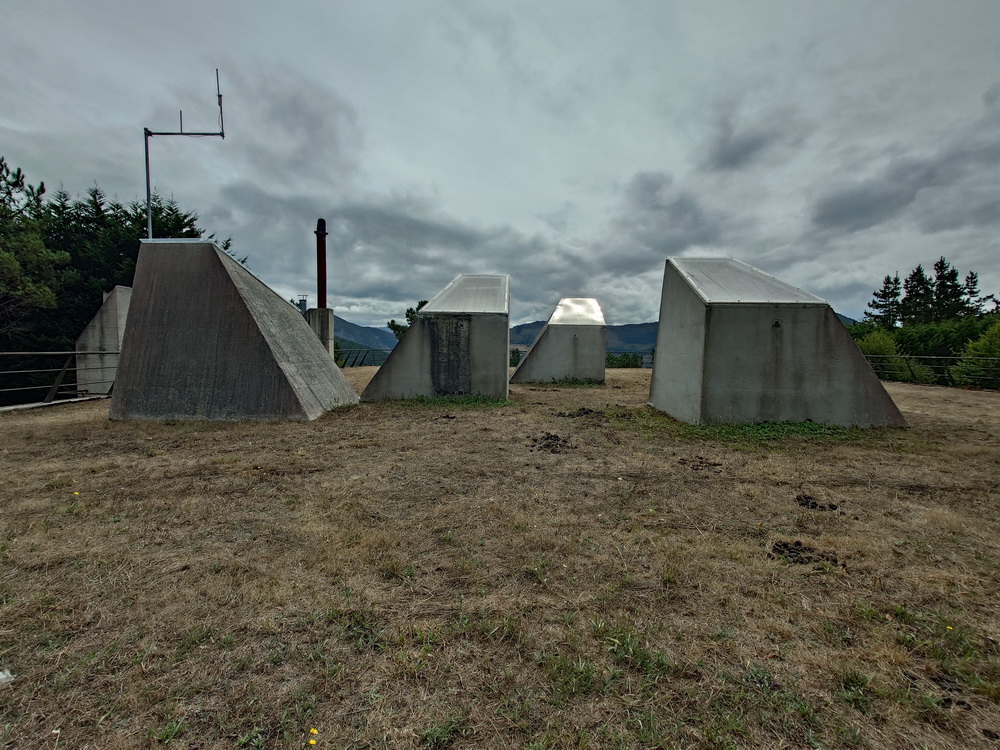
We had to ascend even more and got closer to the rainclouds, but luckily we discovered the Àrea Recreativa Folgueiróu where a restaurant was built into the landscape. From the top you could only see concrete sculptures as skylights for the spaces hiding under the hillside.
Inside it was an interesting architectural space, which offered a huge panoramic window towards the mountain view. It was not only tempting but nearly natural to sit down by a table at the window as there was place for hundred people and only one family had occupied a table. The grumpy restaurant owner was not happy to see us sitting down at one of the best tables without having asked him before. Probably he didn’t want to have simple bikers seated there as he expected more high end clients. As we promised we would not stay long he allowed us to stay there, and we had no other choice than have a totally overpriced lunch with low quality.
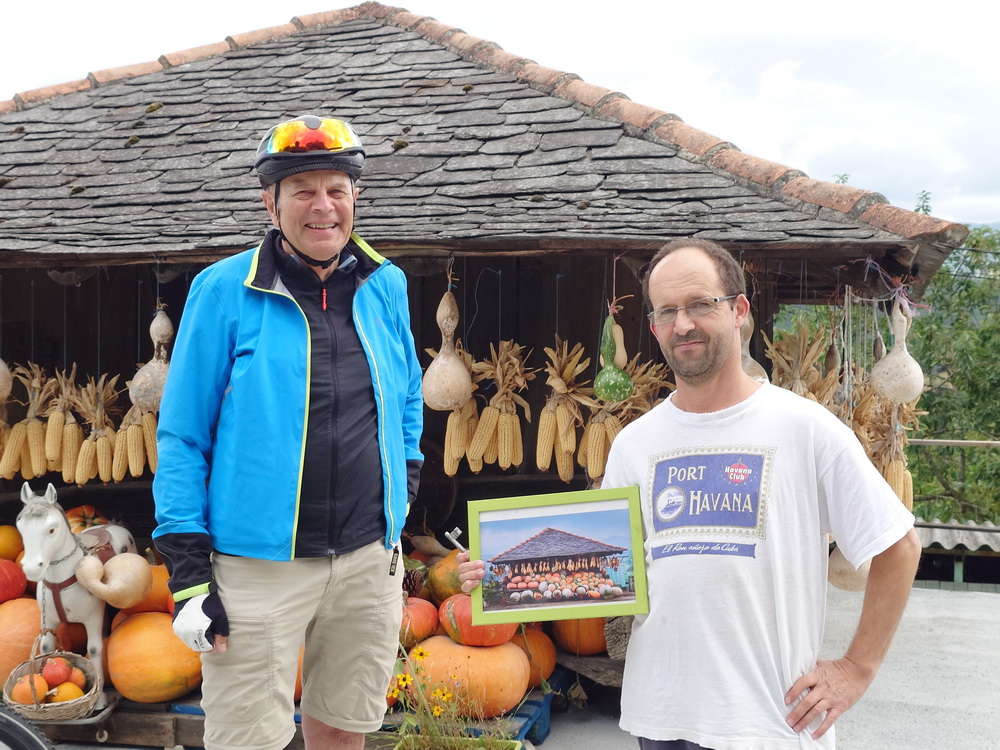
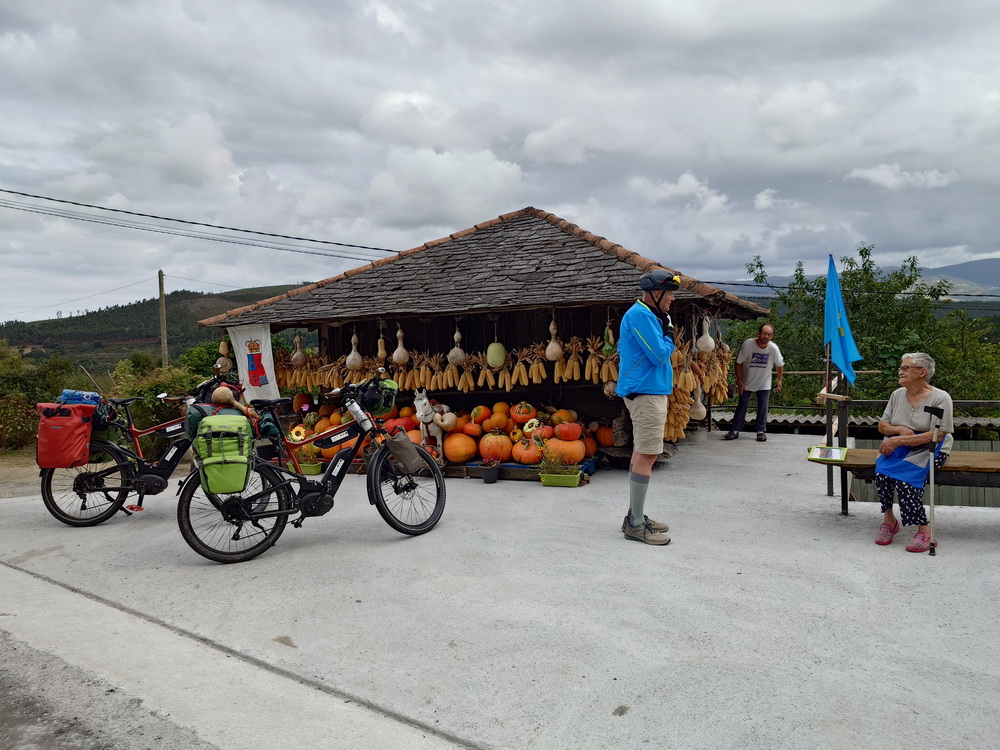
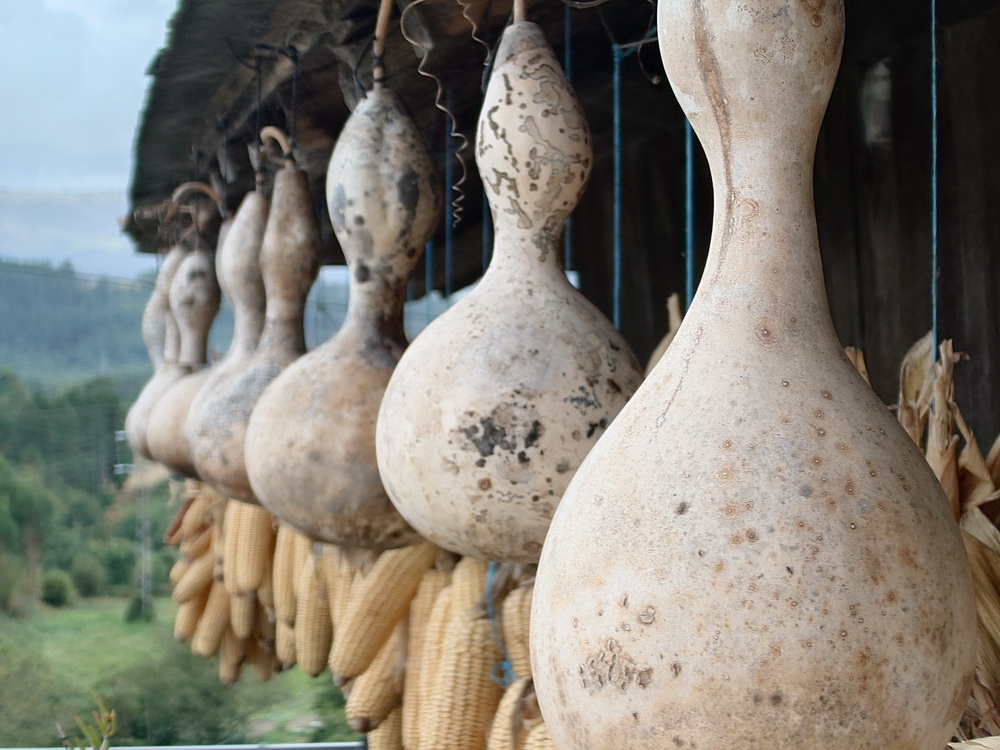
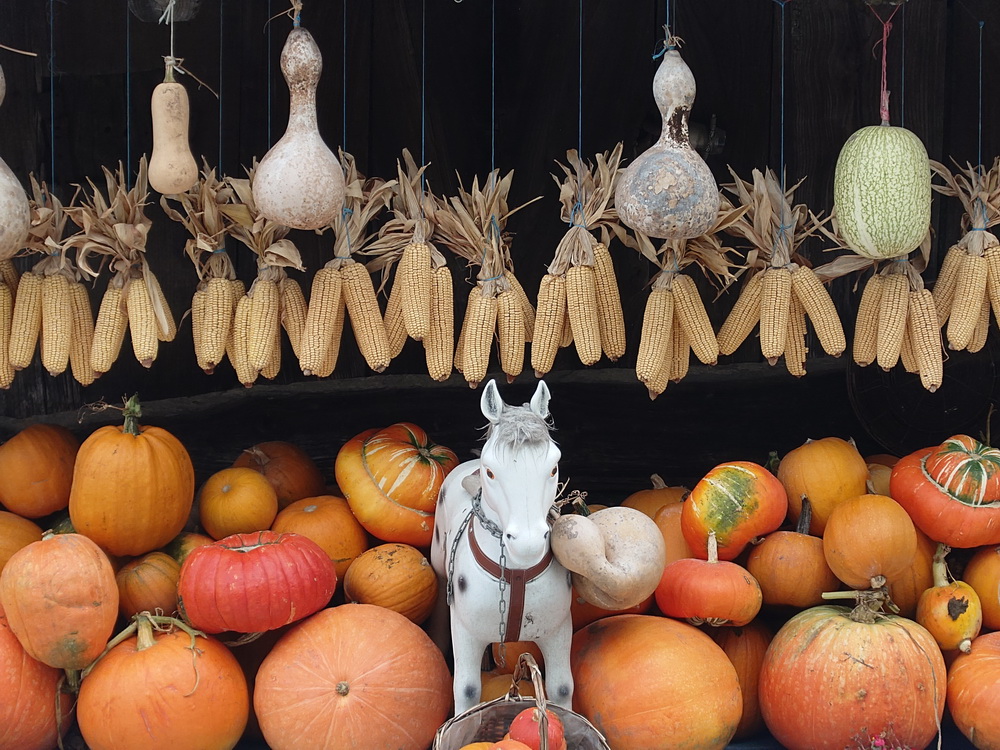
By the time we left the place a few more guests had arrived, but the view which showed nothing but clouds did not improve for them. Back on the road again we were happy to have missed the rain. We hoped that from now on it would only be a downhill passage, but around the next corner we found ourselves again climbing uphill before another downhill got us all the way down to the dam of the river Navia, from where we had to bike up again. With each hillside, each turn and each village we got closer to the ocean. At Sabariz we discovered one of the most decorated Horreos you can imagine. The farmer had that day just finished to put up all the pumpkins one could imagine as decoration. He was very proud to show us his famous granary and he even introduced us to his mother as he was fascinated by our project. He gave us one of his bottle gourds. Now it was not far anymore until we finally saw the blue horizon behind the river mouth of the Rio Navia.
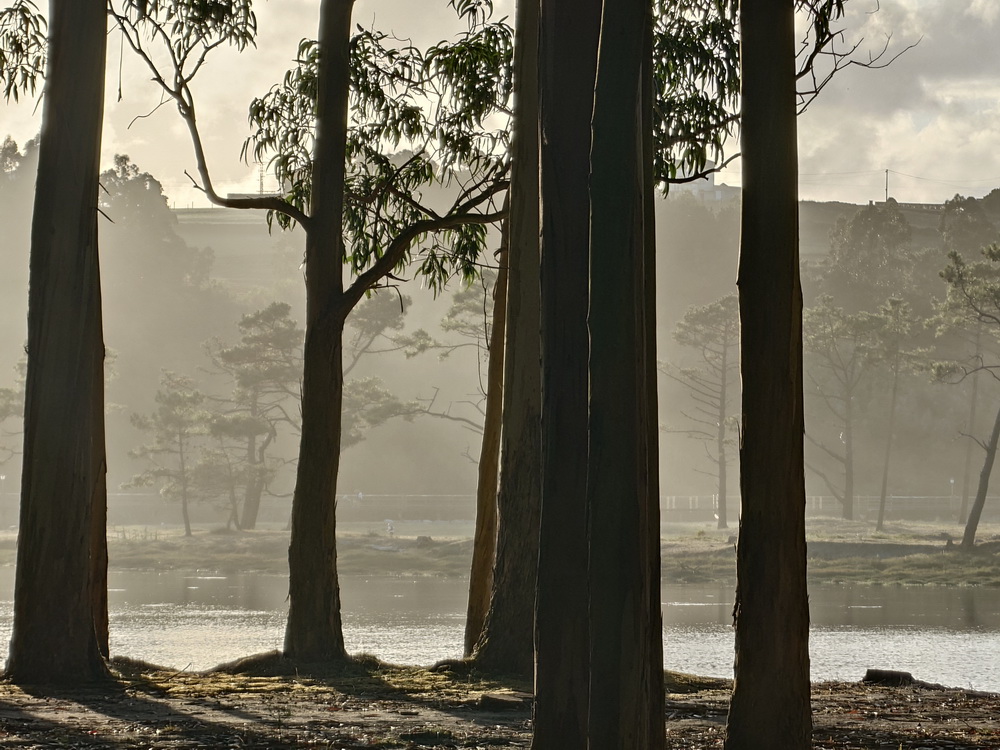
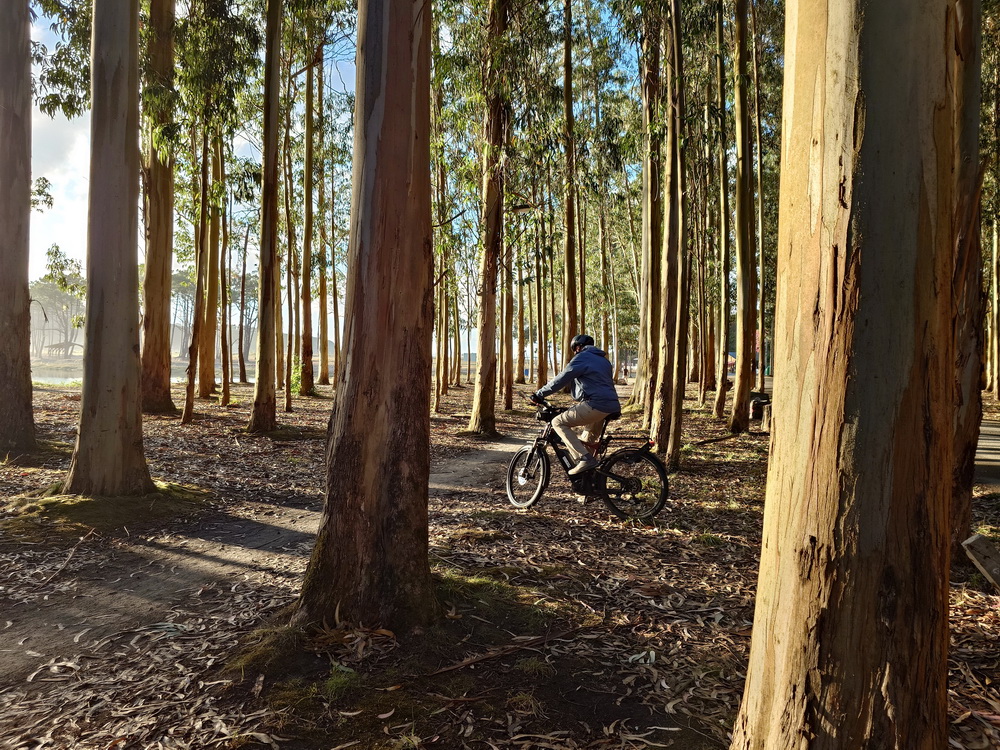
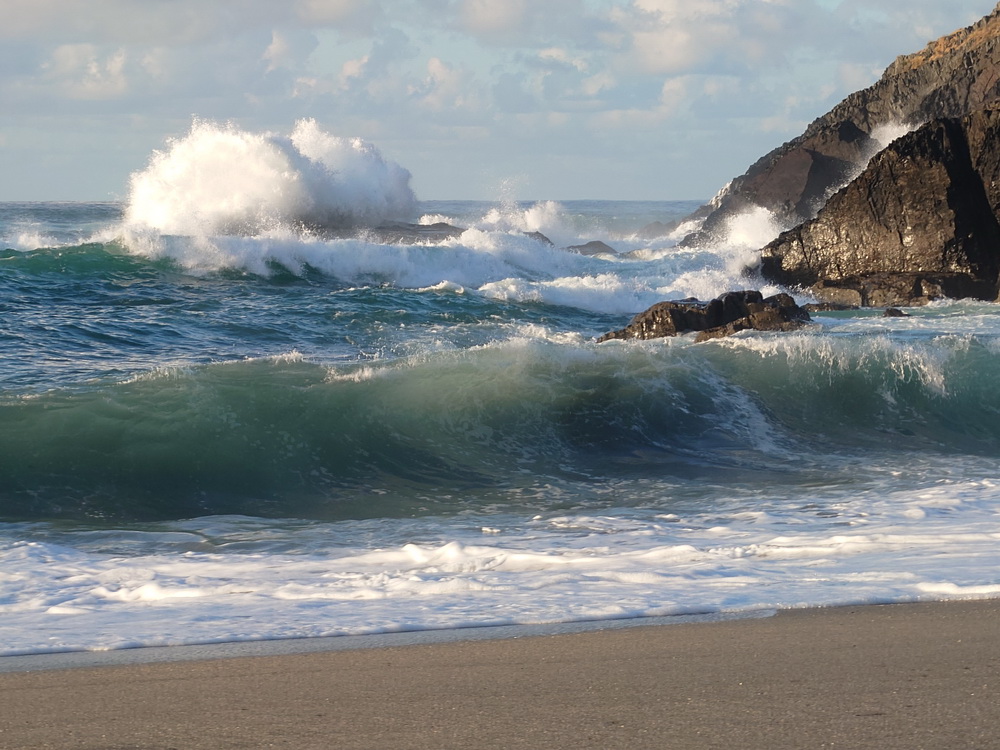
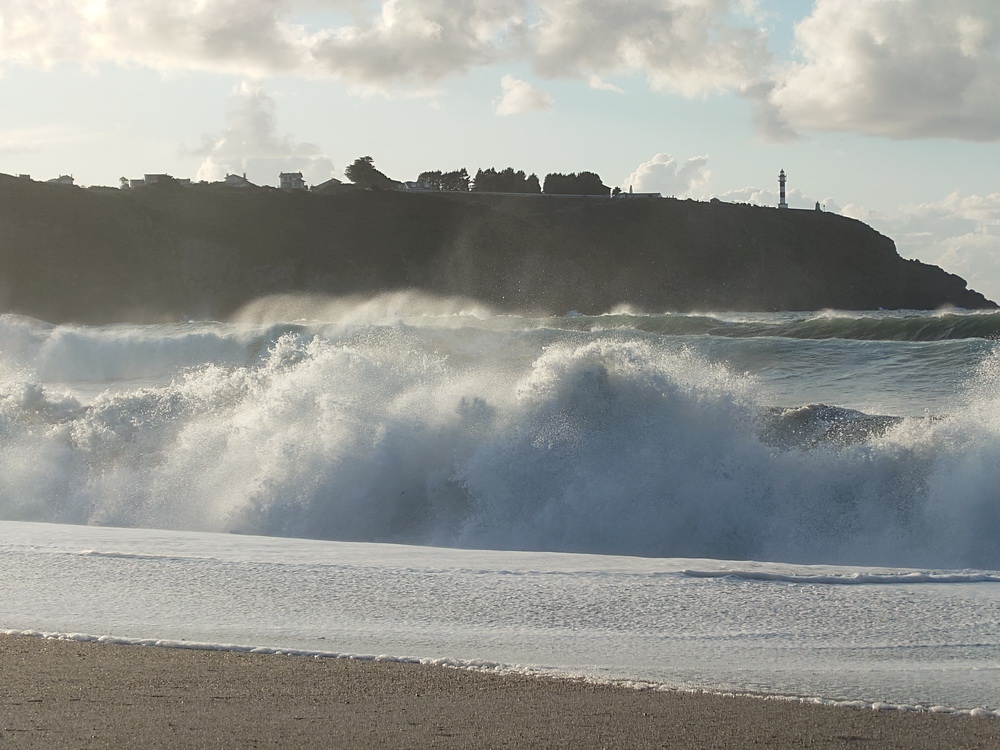
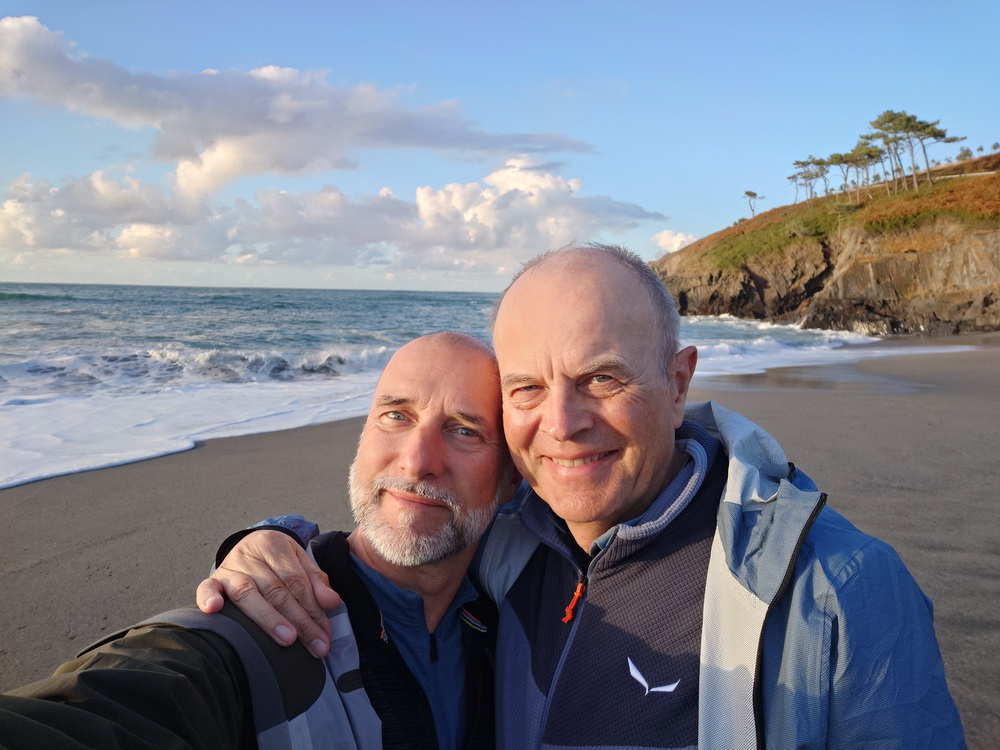
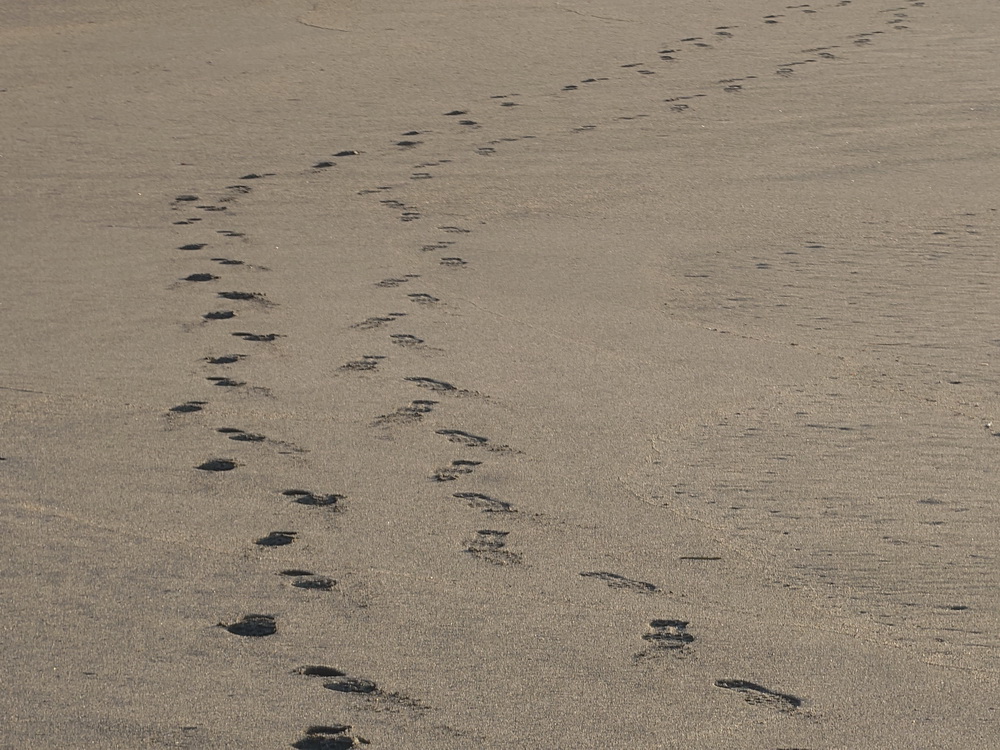
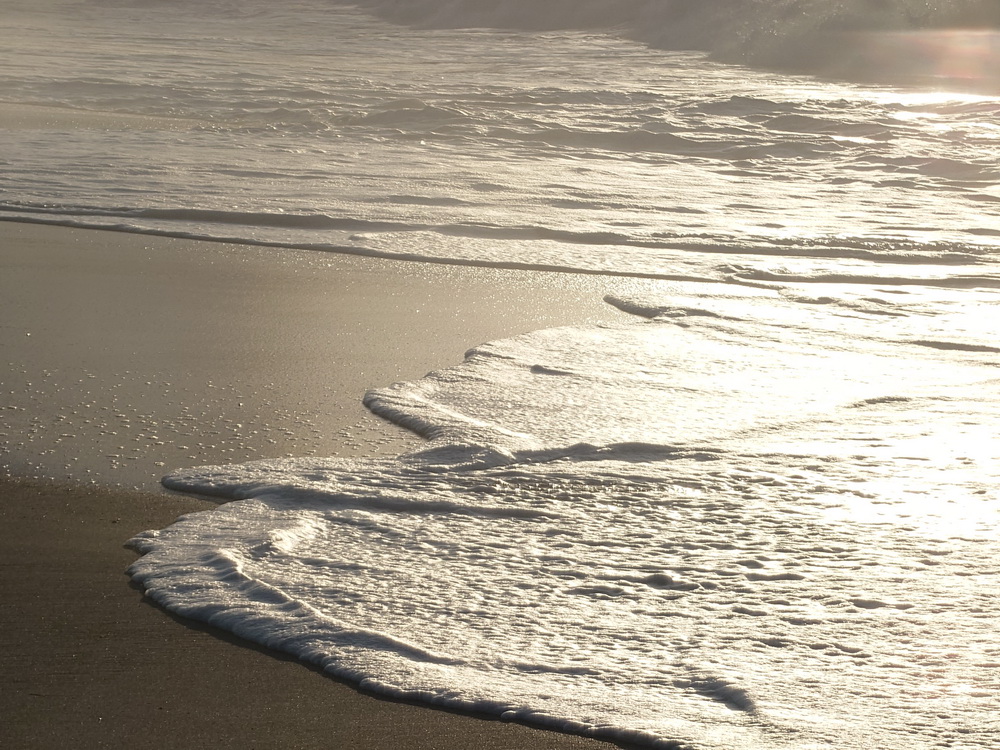
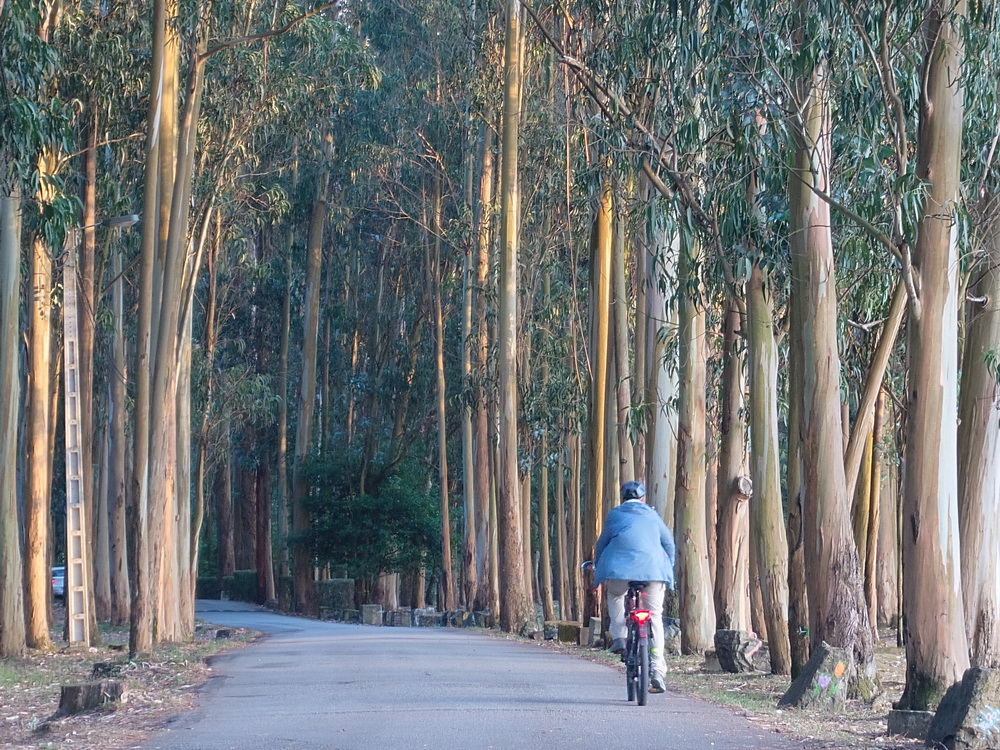
Arriving in the town Navia we got a room under the roof in a nice historic hotel. From there we had only a short bike ride to reach the beach through beautiful eucalyptus forests like the ones on the Californian coast. The ocean presented itself with wild swell. Waves crashing on cliffs and the sandy beach which showed only our footprints as no one dared to swim in the crest of waves.
It was difficult to find a place for dinner that was open, but we were at the end happy to find a pizza place where the TV echoed from several corners in the room. We finished the evening with a big cone of ice cream on a park bench in the harbour.